
The Sin That Refuses the Truth That Saves
Roberto Santiago
(Blended from Matthew 12:22-32, Mark 3:22-30, and Luke 12:10)
By Roberto Santiago
Perhaps this is one of the hardest warnings Jesus ever pronounced, and He did not soften it. He spoke it with a severity that reflected His indignation at the unbelief and blasphemous attitude of those who should have known better. Those who first heard it were likely stunned by its force, and its impact should not be reduced for readers and hearers today.
When Jesus says that every sin and even blasphemy can be forgiven, but that blasphemy against the Holy Spirit will not be forgiven, He is not speaking in riddles, nor is He shrinking the mercy of God after opening the door to it. He is making a distinction that goes to the heart of what faith, evidence, and salvation really are. The point is not that there is one especially ugly word God will not tolerate. The point is that a person can resist the very witness by which God makes forgiveness known. [2] That is what makes the warning serious.
The Problem Was Not Lack of Evidence
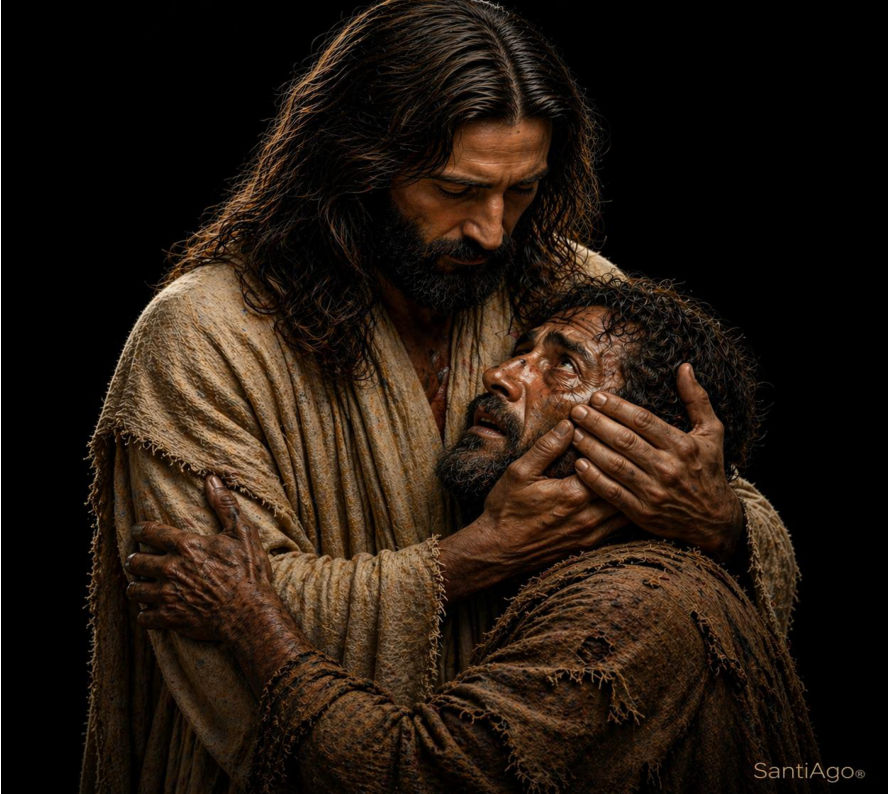
In the Gospel scene, Jesus is not speaking to men who are simply puzzled or slow to understand. He is speaking to men who have seen enough to know that something extraordinary is taking place. Even in their denial, they are admitting that His works cannot be dismissed as ordinary. They do not deny the event. They deny its source.
They are looking at a man who was blind and mute and now sees and speaks. The crowd is astonished. The evidence is in front of everyone. The religious leaders do not answer by saying nothing happened. They answer by saying the power behind it is evil. In other words, the issue is not the absence of evidence. The issue is the refusal to acknowledge what the evidence means. [3]
This is where the warning begins to sharpen. Jesus’ rebuke is not aimed at honest slowness. It is aimed at a willful reversal of moral judgment. Light is present, and they call it darkness. God’s work is present, and they name it unclean.
Faith Is Not a Blind Leap
That brings us to something important. In Scripture, faith is not treated like a jump into the dark. Faith is a response to witness. It is believing what God has said, believing what God has shown, believing what the Holy Spirit presses upon the heart through truth.
Jesus did not ask people to believe with nothing beneath them. His words carried authority. His works bore the marks of heaven. The Scriptures had already pointed toward Him. The Spirit was bearing witness through what He said and what He did. So faith was not demanded in a vacuum. God had given testimony. [4]
That is why unbelief must be handled carefully. Not all unbelief is the same. There is unbelief that struggles. There is unbelief that hesitates. There is unbelief that still wants help.
Thomas is the obvious example. He did not believe that Jesus had risen until he saw Him and touched Him. Jesus corrected him, but He did not cast him away. Instead, He used that moment to point forward to those who would believe without seeing Him physically. “Blessed are those who have not seen and yet have believed.” That blessing is not for people who believe with no basis at
- It is for those who believe through the witness God has provided: the apostolic testimony, the Scriptures, and the work of the Holy Spirit. [5]
So not every form of doubt is rebellion. Not every struggle is blasphemy. Weak faith is not the same as hardened unbelief.
Scriptures Are Part of the Evidence
After His resurrection, Jesus did something decisive for understanding this whole matter. He took His disciples back to the Scriptures and showed them that the Law, the Prophets, and the Psalms had already spoken about Him, about His suffering, His death, and His resurrection.
This means the gospel does not hang on feeling, charisma, or religious style. It is rooted in what God had spoken beforehand and then fulfilled in Christ. The Scriptures are not an outer frame around the Christian message; they are part of its foundation, part of the evidence, part of the witness, and part of the revealed truth of God’s plan of salvation. [6]
That matters because the Christian claim is not that faith exists apart from evidence. The claim is that God has given witness: first through the Old Testament Scriptures, then through Christ, then through those He sent in His name, and now through the Spirit-bearing proclamation of that same gospel.
The Church Does Not Invent the Message
Jesus then sent His disciples into the world as witnesses. He told them that repentance and forgiveness of sins were to be preached in His name to all nations. Before He ascended, He told them they would be His witnesses from Jerusalem outward to the ends of the earth. Later, Paul describes this entrusted task as the ministry of reconciliation. [7]
That phrase deserves to stay with us. It means the church does not manufacture the message. It carries the message. Believers are not asked to market a religious idea, improve a philosophy, or decorate culture with spiritual language. They are asked to announce what God has done in Christ.
And what has God done? He has acted for people who need forgiveness.
That may sound obvious, but it is easy to lose. Humanity is not standing in a neutral place, deciding whether salvation may or may not be interesting. The gospel comes to the estranged. It comes to the unforgiven. It comes to people who do not solve their own alienation by effort, heritage, morality, or sincerity. In that sense, all of us stand among the unforgiven until we are reconciled to God through Christ. His death and resurrection are not additions to human goodness. They are God’s answer to human need. [8]
Why Belief Becomes Central
This is why belief is central to the whole matter. The gospel is not merely information to admire. It is a call. Jesus speaks of hearing and believing. Believing is proven by action taken on what was seen, heard or read. The apostolic witness speaks of repentance (a change in a life from rejection of Christ and His Message to acceptance) by faith, baptism into Christ, burial with Him, and God rising into new life in Him. The point is not to reduce salvation to a formula, but to say plainly that in the New Testament forgiveness is not treated as a loose idea floating free from response. God has acted in Christ. The Spirit bears witness to that act. Human beings are called to believe what God has made known and to enter that reconciled life through Christ. [9]
So the issue is not whether God has made salvation available in some vague way. The issue is whether the witness God has given will be received.
The Holy Spirit Bears Witness to Christ
The Holy Spirit does not come to create spirituality without truth, or emotion without Christ. He bears witness to Christ. He takes what belongs to Christ and makes it known. He works through the Old Testament Scriptures that pointed ahead. He works through gospel message of forgiveness that proclaims Christ now. He works in the one who speaks and in the one who hears. [10]
The disciples had been with Jesus, heard Him, seen Him, and learned from Him, but they were also told to wait for the promise of the Father, for the empowering presence of the Spirit poured out at Pentecost. From that point forward, the church, the forgiven and resurrected people, becomes the Spirit-empowered witness to the risen Christ. So those who believe now without having physically seen Jesus are not believing less. They are believing through the witness God Himself has ordained.
That is why the rejection of this witness is so serious. It is not merely resistance to a preacher or discomfort with religion. It is resistance to the Spirit’s testimony concerning Jesus.
What the Sin Against the Holy Spirit Is - and Is Not
This helps us say more carefully what the sin against the Holy Spirit is.
It is not the cry of a frightened person who worries he has gone too far. It is not the question of someone still sorting through what he has heard. It is not the rejection of human traditions, exaggerated theologies, or inventions that go beyond Scripture. In fact, such things should often be examined and, when necessary, rejected.
But when the truth about Christ has been made plain through Scripture and gospel witness, and a person knowingly hardens himself against that truth, the matter changes. At that point unbelief, the refusal to act on Christ’s gospel message, is no longer simple hesitation. It becomes resistance. It becomes the refusal of the Spirit’s testimony concerning Jesus. [12]
That, I think, is the cleanest way to say it: blasphemy against the Holy Spirit is unbelief hardened into moral refusal. It is the settled rejection of what the Holy Spirit is making known about Christ, even though that truth is the very means by which God offers forgiveness and life.
The Warning Still Stands
The question is not whether God has failed to make Himself known. He has spoken in Christ, confirmed that witness in the Scriptures, declared it in the gospel, and pressed it upon the human heart by the Holy Spirit.
The question is whether the witnesses will be believed by action.
Those who first heard Jesus say these words were surely startled by their severity, and that severity should not be softened
- He spoke with the force the moment required, because the truth before them was being resisted.
And so, the warning remains: to refuse the witness of God concerning His Son is not a light matter. It is to turn from the very truth by which forgiveness, reconciliation, and life are offered. That is why such sin remains unforgiven.
Scripture Index
[1] Blended narrative setting
Matthew 12:22-32 · Mark 3:22-30 · Luke 12:10 [2] Every sin forgivable, except resistance to the Spirit’s witness Matthew 12:31-32 · Mark 3:28-29 · Luke 12:10 [3] Jesus’ works as evidence, and the refusal of their meaning Matthew 12:22-24 · John 10:25-38 · John 14:10-12
[4] Faith as response to witness
John 5:36 · John 10:25 · John 20:30-31 · Romans 10:17 [5] Thomas, faith, and the blessing on later believers John 20:24-29 · 1 Peter 1:8-9
[6] Jesus opening the Scriptures after His resurrection
Luke 24:25-27 · Luke 24:44-49 · Acts 10:43 · 1 Corinthians 15:1-4 [7] The gospel entrusted to witnesses and to the church Matthew 28:18-20 · Luke 24:46-47 · Acts 1:8 · 2 Corinthians 5:18-21
[8] Humanity’s need for reconciliation
Romans 3:9-26 · Romans 5:6-11 · Ephesians 2:1-10 · Colossians 1:19-23 [9] The gospel calling for belief, repentance, and baptism into Christ Mark 16:16 · Acts 2:36-41 · Acts 22:16 · Romans 6:3-5 · Galatians 3:26-27 · Colossians 2:12 · 1 Peter 3:21
[10] The Holy Spirit bearing witness to Christ
John 14:26 · John 15:26 · John 16:7-15 · Acts 5:32 · Hebrews 10:15-17
[11] The promised Spirit and Pentecost witness
Acts 1:4-8 · Acts 2:1-4 · Acts 2:32-39
[12] The danger of hardening oneself against God’s witness John 3:16-21 · John 3:36 · John 12:46-50 · Hebrews 2:1-4 · Hebrews 3:7-15 · Hebrews 10:26-29
[13] The tragedy of refusing the offered reconciliation
2 Corinthians 5:18-21 · 1 John 5:9-12 · Romans 1:16-17
Text and illustrations reproduced from the study “The Sin That Refuses the Truth That Saves”. The original PDF is the reference copy.