
Esther
Outlined Bible
Introduction: The book of Esther tells the story of a plot to exterminate the entire Jewish nation in the days of the Persian king Ahasuerus (Xerxes), and how it was thwarted.
Name - The book is named for the Jewish orphan girl who became Queen of Persia. Esther is a Persian word which means star.
Author - No author is named in the book. Jewish tradition ascribes authorship to Esther's uncle, Mordecai, one of the book's central characters. Other scholars believe it was written by unidentified scribes who followed Ezra.
Purpose
- To demonstrate the overruling providence of God.
- To show that God honored His election of Israel as His covenant people.
- To illustrate what can happen in a person's life when God is the director.
- Background of the book.
- When Cyrus permitted the Jews in exile to return to their homeland, many of them stayed in their new places.
- Mordecai, Esther, and thousands of others remained in the territory of the Persians outside Palestine.
- This book demonstrates God's presence with those people as well as with the returnees to Judah.
- We have a good deal of information about King Ahasuerus' reign from non-biblical sources.
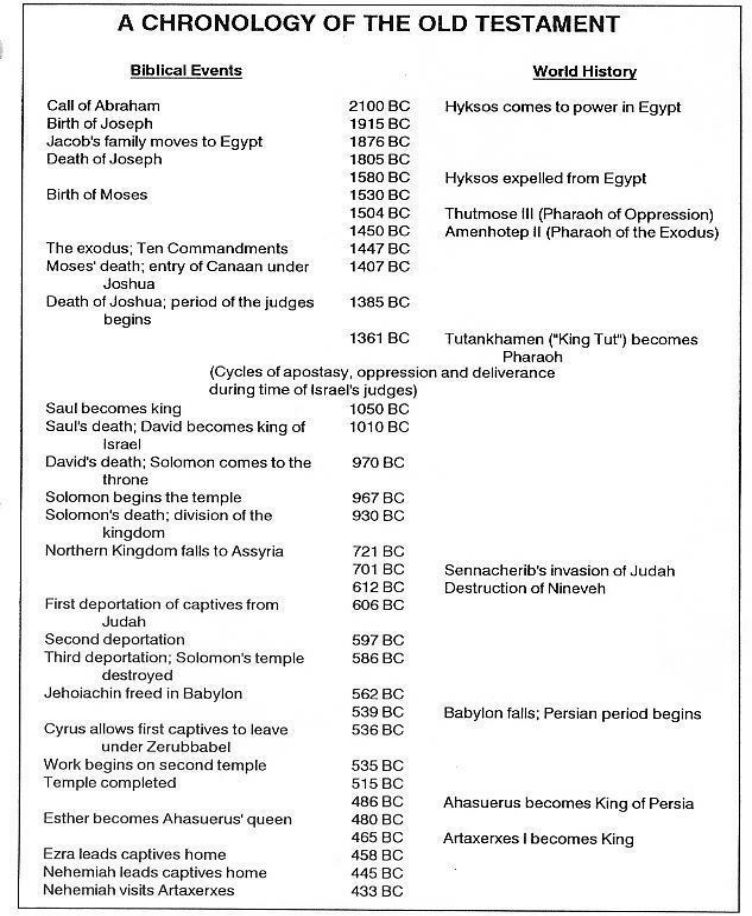
- He is better known to history by his Greek name, Xerxes King of Persia from 486 to 465 BC.
- In the gap between his third (Esther 1:3) and seventh (Esther 2:16) years, he undertook a disastrous invasion of Greece.
- Date - It must have been written by a Jew who lived in Persia between 450-400 BC.
- Archaeology has shown that the author had first-hand knowledge of Persian society and architecture during the days of the Persian Empire.
- Xerxes reigned over the Persian Empire from 486-465 BC and is usually identified as Ahasuerus.
- The English Bible places it after Ezra and Nehemiah, because it shares a Persian background with them.
- Unusual facts about the book.
- It is the only book of Scripture which does not mention the name of God.
- It is the only Old Testament book which has not been found among the Dead Sea Scrolls of
Qumran.
- It was the last book to be accepted into the Jewish Scriptures.
- II Chronicles 36:20-23 provides a background for the book of Esther.
- Main messages of the book
- The book explains the origin of the Jewish Feast of Purim (February/March).
- The larger theme of the book is the providence of the Almighty God
- Outline of the book.
- The feast of Ahasuerus and the divorce of Vashti. (1:1-22)
- The choice of Esther as Queen. (2:1-23)
- Haman's plot to destroy Mordecai and the Jews. (3:1-15)
- Mordecai's persuasion of Esther to intervene. (4:1-17)
- Esther's successful petition to the King. (5:1-7; 10)
- The downfall of Haman and the deliverance of the Jews. (8:1-9; 16)
- The feast of Purim. (9:17-32)
- Conclusion: The prominence of Mordecai the Jew. (10:1-3)
- Key Themes of the Book.
- Trials, no matter how severe, cannot destroy the faith of a true believer.
- To shrink from the trial is natural.
- Trials are meant to strengthen our faith. (I Peter 4:12; James 1:2-4).
- God has a plan for your life just as he had for Esther.
- Who knows but that God may have called you for just such a time as this?
- He may want to use you in some great way.
- More likely He wants to use you in the natural events of your life.
- God looks for our submission to His will regardless of circumstances.
- God cannot use us to fulfill His plan for us unless we are willing to heed His call.
- This ties to the doctrine of the providence of God.
- Pride and revenge lead to death. (Proverbs 11:2; 16:18; 29:23).
- Man's plans can never undo God's purpose:
- Haman's shrewd plan seemed a sure success.
- The law of the Medes and Persians was irrevocable.
- But Haman overlooked one thing - The Almighty God.
- Never overlook the Almighty.
- One person who is dedicated to God has great power and influence.
- Our responsibility is to obey. The results are up to God.
- Racial prejudice is absolutely wrong.
Conclusion:
- As Esther shows so clearly, all of history is really His-Story, and all people must see themselves as creatures responsible to a Holy God.
- A summary chart of the main events of the Children of Israel is shown on the following page.
- As we proceed to the poetical and prophetic books of the Old
Testament, we shall attempt to place them within this historical framework.
- Esther shows so clearly, all of history is really History [His-Story], and all people must see themselves as creatures responsible to a Holy God.
Esther
Summarized Bible
King Xerxes held a seven-day banquet displaying his wealth. He ordered Queen Vashti to display her beauty before his drunken guests. She refused and was banished. He then sought another queen among the beautiful girls who were brought to the citadel of Susa.
There was in the citadel of Susa a Jew of the tribe of Benjamin, named Mordecai who had been carried into exile from Jerusalem by Nebuchadnezzar king of Babylon. Mordecai had a cousin named Esther whom he had brought up because she had neither father nor mother.
Esther also was taken to the king's palace and entrusted to Hegai, who had charge of the harem. She did not reveal her nationality and family background, because Mordecai had forbidden her to do so. Every day Mordecai walked back and forth near the courtyard of the harem to find out how Esther was and what was happening to her.
When the turn came for Esther to go to the king, she won the favor of everyone who saw her. The king was attracted to Esther more than to any of the other women, and she won his favor. So, he set a royal crown on her head and made her queen instead of Vashti.
During the time Mordecai was sitting at the king's gate, Bigthana and Teresh, two of the king's officers who guarded the doorway, became angry and conspired to assassinate King Xerxes. Mordecai found out about the plot and told Queen Esther, who in turn reported it to the king, giving credit to Mordecai. The two officials were hanged. All this was recorded in the book of the annals in the presence of the king.
After these events, King Xerxes honored Haman elevating him and giving him a seat of honor higher than that of all the other nobles. All the royal officials at the king's gate knelt down and paid honor to Haman, for the king had commanded this concerning him. But Mordecai would not kneel down or pay him honor. When Haman saw that Mordecai would not kneel down or pay him honor, he was enraged. Yet having learned who Mordecai's people were, he scorned the idea of killing only Mordecai. Instead, Haman looked for a way to destroy all Jews. Haman said to King Xerxes, “There is a certain people dispersed and scattered among the peoples in all the provinces of your kingdom whose customs are different from those of all other people and who do not obey the king's laws; it is not in the king's best interest to tolerate them. If it pleases the king, let a decree be issued to destroy them.”
An edict was sent by couriers to all the king's provinces with the order to destroy, kill and annihilate all the Jews — young and old, women and little children — on a single day, the thirteenth day of the twelfth month, the month of Adar, and to plunder their goods.
When Mordecai learned of all that had been done, he tore his clothes, put on sackcloth and ashes, and went out into the city, wailing loudly and bitterly. When Esther heard about Mordecai, she was in great distress. She sent Hathach out to Mordecai to find out the cause of his distress. Mordecai told him everything that had happened to him and gave him a copy of the edict for their annihilation to Esther and told him to urge her to go into the king's presence to beg for mercy and plead with him for her people. She sent word to Mordecai saying, "All the king's officials and the people of the royal provinces know that for any man or woman who approaches the king in the inner court without being summoned by the king has but one law: that he be put to death. The only exception to this is for the king to extend the gold scepter to him and spare his life. But thirty days have passed since I was called to go to the king." Mordecai sent back this answer: “Do not think that because you are in the king's house you alone of all the Jews will escape. For if you remain silent at this time, relief and deliverance for the Jews will arise from another place, but you and your father's family will perish. Who knows but that you have come to royal position for such a time as this?”
Esther asked Mordecai to gather all the Jews who are in Susa, and fast for me. Do not eat or drink for three days, night or day. I and my maids will fast as you do. When this is done, I will go to the king, even though it is against the law, saying if I perish, I perish.
So, Esther approached and touched the tip of the scepter. Then the king asked, “What is it, Queen Esther? What is your request?” “If it pleases the king,” replied Esther, “let the king, together with Haman, come
today to a banquet I have prepared for him.” The king said bring Haman at once so that we may do what Esther asks. The king and Haman went to the banquet Esther had prepared. The king again asked Esther her request, but instead of answering, she invited them to a second banquet to come tomorrow to another banquet.
Haman went out that day happy and in high spirits. But when he saw Mordecai at the king's gate and observed that he neither rose nor showed fear in his presence, he was filled with rage against Mordecai. Nevertheless, Haman restrained himself but had gallows built, seventy-five feet high on which to hang Mordecai. That night the king could not sleep; so, he ordered the book of the chronicles and found that Mordecai had not been honored for exposing Bigthana and Teresh assassination plan. King Xerxes asked Haman what should be done for the one the delights to honor. Haman’s reply was to have him put on a royal robe, have a royal crest placed on its head and led by a noble prince through the city streets on the kings horse proclaiming before him, ‘This is what is done for the man the king delights to honor!’ Xerxes told Haman to get the robe and the horse for Mordecai the Jew, who sits at the king's gate. So, Haman got the robe and the horse. He robed Mordecai, and led him on horseback through the city streets, proclaiming before him, "This is what is done for the man the king delights to honor!”
At the second banquet as they were drinking wine the king again asked, “Queen Esther, what is your petition?” She answered, “If I have found favor with you, O king, and if it pleases your majesty, grant me my life — this is my petition. Spare my people — for I and my people have been sold for destruction, slaughter and annihilation.” King Xerxes asked Queen Esther, “Who is he? Where is the man who has dared to do such a thing?” Esther said, “The adversary and enemy is this vile Haman.” The king left in a rage. But Haman, realizing that the king had already decided his fate, stayed behind to beg Queen Esther for his life. Just as the king returned from the palace garden to the banquet hall, Haman was falling on the couch where Esther was reclining. The king exclaimed, “Will he even molest the queen while she is with me in the house?” So, Haman was hung on the gallows he had prepared for Mordecai.
The king issued another edict which granted the Jews in every city the right to assemble and protect themselves. Mordecai left the king's presence wearing royal garments of blue and white, a large crown of gold and a purple robe of fine linen. Mordecai was second in rank to King Xerxes, preeminent among the Jews, and held in high esteem by his many fellow Jews, because he and Esther allowed God to use them to save His people.
Key Points from Esther ➢ Mordecai confronted evil by speaking ➢ Mordecai and Esther allowed God to use them to save His people. ➢ Esther risked her life to do God’s will. ➢ What do we risk to do God’s will?
Text and illustrations reproduced from the study “Esther”. The original PDF is the reference copy.