
Exodus
Outlined Bible
Introduction: The book of Exodus is probably the single-most important Old Testament book for the Christian to know and understand as background to the New Testament. It records the beginning of the national life of Israel and the covenant that God made with the Israelites through Moses at Sinai. This covenant did not replace or fulfill the Covenant He made with Abraham.
Name - The word exodus means going out - departure.
Author - The book was written by Moses. (Exodus 17:14; 24:4-8; Numbers 33:1-2; Deuteronomy 31:9, 22, 24)
- He was the central figure of the book and an eyewitness of its primary events.
- He almost certainly wrote it during the 40-year wondering period.
Purpose - The purpose of the book is to share with the reader what transpired between the initial covenant God made with Abraham and the subsequent development of the covenant nation through which the promised Messiah would come. The covenant with the Israelites through Moses would be fulfilled when its purpose was completed i.e. the coming of the Messiah.
- Background of the book
- The book begins in Egypt where we last left Jacob's family. (cf. Genesis 50:12-14)
- Two hundred seventy-five years have passed since Joseph died.
- The likely date for the exodus is around 1450 BC.
- 1 Kings 6:1 says Solomon began to build the Temple 480 years after Israel left Egypt.
- Construction of the Temple began about 967 BC.
- Adding 480 years to 967, we get a date of 1447 BC for the exodus.
- New leadership now reigned in Egypt.
- Joseph had risen to authority under the Hyksos' rule of Egypt.
- The Hyksos, like the Hebrews, were of Semitic origin.
- They ruled Egypt from approximately 2160 to 1580 BC.
- In 1580 BC the Hyksos were expelled by native Egyptians.
- The new Pharaoh did not "know" Joseph in the sense that he did not appreciate that period of his nation's history.
- He also feared that the massive number of Hebrews (now totaling 2 to 3 million) would ally themselves to another foreign invader.
- A plan of grievous oppression is implemented upon the Hebrews. (1:11-22)
- It begins with slave labor. (1:11-14)
- The plan escalates to the slaughter of children. (1:15-22)
- The Main Message of the book
- The primary message of Exodus is deliverance.
- It vividly displays God's faithfulness in keeping and developing the covenant made with Abraham. 7
- The book also reveals God’s providential control over men and nations to bring about His desired end.
- The deliverance of God's people from Egyptian bondage is a foreshadowing of Jesus Christ's deliverance of God's people from sin's bondage.
- Outline of the book
- The deliverance story - Exodus 1-12:
- The book begins with the story of Moses' birth and adoption by the Egyptian princess. (2:1-10)
- Now 40 years old Moses is incensed over an episode where he witnesses an Egyptian beat a Hebrew slave. He murders the Egyptian and flees to Midian. (2:11-15)
- For the next 40 years, Moses serves as a shepherd of his father-in-law Jethro's flock. (2:16-25)
- God calls Moses from a burning bush to return to Egypt to deliver the Hebrews from bondage. (3:1- 4:31)
- After Moses' initial demands of freedom, Pharaoh increases the burden of the Israelites. (5:1-6:13)
- God then sends a series of ten terrible plagues against the land. (7:14-12:36)
- The people begin their exodus. (12:37-51)
- The journey to Sinai - Exodus 13-19:
- After leaving Egypt, Pharaoh is angered and sends his chariots to destroy the Israelites. (14:1-13)
- God parts the waters of the Red Sea, allowing the Israelites to cross. As Pharaoh's chariots try to follow, the waters collapse on them. (14:14-31)
- Moses and his sister Miriam sing praise to the Lord for his deliverance. (15:1-21)
- Traveling from the Red Sea to the Desert of Sin (Exodus 15:22-16:1), the people began to grumble over lack of food and water. (16:2-3)
- God responded to their grumbling by giving them:
- Manna. (16:4-36)
- Water at Rephidim. (17:1-7)
- God also provided a great victory over the Amalekites. (17:8-16)
- Jethro (Moses father-in-law), joins the Israelites and advises Moses to organize the people and administer judgments. (18:1-27)
- They arrive at Sinai and prepare to receive the law. (19:1-25)
- At Sinai - Exodus 20-40
- The Ten Commandments are given. (20:1-17)
- A series of civil laws is given. (20:18-23:19)
- The covenant is confirmed. (24:1-18)
- Instructions for the construction and furnishings of the Tabernacle are given. (25:1-27:21)
- Instructions for priestly garments, Tabernacle ministry, and Sabbath observation are given. (28:1- 31:18)
- While Moses is on the mountain, the people fashion and worship a golden calf. (32:1-33:23) After the destruction of the golden calf the covenant with God is renewed. (34:1-35)
- The account of the construction of the Tabernacle and its furnishings is detailed. (35:3-40:33)
- Key Themes of the Book
- Deliverance
- The four words most of us associate with the exodus are, "Let my people go!"
- The deliverance was accomplished in such a way that only God could receive glory. (Exodus 3:14)
- Passover
- The Passover had its origin with the 10th plague - the death of the first born.
- God provided a plan by which the Israelites' firstborn were "passed over" and protected. (Exodus 12)
- Passover and the Feast of Unleavened Bread were observed together from that time forward to commemorate the exodus. (cf. Exodus 23:15)
- The image of Passover is central to the concept of the atonement of Christ. (John 1:29; I Corinthians 5:7)
- The Law of Moses
- Moses and the children of Israel stayed at Sinai for over a year to receive and understand the law.
- The Law of Moses represented the next major step in the development of the covenant made with
Abraham. (Genesis 8 15)
- The Ten Commandments (or Decalogue) represented the peoples’ fundamental duties and obligations to God and their fellow man. (Exodus 20:17; cf. Deuteronomy 6:5; Matthew 22:37-40)
- The basic principles undergirding the Law (e.g., respect for God, worship, marital fidelity, sanctity of human life, etc.) are part of God's eternal nature and are permanently relevant. However, the law itself (e.g. animal sacrifices, Sabbath worship, dietary restrictions) has fulfilled its purpose (and been superseded by) the coming of Jesus Christ.
- The Law is later called:
- Curse (Galatians 3:10-13)
- Prison (Galatians 3:23)
- That which leads us to Christ. (Galatians. 3:24)
- A foreshadowing or type. (Hebrews 10:1)
- A gardener or tutor. (Galatians 4:2)
- The Tabernacle
- It was a symbol of God's presence and leadership among the people.
- It was also the focal point of the Israelites' worship.
- The specifications for its construction were given at Sinai. (Exodus 25-40)
Summarized Bible
Moses - the Egyptian
God promised to Abraham that he would be the father of many nations through Isaac, His son of promise. Some four hundred years have passed, since Jacob, son of Isaac, went to Egypt due to a famine. His family has grown into the millions but living in slavery. During this time Egypt was taken over by a new dynasty who were new nothing about Egypt’s past and never heard of Joseph. Pharaoh ordered every son born to the Hebrews was to be cast into the Nile. Moses’s mother hid him until he was found by Pharaoh’s daughter. For forty years he was trained in the ways of the Egyptian royalty. For fear of the wrath of Pharaoh, he fled Egypt after killing an Egyptian for mistreating a Hebrew slave. For the next forty years he herded sheep for Reuel, a priest of Midian, also referred to as Jethro. Then God called Moses to go to Egypt to deliver Abraham, Isaac and Jacob’s descendent from bondage. (Exodus 1 – 2)
Key Point from Moses - the Egyptian ➢ God is faithful. He saw the Israelites’ condition and remembered his promise to Abraham, Isaac and Jacob. ➢ God chose Moses to deliver His people out of their bondage of slavery. ➢ Centuries later God sent Jesus of Nazareth to deliver His people out of their bondage of sin.
Moses - Called by God
After killing the Egyptian Moses fled Egypt and lived in Median for forty years tending sheep. The Children of Israel had become great in number so much so that the new Pharaoh was fearful they might align themselves with another ruler. “Therefore, they set taskmasters over them to afflict them with heavy
burdens. They built for Pharaoh store cities, Pithom and Raamses. But the more they were oppressed, the more they multiplied. And the Egyptians were in dread of the people of Israel.” (Exodus 1:11-13)
One day when Moses was keeping the flock of sheep God spoke to him saying “I am the God of your father, the God of Abraham, the God of Isaac, and the God of Jacob.” … “I have surely seen the affliction of my people who are in Egypt and have heard their cry because of their taskmasters. I know their sufferings and I have come down to deliver them out of the hand of the Egyptians and to bring them up out of that land to a good and broad land, a land flowing with milk and honey.” … “Come, I will send you to Pharaoh that you may bring My people, the children of Israel, out of Egypt.” (Ex 3:6; 7-8;10) Moses felt inadequate but reluctantly went after God showed him the power of His miracles to convince the Egyptians and Israelites that God was in control. (Exodus 3 - 4:17)
Key Points from Moses - Called by God ➢ God told Moses to GO but Moses said send someone else which angered God. Do we anger God by not doing His will which He has given to us in inspired word, the Bible? ➢ The Children of Israel multiplied greatly while being persecuted. So did the 1st-century Christians.
Moses, The Deliverer
Moses had spent 40 years in Egypt being trained in all the ways of the Egyptians and another 40 years as a shepherd being trained by God to lead His people from Egypt to the land promised to Abraham, Isaac and Jacob. The next forty years he led God’s Children out of physical bondage.
First, Moses with Aaron went to Pharaoh, perhaps his adopted mother’s father or her brother, requesting him to allow the Israelites go to the wilderness to hold a feast and worship God. Pharaoh refused saying “Who is the Lord, that I should obey his voice and let Israel go? I do not know the Lord, and moreover, I will not let Israel go.” (Exodus 5:2) Moreover, “You shall no longer give the people straw to make bricks, as in the past; let them go and gather straw for themselves. But the number of bricks that they made in the past you shall impose on them, you shall by no means reduce it, for they are idle. (Exodus 5:7-8)
The people grumbled saying “you have made us stink in the sight of Pharaoh and his servants, and have put a sword in their hand to kill us.” (Exodus 5:21) This will not be the last time they grumble and complain.
Key Point from Moses, The Deliverer ➢ God desires for His people to worship Him and not to constantly complain.
The Plagues
Moses begins to deliver God’s message to Pharaoh who God allowed to come to power to display His power. Initially no one is impressed. Then Pharaoh’s magicians and others began to waiver but not Pharaoh. Each time he rejected God’s plea through Moses, it became easier for to reject God again – he hardened is own heart. With each new plague of destruction increases so much so that “Pharaoh's servants said to him, ‘How long shall this man be a snare to us? Let the men go, that they may serve the Lord their God. Do you not yet understand that Egypt is ruined?’” (Exodus 9:32)
Finally, Pharaoh has had enough when he said, “Get away from me; take care never to see my face again, for on the day you see my face you shall die.” Moses said, “As you say! I will not see your face again.” (Exodus 10:28-29) Moses begins to prepare the Israelites for their departure from Egyptian slavery. (Exodus 7 – 11)
Key Points from The Plagues ➢ “The Egyptians will know that I am the LORD." Do we know God as the loving savior or just know about God? Does God know us? ➢ Constant denying God’s plea hardens the heart making it easier to reject again until it becomes too late.
Crossing Over
The firstborn of the Egyptians died, and Pharaoh told Moses to take the Israelites and get out! The Passover had been celebrated and the Israelites having left Egypt faced the Red Sea. God went before them in a pillar of cloud by day and a pillar of fire by night.
Pharaoh changed his mind and sent his army in pursuit. With the Red Sea in front and Pharaoh’s army behind, fear filled the hearts of the Israelites. Moses urged them to “Fear not, stand firm, and see the salvation of the Lord, which he will work for you today. For the Egyptians whom you see today, you shall never see again. The Lord will fight for you, and you have only to be silent.” (Exodus 14:13-14) “Then … the Lord drove the sea back by a strong east wind all night and made the sea dry land, and the waters were divided. And the people of Israel went into the midst of the sea on dry ground, the waters being a wall to them on their right hand and on their left.” (Exodus 14:21-22)
Pharaoh’s army pursued the Israelites into the midst of the sea and the Lord threw the Egyptian forces into a panic as the sea returned to its normal course covering the chariots and the horsemen; of all the host of Pharaoh that had followed them into the sea, not one of them remained. (Exodus 14:23-29)
Key Point from Crossing Over ➢ The Israelites were delivered from the bondage of physical slavery and to eventually their earthly land of promise. ➢ If those in Christ stand firm in their faith, they will be delivered from eternal slavery to Heaven their promised land with God. ➢ Fear and lack of trust in God result in bad decisions.
Feeding and Caring for a New Nation
FREE at last! They traveled three days in the wilderness and began to grumble for lack of water and food. God provided good water and food from heaven called manna which continued for forty years. Again, they complained and grumbled about water. In fact, they appeared not to recall all God did and is doing for them.
With such a multitude of people, constant conflicts among them need to be resolved which Moses was overwhelmed as he attempted to do by himself. At Jethro’s recommendation Moses appoint men of increasing larger sections of people to help and the people ceased being weary. (Exodus 15 – 17)
Key Point from Feeding and Caring for a New Nation
➢ God is always faithful and just and displeased with our grumbling.
- Sinai
Three months had passed since the Israelites departed Egypt and crossed the Red Sea on dry ground. God had brought them out of slavery, destroy the Egyptian army, and gave them food and water, even after their much grumbling. Now they are encamped in the wilderness before Mt. Sinai.
The Lord said to Moses “Thus you shall say to the house of Jacob, and tell the people of Israel: ‘You yourselves have seen what I did to the Egyptians, and how I bore you on eagles' wings and brought you to myself. Now therefore, if you will indeed obey my voice and keep my covenant, you shall be my treasured possession among all peoples. … All the people answered together and said, ‘All that the Lord has spoken we will do.’” (Exodus 19:3-5; 8)
They consecrated themselves to meet God. God directed Moses to set limits lest they die. “There was thunder and lightning and a thick cloud on the mountain and a very loud trumpet blast so that all the people in the camp trembled as the people stood before the mountain. God called Moses to come to the top of the mountain. Here God delivered to Moses the Ten Commandments.
- "You shall have no other gods before me.
- "You shall not make for yourself a carved image, or any likeness of anything that is in heaven above, or that is in the earth beneath, or that is in the water under the earth. You shall not bow down to them or serve them, for I the Lord your God am a jealous God, visiting the iniquity of the fathers on the children to the third and the fourth generation of those who hate me, but showing steadfast love to thousands of those who love me and keep my commandments.
- "You shall not take the name of the Lord your God in vain, for the Lord will not hold him guiltless who takes his name in vain.
- "Remember the Sabbath day, to keep it holy. Six days you shall labor, and do all your work, 10 but the seventh day is a Sabbath to the Lord your God. On it you shall not do any work, you, or your son, or your daughter, your male servant, or your female servant, or your livestock, or the sojourner who is within your gates. For in six days the Lord made heaven and earth, the sea, and all that is in them, and rested the seventh day. Therefore, the Lord blessed the Sabbath day and made it holy.
- "Honor your father and your mother, that your days may be long in the land that the Lord your God is giving you.
- "You shall not murder.
- "You shall not commit adultery.
- "You shall not steal.
- "You shall not bear false witness against your neighbor.
- "You shall not covet your neighbor's house; you shall not covet your neighbor's wife, or his male servant, or his female servant, or his ox, or his donkey, or anything that is your neighbor's." (Exodus 20:3-17)
Key Point from Mt. Sinai ➢ If you obey God fully and keep His covenant, then you will be God’s Holy people. This applies today just as it did then.
Rules for the New Nation to Live by
The Ten Commandments had been given to the Israelites. Now laws, rules and regulations to govern the new nation who were slaves a short time ago. Worshiping God:
- Make no idols
- Make an altar of earth or stone to sacrifice burnt offerings
Dealing with people:
- Hebrew slave
- Sell the daughter
- Strife by fighting
- Stealing
- Cursing parents
Justice
- Seduction
- Sorceress
- Sex with animals
- Lending money
- Respect for God and rulers
Key Point from Rules for the New Nation to Live by ➢ God’s people must deal righteously in justice and mercy with others based upon a clear understanding of laws, rules and regulations.
Covenant and Tabernacle
Moses told the people the Word of the Lord and all its rules. He wrote them down, built an altar, offered burnt and peace offerings to God, and sprinkled blood on the altar and on the people stating “then he took the Book of the Covenant and read it in the hearing of the people. And they said, ‘All that the Lord has spoken we will do, and we will be obedient.’ And Moses took the blood and threw it on the people and said, ‘Behold the blood of the covenant that the Lord has made with you in accordance with all these words.’” (Exodus 24:7-8)
God said “Tell the Israelites to bring me an offering. You are to receive the offering for me from each man whose heart prompts him to give - a freewill offering.” (Exodus 25:2) From these freely given items God gave Moses detailed instruction to build a tabernacle which would include within as a place He could dwell with them:
- Ark covered by the Mercy seat to hold His testimony
- Table of for bread
- Golden lampstand
- Bronze altar
Key Points from Covenant and Tabernacle ➢ God entered into a covenant with them which Moses read to them, and stored it safely in the ark where God’s presence dwelled. They responded – “We will do everything the LORD has said; we will obey.” ➢ Those in the covenant came in contact with the blood of the sacrifice.
➢ Christ has made a New Covenant with all who put their trust in and obey Him by coming in contact with the blood through baptism allowing God to put them into Christ’s Kingdom. We must not turn back but remain faithful, do His will, diligently study His word storing it in our hearts, then He will give us eternal life.
Worship and Priest Items
God continued to provide instruction on worship, the appearance of and actions by priests while fulfilling their duties. Colorful garments showed people who were God’s priests. Other items were for them to perform their duties;
- Breastplate of judgment
- Ephod
- Robe
- Checkered coat
- Turban
- Sash
Specific formulas were given for making anointing oil and incense. They were not to be used as personal items on the body. “Anoint Aaron and his sons and consecrate them so they may serve me as priests. Say to the Israelites, ‘This is to be my sacred anointing oil for the generations to come. Do not pour it on men's bodies and do not make any oil with the same formula. It is sacred, and you are to consider it sacred. Whoever makes perfume like it and whoever puts it on anyone other than a priest must be cut off from his people.’” (Exodus 30:30-33)
Their day of sacrifice and worship was established - “Then the Lord said to Moses, ‘Say to the Israelites, you must observe my Sabbaths. This will be a sign between me and you for the generations to come, so you may know that I am the Lord, who makes you holy. Observe the Sabbath, because it is holy to you. Anyone who desecrates it must be put to death; whoever does any work on that day must be cut off from his people.’” (Exodus 31:12-15)
Key Points from Worship and Priest Items ➢ To come before God, one must be consecrated and be clothed in the clothing required of God. For the Christian, they must be put in the Christ Body by God and clothed in righteousness.
Idol Worship and Consequences
The people heard God call Moses up into the mountain, they were fearful and afraid of God while in His in their presence but soon forgot Him. False sacrifices and worship practices were established which brought them terrible consequences because of their failure to follow God’s covenant with them.
How soon they forgot!! While Moses was on the mount, they built a golden image and worshipped it as the god who delivered them from Egyptian slavery. Moses was very displeased and said “You have committed a great sin. But now I will go up to the Lord; perhaps I can make atonement for your sin.” God told Moses “Whoever has sinned against me I will blot out of my book. Now go, lead the people to the place I spoke of, and my angel will go before you. However, when the time comes for Me to punish, I will punish them
for their sin.” And God sent a plague on the people because of the calf they had made. (Exodus 32:30; 33- 35)
They leave the wilderness of Sanai to go to the land promised to Abraham, Isaac and Jacob led by the pillar of cloud by day and fire by night.
Key Point from Idol Worship and Consequences ➢ Whoever sinned against God then and now without forgiveness will be blotted out of the Book of Life. ➢ Forgiveness is in Christ to all who obey and live according to His will.
Shadows, Types and Prophecies
Introduction
'Aadaam (the Hebrew word for man) was created in the image or nature of God and lived righteously for an unspecified period of time. During that time physical and spiritual death of man did not exist. After Adam's creation, God placed him in Eden giving him at least 3 instructions.
- Be fruitful and multiply [reproduce].
- Tend and keep the garden [work].
- Do not eat of the fruit of the tree of knowledge of good and evil [obey].
There is no indication that Adam and Eve refused to reproduce or take care of the garden. However, when tempted by Satan they chose to yield to their desire to be as wise as God and disobeyed by eating of the restricted tree. They were no longer in a righteous relationship with
- Consequently, physical and spiritual death entered into their life and the created world. God did not abandon them but initiated His plan to redeem and reconcile mankind. Their earthly sacrifices, ceremonies and rituals were types and shadows foreshadowing the perfect and lasting sacrifice or sin-offering to be revealed in Jesus of Nazareth, God in Human form.
"Therefore, let no one judge you in matters of food and drink or with respect to a festival, a New Moon, or Sabbath days. These are a shadow of the things to come, but the reality belongs to the Messiah" (Colossians 2:16).
Prophecy
Prophecy is a process in which one or more messages communicated to a prophet are then communicated to others. Such messages typically involve divine inspiration, interpretation, or revelation of conditioned events to come (cf. divine knowledge). The process of prophecy especially involves reciprocal communication of the prophet with the (divine) source of the messages. A listing of prophecies during the Patriarchal and Mosaic ages relating to Christ and their fulfillment is provided at the end of the lesson.
Types
- A type is a divinely purposed illustration of some truth. It may be: (1) a person; (2) an event;
- a thing; (4) an institution; or (5) a ceremony. Types occur most frequently in the Pentateuch
[Genesis, Exodus, Leviticus, Numbers and Deuteronomy] but are found, more sparingly, elsewhere. The antitype, or fulfillment of the type, is found generally in the New Testament"
- "A 'Type' is a prefigurative action or occurrence in which one event, person or circumstance is intended to represent another, similar to it in certain respects, but future and distant. The 'Antitype' is the thing prefigured. The Old Testament type is also called the shadow and the New
Testament reality which it typified is called the body, the express image, the substance or the reality.
"To correctly interpret type-language prophecy, it must be spiritualized. A type was a prophecy of the antitype.
"Because of the resemblance of two things in certain features, one may be designated by the name of the other. In some cases, the language which described the shadow is used when the substance is meant." … "We must recognize that the type and antitype are not identical. There are only some points of resemblance. Also, the shadow is inferior to the substance. The type was temporary. There can be no possibility of a return to the shadow after the coming of the substance."
"Typology [the study and interpretation of types and symbols]
- Type - (Gr. tupos). Romans 5:14 where Paul declares that Adam "is a figure, type, symbol, representation, pattern (tupos) of him that was to come"; i.e., Christ.
- Shadow (Gr. Skia). Colossians 2:17, certain elements of the Mosaic system are said to be "a shadow of the things to come;" "who, Levitical priest, unto an example and shadow do serve of the heavenly things (Hebrews 8:5); the law having a shadow of the coming good things-- not the very image of the matters (Hebrews 10:1).
- Copy, example, pattern (Gr. Hupodeigma) and used in conjunction with "shadow" in
Hebrews 8:5 (cf. Hebrews 9:23).
- Parable, symbol, illustration, figure, type (Gr. parabole). Hebrews 9:9, where certain elements of the Tabernacle are "a figure for the present time." "He considered that God was able even to raise him from the dead, from which, figuratively speaking, he did receive him back (Hebrews 11:19).
- Antitype, true likeness, symbolizes, corresponds, pattern, copy, figure (Gr. antitupon, rendered "figures" or "pattern" in Hebrews 9:24, and "like figure" or "true likeness" in 1 Peter 3:21.
"Types are grounded in real history; the people, places, events, offices, actions, institutions,
- were deliberately chosen by God to prepare for the coming of the Christian system. The type was designed by God to preview its fulfillment in the New Testament."
Patriarchal Age
The following article on Types and Shadows in the Patriarchal age is quoted from the Internet website feedingonchrist.com/old-testament-personal-types-and-shadows-of-christ. They are the personal opinions and interpretations of Nicholas T. Batzig of New Covenant Presbyterian Church in Richmond Hill, Ga. Like all opinions and interpretations, they are not inspired and may or may not be valid. It is up to the readers to form their own opinion and either to reject or accept them. Thebiblewayonline.com does not express an opinion regarding his interpretations and opinions.
Adam is explicitly said to have been a type of Christ in that he was the representative of humanity
- 5:12). Paul unfolds one of the foremost ways in which he was a type of Christ in Romans 5:12-21. Adam's federal headship-together with the guilt, corruption and death that his disobedience brought on all humanity-is contrasted with the federal headship of Christ, and the subsequent justification of believers through His obedience and substitutionary death. Adam is also seen as a type of Christ in 1 Corinthians 15 where his earthly body is contrasted with the resurrected body of the glorified Christ and His people. In both of these places there is similarity and contrast in the type.
Abel is shown to be a type of Christ in that he was the first one to suffer for righteousness sake (Matt. 23:34-35). The hostility that Cain directed toward his brother was ultimately meant for
- Charles Spurgeon said, If Cain could have gotten at the throat of God he would have done
- This is precisely what men did in the crucifixion of Christ. Abel died because he worshiped God rightly. Jesus died because He always did the will of His Father in Heaven. Abel was the first martyr.
Jesus is the anti-typical martyr. The writer of Hebrews tells us that "the blood of Jesus speaks better things than that of Abel" (Heb. 11:4; 12:24). As was true of Adam, so Abel was a type of Christ by way of comparison and contrast. He is compared with Christ in that he was martyred for righteousness; he is contrasted with Christ in that his blood cried out for vengeance while Christ's blood cries out for mercy.
Seth was a type of Christ in that he was the "seed" of the woman who-as his name intimates-was "appointed/placed/set" in the place of Abel. Our Lord Jesus Christ is the "Seed of the woman" in the sense of ultimate fulfillment of the promise of Genesis 3:15. Seth was merely a typical step in the fulfillment of the Covenant promise to send a "Seed-Redeemer." Here it is imperative for us to note a guiding interpretive principle when studying the Old Testament. Because the revelation of God is organically related to the first promise of a redeemer (Gen. 3:15), and since that first promise was to be fulfillment by "the woman" bearing a male child, every subsequent generation from Adam and Eve forward were to look expectantly to the fulfillment of the promise of redemption. We see that in Eve naming Cain. We are told in Genesis 4:1, "Now Adam knew Eve his wife, and she conceived and bore Cain, and said, 'I have acquired a man from the Lord.'" In faith, Eve was hoping that God had fulfilled His promise to give her a Redeemer, though nothing could have been further from the truth. The expectation of the Redeemer is bound also to the establishment of the covenantal line from which Christ would come. Seth stands at the head of that covenantal line.
Enoch was a type of Christ in that "he walked with God and was not." Enoch was an example of exceptional uprightness. In his being taken away to heaven bodily, he prefigured the bodily ascension of Christ who "walked with God and was not." The bodily ascension of Enoch prefigures the resurrection and ascension of Jesus-as well as the bodily resurrection of all those united to Christ by faith.
Noah was a type of Christ in that he served as a sort of "second Adam;" he was not "The second Man," or "the Last Adam," but was a type of the One to come. Just as God had given Adam creation mandates to be fruitful and multiply so He gave Noah re-creation mandates. The Lord had given Adam instructions concerning what he could eat. So too Noah received instructions concerning food. Noah would typically be the federal representative of a new humanity. Jesus is THE federal head of the new humanity. Noah's name meant "rest." His father named him "Rest," saying, "This one will give us rest from the ground that the Lord God has cursed." Noah only brought rest in a typical sense when he walked off of the Ark with his family to inhabit a typical new creation. But Christ, the greater Noah, actually gives rest to the souls of men and women (Matt. 11:25-30). Christ alone has secured the new creation through His death and resurrection. The Lord preserved mankind after the flood in order to fulfill His promise (Gen. 3:15) to send the "seed" of the woman to crush the head of the Serpent. He also preserved Noah on the Ark because the Redeemer was in his loins-so to speak (Luke 3:23, 35-37). Because Messiah had not yet come, God would have been unfaithful to His promise if He had utterly destroyed the world. He left a remnant so that men might multiply, and that the Christ might come and redeem a multitude of people to great to number. Though the flood had been a judgment on the wickedness of the fallen world, it could never take that wickedness out of the hearts of men, only the saving work of Christ could do so. God promised never to destroy the world in the way that He had done so for the very same reason for which He had destroyed it in the first place (Gen. 6:5-7; 8:20-22). In short, the humanity of Christ was in the Ark in Noah's loins, and everything in the Ark with Noah was going to be used in the unfolding plan of redemption.
Job was a type of Christ in that he was a righteous sufferer. Job underwent a humiliation and exaltation that finds it's antitype in the suffering and glory of the Redeemer. Job was tested by God when he was tempted by the devil. Jesus was tested by God when He was tempted by the devil. Just as God meant good for Job through his sufferings (Job 42:12), so He meant good for Christ through His sufferings. Jesus is the righteous sufferer who shows forth the righteousness of God
Melchizedek was a type of Christ in that he was the King/Priest who blessed Abraham. No one in the Old Testament serves in both offices. Jesus is the Prophet, Priest and King of His church. Melchizedek typified Him in two of the three offices (Zech. 6:12-13). He was "King of Righteousness" and "King of Priest." Jesus is the King in whom "righteousness and peace kiss" at the cross (Ps. 85:10). Like Melchizedek before Him, Jesus had "no beginning of days, nor end of life." He is the eternal Priest to whom Melchizedek pointed. He was never and never will be, replaced as High Priest of the Church.
Abraham was a type of Christ in that he was the prototypical stranger and foreigner. Like the Redeemer, He functionally "had nowhere to lay his head." As the federal head of the Covenant, he was also the father of many nations. Jesus is the "Everlasting Father" (Isaiah 8:18, 9:6; Psalm 45:16; Hebrews 2:13) of believers who federally represented His people from every tongue, tribe, nation and language. The promises in Scripture are said to have been made to "Abraham and his Seed…who is Christ." All the promises made to Abraham were made to Him as the typical representative of the Covenant of Grace. Ultimately, they were made to, and fulfilled in, Jesus Christ.
Isaac was a type of Christ in that he was the promised "son of Abraham." The promises of God were given directly to Abraham with respect to His son (offspring). Everywhere in the NT are we taught that Jesus is the true promised son of Abraham. However, in the original giving of the promise Isaac was the promised son in view. The birth and life of Isaac also typify the Redeemer. Just as Isaac's birth was the result of the supernatural power of God so too was it true of Jesus. Isaac typified the Redeemer in that he is the only other human sacrifice that God commanded, and-though God stopped Abraham from going through with the sacrifice of Isaac-he is said to have died and been risen "figuratively" (Hebrews 11:19). Jesus, the true and greater son of Abraham, was sacrificed, raised and returned to His Father.
Jacob was a type of Christ in that He was the chosen one who was named 'Israel' by God. Before Israel was a nation, He was a person. This is significant since Jesus is shown to be the true Israel in the Gospels. The fact that the name "Israel" is first given to a person reveals that the anti-typical Israel would be a person. Jacob's gave birth to the nation-church; Jesus gives birth to His church. Jesus is God's "chosen One" (Is. 42:1). He is the "last man of Israel" and the representative of the true Israel.
Joseph was a type of Christ in that he suffered unjustly and then was exalted to save his brethren. Undergoing a series of deaths and resurrections, Joseph typified the "sufferings of Christ and the glories to follow" (1 Peter 1:10-11). He was envied and hated by his brothers, suffered at their hands and was exalted to a place of power over the most powerful nation of the world. Jesus, the greater Joseph, was envied and hated by His countrymen and brethren, murdered by them and then exalted to the highest place of power and honor to save the world by feeding them with the rich granaries of heaven. feedingonchrist.com/old-testament-personal-types-and-shadows-of- christ
Mosaic Age
Years after Joseph's death God raised up Moses to deliver His people from Egyptian bondage. After crossing the Red Sea, they were free from slavery. Then, God through Moses entered into a covenant with these former slaves. This covenant is often referred to as "The Law of Moses." God also gave to Moses specific plans for the building of a tabernacle and its contents. Following its completion God enters into the Most Holy Place. Because of lack of faith, these people known to us as The Children of Israel wandered for 40 years before they were allowed to enter the land promised by God to Abraham, Isaac and Jacob.
By inspiration Moses and other writers recorded their history we call the Old Testament. It covers the period from creation to "just at the right time" for God to reveal and provide the forgiveness of sins (salvation) by the atoning sacrifice of Jesus of Nazareth.
Hopefully, the following pictures will assist you in understanding Joseph Pitman's personal interpretations of types and shadows. The BibleWay Publishing does not express an opinion as to the accuracy of his opinion.
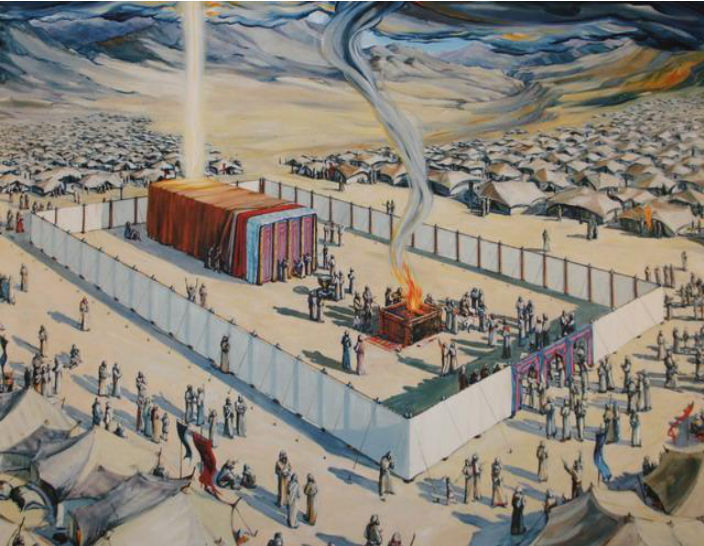
- The first shows the Israelites camped by tribe around the Tabernacle.
- The second displays the burnt offering on the altar and the presence of God descending on the Most Holy Place where the Arc of the Covenant and Mercy Seat resided.
- The third is a cutaway view showing the layout and contents of the Holy and Most Holy,
Holy of Holies.
- The fourth is an artist conception of the tabernacle contents
THE SHADOW OF HEAVENLY THINGS, - THE FIRST AND SECOND TABERNACLE. By Joseph Pittman.
"To be had from the Author, Airlie Avenue, Armadale, or at the Austral Publishing Co., 528 Elizabeth-street, Melbourne. The profits of this work will be devoted to the Armadale Rescue Home. 1893. Pittman, Joseph.
The Shadow of Heavenly Things, or the First and Second Tabernacle. Melbourne: Austral Publishing Company, 1893. Electronic text provided by Colvil Smith. HTML rendering by Ernie Stefanik. 15 August 1999"
Chapters Preface and Introduction Chapter I: Shadow and Substance Chapter II: Moses-Christ Chapter III: Inspired Workmen Chapter IV: The Materials Chapter V: The Court Chapter VI: The Structure Chapter VII: The Covering Chapter VIII: The Brazen Altar Chapter IX: The Laver Chapter X: The Priesthood Chapter XI: The Holy Place Chapter XII: The Table of Shew-Bread Chapter XIII: The Altar of Incense Chapter XIV: The Holy of Holies Chapter XV: The High Priest Chapter XVI: Conclusion
PREFACE
THE substance of this little work was written eight years ago. On coming to the colony of Victoria it was my intention then to have published it; but finding Bro. Maston's little gem of a treatise on the same subject already in the field, I put the manuscript away. But thinking over ways of helping our Rescue Home it occurred to me that, with this object in view, I might now be pardoned for bringing my humble production to light. On interviewing Bro. Maston, with his usual magnanimity, he soon set my mind at rest as to any fear of rivalry; and urged me to go to press, as the field was by no means fully explored. And now I have only to say that if this effort prove in any degree helpful to my earnest reader, I shall be more than repaid, if by his commending it to others, its sale is increased, and so the Rescue Home will be benefited. -- J. P.
INTRODUCTION.
TO draw aside the veil of futurity is divine. Of the numerous evidences of the heavenly authorship
of the Bible, perhaps one of the most conclusive is its marvellous unfolding of the future. Two methods were employed. First, by the "sure word of prophecy," which God gave "by the mouth of His holy prophets since the world began;" and second, by types and shadows. It may be open to question whether, ordinarily, "coming events cast their shadows before," but this is undoubtedly true of the Bible. It is not too much to say that the entire system of Christianity was forecast in the Scriptures of the Old Testament by means of type and prophecy. The New Testament contains about 500 references to the Old. Nearly the whole of these citations are made to bear witness to the truth of the religion of Jesus Christ. There is therefore a close connection between the two great divisions of the Bible--the Old and the New Testaments; and they must be studied together to understand "all the counsel of God." The plan of this little treatise confines us to one aspect of this delightful study. Let us pray for light and guidance, that the glory of God may be ours, and that we may see light in His light.
The journeyings of the Israelites, from their captivity in Egypt to their entrance into Canaan, is one continuous series of types and symbols of our progress from the bondage of sin to our triumphant entrance into glory. Moses, too, as the leader of Israel, ever stands out as the type of Jesus Christ. This is abundantly proved by the following New Testament Scriptures: "I would not, brethren, have you ignorant how that our fathers were all under the cloud, and all passed through the sea; and were all baptized unto (marg. into) Moses in the cloud and in the sea; and did all eat the same spiritual meat; and did all drink the same spiritual drink: for they drank of a spiritual rock that followed them, and that rock was Christ. . . . Now these things were, our examples (marg. in these things they became figures of us)" (1 Cor. 10:1-6); "Moses indeed said, A prophet shall the Lord God raise up unto you from among your brethren like unto me; to, Him shall ye hearken in all things whatsoever He shall speak unto you. And it shall be that every soul which shall not hearken to that prophet shall be utterly destroyed from among the people" (Acts 3:22, 23); "With whom was He displeased forty years? Was it not with them that sinned, whose carcasses fell in the wilderness? And to whom swear He that they should not enter into His rest, but to them that were disobedient? And we see that they were not able to, enter in because of unbelief. Let us fear, therefore, lest haply, a promise being left of entering into His rest, any one of you should seem to have come short of it" (Heb. 3:17; 4:1). But even if we could not refer to such scriptures as these, the likeness is so striking that it is impossible to mistake it. Let us briefly trace it. The Israelites were subject to a cruel bondage in Egypt, which utterly degraded them. This is the state of man, bound, defiled, and degraded by sin. Moses was sent by God to lead the children of Israel out of their bondage into liberty. Jesus was sent to deliver us from sin and ruin. The very character and life story of Moses bear striking resemblance to Jesus. Knowing that he was intended to be the deliverer of Israel (Acts 7:25) he "refused to be called the son of Pharaoh's daughter, choosing rather to be evil entreated with the people of God than to enjoy the pleasures of sin for a season, accounting the reproach of (the) Christ greater riches than the treasures of Egypt, for he looked unto the recompense of reward" (Heb. 11:24-26). Thus Jesus, "though He was rich, yet for our sakes He became poor, that we, through His poverty, might become rich" (2
- 8:9). "Who for the joy that was set before Him, endured the cross, despising the shame"
- 12:2). The likeness is real, though it is truly as but the shadow to the substance. The analogy yet continues. Moses proved his divine mission by many wonderful miracles. So of Jesus Peter said: "Ye men of Israel, hear these words: Jesus of Nazareth, a man approved of God unto you by
mighty works and wonders and signs, which God did in the midst of you, even as ye yourselves know" (Acts 2:22). And Jesus said truly: "The works which I do in My Father's name, they bear witness of Me" (John 10:25). The institution of the Passover--the lamb slain and eaten with unleavened bread and bitter herbs, the people having their loins girded, their shoes on their feet and their staff in their hand; the lintel and posts of their doors splashed with the blood of the lamb; the passing over of the angel of destru6tion: all strikingly illustrate precious new covenant things. "Christ our passover is sacrificed for us," and by faith we received Him, with the bitterness of repentance, but with the gladness of hope, when we rose up from our chains and shame, resolved to live a new and consecrated life. By faith we sheltered ourselves under the blood of His cross, and the wrath which we so much dreaded and deserved was graciously turned aside! Moses leads the people, under God. We read: "And it came to pass, when Pharaoh had let the people go, that God led them not by the way of the land of the Philistines, although that was near: for God said, Lest peradventure the people repent when they see war, and they return to Egypt: but God led the people about by the way of the wilderness of the Red Sea" (Ex. 13:17, 18). Now, while it is impossible to locate on the map the course pursued by the children of Israel, it is certain that the Lord led them by a strange way, which in their worldly wisdom they would never have chosen for themselves. As far as can be ascertained with tolerable certainty, it appears that the way that "was near" was a short and easy way into the wilderness, which would have avoided the Red Sea. But instead of taking this course, "God led the people about" through a rugged mountainous country, down to the shores of the Red Sea. Any human general would have judged this to be the height of folly. And we know what the people thought when they saw the sea before them, impassable mountains on either side of them, and the relentless Pharaoh and his host at their rear. But God saw the end from the beginning. They did not, and this made all the difference. "And the Lord said unto Moses, Wherefore, criest thou unto Me? Speak unto the children of Israel that they go forward. And lift thou up thy rod, and stretch out thine hand over the sea, and divide it" (Ex. 14:15, 16). And Moses did so; and the people, led by Moses, passed over on dry land; and the Egyptians, following them, were engulphed in the returning flood, while the people rent the heavens with their shouts of victory and praise. This illustrates a great and important truth. God's ways are not our ways. This instance of God's inscrutable providence is in reality an illustration of His ways generally. Numerous instances of the same kind, in which God's commands and ways seem, to poor finite reason, absurd, are scattered over the pages of the word of God. I need only mention the blowing of trumpets round Jericho; Gideon's army reduced to 300 men, to face the host of the Midianites; the washing of Naaman the leper in Jordan; the blind man, whose eyes were anointed with clay, told to wash them in the pool of Siloam. Human reason is baffled before commands like these. And were it not for the sequel in all such instances, instead of standing in reverent awe and adoration before such infinite wisdom and power, we would have been offended by their apparent absurdity. But of what does the fact of God leading the people by a strange way through the Red Sea remind us, or what act in the progress from sin and condemnation to the liberty of the gospel is it intended to typify? The answer is baptism. "Our fathers," says Paul, "were all under the cloud, and all passed through the sea, and were all baptised into Moses in the cloud and in the sea;" and he adds, "Now these things were our examples" (figures of us, marg.). Here it is seen that the baptism of the Israelites into Moses as their deliverer, in the cloud and in the sea, was a type of baptism into Christ. To me the analogy, seems so complete that I do not see how anyone can doubt it. We have seen that the passover
was a type of redemption through the precious blood of Christ, and the attitude of the people typified our faith in the Christ and our sincere repentance towards God, and that the people suffered themselves to be strangely led through the Red Sea. Now, if we take up our New Testament and examine the way of salvation as set forth by Christ and His inspired Apostles, we shall find that the passage of the Red Sea must be typical of baptism and nothing else. Our blessed Lord in giving the Apostles their Great Commission says: "Go ye, therefore, and make disciples of all nations, baptizing them (the disciples) into the name of the Father, and of the Son, and of the Holy Ghost," (Matt. 28:19.) Now just as the people of Israel committed themselves to Moses as his disciples or followers, and were formally baptized into him by following him through the Red Sea, and witnessed the complete overthrow and destruction of their old taskmasters; so the penitent believer in Jesus commits himself to Christ, as His faithful disciple, and follows Him through baptism, and then goes on his way rejoicing, like the Eunuch (Acts 8), because his sins and bonds are broken away and buried, to be remembered no more against him forever. This is God's strange way. Many think it meaningless, absurd, unnecessary. O let us take heed that we do not repeat the folly of the Israelites in their murmurings, or of Naaman in his short-sighted reasoning. Blessed is the man that believes God's way to be safe and right, just because it is His way; for in simply pursuing the path of duty, where reason fails to direct, he does but show his faith in the unerring wisdom of God, instead of in his own foolish and short-sighted reason.
Let us follow this analogy a little further. The story of Israel's wanderings and God's dealings with them are many times referred to in the New Testament as illustrations or figures of the Christian life.
- They had no settled dwelling place. They were constantly on the move, ever journeying, sometimes approaching very near to the land of promise and again receding from it, but having ever before them the hoped for rest in the land "flowing with milk and honey." Over and over again is this used in the New Testament to illustrate the Christian life. "For we have not here an abiding city, but we seek after the city which is to come" (Heb. 13:14)--We are "sojourners and pilgrims" and long for the "rest that remaineth"; when we shall be "forever with the Lord."
- The wilderness was barren. Their daily supplies came from heaven. The smitten rock yields floods of waters that follow them in all their wanderings. Says Moses, "The Lord led thee through that great and terrible wilderness, wherein were fiery serpents and scorpions, and thirsty ground where was no water; who brought thee forth water out of the rock of flint; who led thee in the wilderness with manna, which thy father's knew not; that he might humble thee, and that he might prove thee, to do thee good at thy latter end" (Deut. 8:15-16). "And thou shalt remember all the way which the Lord thy God hath led thee these forty years in the wilderness, that he might humble thee, to prove thee, to know what was in thine heart, whether thou wouldst keep his commandments or no. And he humbled thee, and suffered thee to hunger, and fed thee with manna, which thou knewest not, neither did thy fathers know; that He might make thee to know that man doth not live by bread only, but by everything that proceedeth out of the mouth of the
Lord doth man live. Thy raiment waxed not old upon thee, neither did thy foot swell these forty years" (Deut. 8:2-4). It is a joy to every true Christian to be able to apply to himself the precious things of the New Testament which are here symbolized. "That rock was Christ," says Paul (1 Cor.
10:4). And Jesus says, "I am the living bread which came down out of heaven, that a man may eat thereof and not die" (John 6:51). This world to the Christian is a barren desert, so far as his spiritual life is concerned, but he knows to his joy that "man doth not live by bread only."
- The very murmurings, disobediences, and punishments of the Israelites in the wilderness are often used by New Testament writers as warnings and types for our profit. "The serpent in the wilderness" is a type of Christ "lifted up" upon the cross. The people murmured, and God sent fiery serpents which destroyed them, and when they cried to God for mercy, he ordered Moses to make a serpent of brass, as much like the fiery serpents as possible, and lift it upon a pole, that whosoever looked upon it might be healed. Jesus uses this as a type of himself. The type is indeed a very striking one, but how strange for Jesus to compare himself to a serpent! But no, it was not a serpent, but the likeness of a serpent. How true then is the symbol, Jesus was made "in the likeness of sinful flesh," that "as an offering for sin he might condemn sin in the flesh." The Apostle
Paul says: "These things were our examples to the intent that we should not lust after evil things, as they also lusted. Neither be ye idolaters as were some of them . . . neither let us tempt Christ as some of them also tempted and were destroyed of the destroyer. Now all these things happened unto them for examples, and they are written for our admonition upon whom the ends of the world (age) are come. Wherefore let him that thinketh he standeth take heed lest he fall" (1 Cor: 10). Again in Heb. 3:12-19: "With whom was he grieved forty years? Was it not with them that had sinned, whose carcases fell in the wilderness? And to whom swear he that they should not enter into His rest but to those who were disobedient, and we see that they were not able to enter in because of their unbelief." Also 4:1, 2: "Let us fear therefore, lest haply a promise being left of entering into His rest any one of you should seem (be manifested) to have come short of it."
From the foregoing it will not be doubted that the history of the Children of Israel was intended to be typical of "heavenly things," i.e., the spiritual realities of the New Covenant. Before closing this chapter, we may briefly consider one or two lessons that we have learned to our profit. 1st. We see that the Christian is amenable to law, as were the Jews. The difference is that while the law of Moses "killed," the law of the Spirit gives life. This is the more reason why the latter should be joyfully and scrupulously obeyed. Christ is our Lord and Leader, as Moses was to Israel, and it is ours to follow our Divine Leader as Israel were bound to follow theirs. To those who thus obey, His service is perfect freedom. 2nd. Our responsibilities are measured by our advantages. Where much is given, much is required. If, therefore, under Moses, the people were punished for disobedience, "of how much sorer punishment shall we be worthy if we turn away from Him that speaketh from heaven." 3rd. The inducements to follow Moses were great, but how much greater are the inducements to follow Jesus. Moses was truly a noble example of self-sacrifice for his people--a wise leader, a faithful friend; but how much deeper is the love of Christ; what friends can compare with Him! Moses could not save the people from their sins--could not guide them to life eternal. But Jesus is "the way, the truth and the life," and all men may come to the Father through Him.
SHADOW AND SUBSTANCE
IN the foregoing introduction, we have seen that the history of the Israelites from Egypt to Canaan was designed to be typical of the Christian life from the time of our deliverance from the bondage of sin and Satan to our entrance into the rest that remaineth to the people of God. We have drawn but an outline; but much more might be said of their temptations, trials, wars, victories, &c., but we have not space, and moreover, it is better to be suggestive rather than exhaustive, that the devout reader may have room for further research and comparison.
I will now proceed to show that the tabernacle in the wilderness was designed to be a type of the Christian system. We are indebted almost entirely to the epistle to the Hebrews for confirmation of this truth. Heb. 10:1: "For the law having a shadow of good things to come, and not the very image of the things," etc. It is evident by the context that "the law" here relates to that part of the law of Moses which concerned the tabernacle and its connections, or what is called "the ceremonial law." This law contained a "shadow of good things to come." These "good things" are the blessings of the gospel of Christ, as the chapter shows very conclusively. The shadow is explained to be "not the very image of the (good) things." A shadow never is the exact image of its substance, but is usually sufficient to indicate it. Sometimes the identification of the shadow and its substance is difficult--perhaps impossible--till the substance appear. But then, their relation to each other is easily established. If we see a shadow of a tree cast by the sun or moon, though the tree is out of sight, we say with absolute certainty that the shadow is that of a tree; but we cannot always be so sure till the object be compared with its shadow. Now this is the principle of interpretation we must follow. The substance in the New Testament must explain the shadow in the Old Testament. Fancy has had unlimited play, and confusion has resulted in the treatment of this subject through the neglect of this principle. By following this principle, we hope to be able to explain the figurative teaching of the tabernacle and its connections consistently and beautifully. We will not assume the truth of our main position, but prove it. That the tabernacle with its services was intended to be typical the following scriptures will be sufficient to show: "Now these things (the tabernacle and its furniture) having been thus prepared the priests go in continually into the first tabernacle accomplishing the services; but into the second the high priest alone, once in the year, not without blood, which he offered for himself and for the errors of the people; the HOLY GHOST THIS SIGNIFYING that the way into the holy place hath not yet been made manifest, while as the FIRST tabernacle is still standing, which is a parable for the time now present . . . but Christ having come a high priest of the good things to come, through the GREATER AND MORE PERFECT TABERNACLE, not made with hands," etc. (Heb. 9:6-11). "It was necessary therefore that the copies of the things in the heavens should be cleansed with these (the blood of bulls, etc.), but the heavenly things themselves with better sacrifices than these. For Christ entered not into the holy place made with hands, LIKE IN PATTERN TO THE TRUE, but into heaven itself," etc. (Heb. 9:23-25). "Having therefore, brethren, boldness to enter into the holy place by the blood of Jesus, by the way which He dedicated for us, a NEW AND LIVING WAY, through the veil, that is to say, His flesh; and having a great high priest over the house of God, let us draw near with a true heart in fullness of faith, having our hearts sprinkled from an evil conscience, and our body washed with pure water" (Heb. 10:19, 20). These scriptures are ample for the present purpose; they show clearly that the first tabernacle was a type of a second that the earthly tabernacle was typical of a heavenly; that the tabernacle made with hands was figurative of a tabernacle to come made "without hands," "which the Lord pitched and not man,
that the shadow was to be replaced by the 'true' (or reality)." The Holy Spirit has graciously afforded us a distinct outline-interpretation. So long as we keep this broad outline in view, and so long as we work upon it as our foundation, we cannot go far astray.
From the above scriptures one conclusion is inevitable, and I will here state it. It will form the base and ground work of the superstructure we are about to build up. It will be well--nay needful, therefore, to keep it in mind. It is this: THE TABERNACLE IN THE WILDERNESS WAS A TYPE OF THE CHURCH OF JESUS CHRIST. By the Church of Christ, I mean Christ and His people, with all that binds them together. I believe that every step we take in this comparison will be seen to be a move in one direction, and towards one delightful goal a climax which will leave the mind of the devout reader in sweet and blessed rest when he lays down this little work.
The Mosaic ritual was of divine origin from beginning to end. It was, therefore, perfect as a ritualistic system. But it was a "Shadow of heavenly things." The "heavenly things" must, hence, form a SYSTEM. What, for convenience, we call Christianity is that system. Now Christianity is not the person of Christ alone, though we rejoice to know that He is the centre, the key stone, the foundation. The Christian system includes God the great first cause; Jesus Christ the Son of the living God; the Holy Spirit; the cross, the grave, and the resurrection; faith, repentance, baptism, and a consecrated life; the church and its ordinances. All these things were symbolised in the Mosaic system. We are not sure that any of the Israelites, or even Moses, understood this; though no doubt to the earnest and devout among them the law was in some sense their "school-master" to bring them unto Christ. But whether they understood these things before or not, when He appeared the anti-type was so plain, that none who were "spiritual" could mistake it. Christ and the truth which He unfolded, became, as it were, a key by which the hieroglyphics of the law might be easily translated. Thereby the covenant in the flesh appears as the shadow of the covenant in the spirit, circumcision in the flesh becomes circumcision of the heart. Sometimes the comparisons become contrasts. "Not the children of the flesh," but Israel, according to the faith, are Abraham's seed, and heirs according to the promise. We come not to Sinai with its awful terrors, but to Zion, the city of the living God. Not Jerusalem in Palestine is our glorious home, but Jerusalem above "the mother of us all."
The more this comparison is worked out the more clearly does it appear that the same divine authorship is stamped upon both Old and New Testaments; and the more we become impressed with the wonderful wisdom of God in using things so simple to shadow forth the stupendous things of Redemption. The Bible is seen to be a unit. Like the tabernacle it has its holy and most holy place--the Old and New Testaments; and it is only needful to rend the veil to see that both are one. Both are the work of one Holy Spirit. Both are the product of holy men of God, who wrote as they were moved by the Holy Spirit. There is no confusion, but a gradual development of divine truth unto perfection. Nature and revelation agree. The same laws of progress and development govern both. The bulb of the tulip contains the beautiful flower within its mysterious folds. But for experience, it were impossible to guess what that bulb would become by planting it in the earth; but when perfectly developed we see clearly that a wonderful and beautiful plan has been worked out, the end being the sweet flower that crowns the stem. So with Revelation. Paul puts it thus: "Unto me who am less than the least of all saints was this grace
given, to preach unto the Gentiles the unsearchable riches of Christ, and to make all men see what is the dispensation of the mystery, which from all ages have been hid in God, who created all things, to the intent that now unto the principalities and the powers in the heavenly places might be made known THROUGH THE CHURCH the manifold wisdom of God, according to the eternal purpose (purpose of the ages), which he purposed in Christ Jesus our Lord " (Ep. 3:8-11). "O the depth of the riches, both of the wisdom and the knowledge of God! how unsearchable are his judgements and his ways past tracing out! For who hath known the mind of the Lord? or who hath been his counsellor? or who hath first given to Him, and it shall be recompensed to Him again? For of Him, and through Him, and to Him are all things, to whom be glory forever. AMEN."
Chapter II
MOSES-CHRIST
WE have already seen in a general way that Moses was a type of Christ. Let us examine further into this truth. In no respect does Moses appear as a type of Christ more strikingly than as the law-giver of Israel. When he descended from the holy mount his face shone with heavenly glory, and because the people could not bear the light, he put a veil over his face. This reminds us of Him who "came out from God" and "down from heaven" to reveal the will of God to man. In doing so He laid aside the glory which He had with the Father before the world began, and veiled His divine nature in human flesh. The apostle presents this wonderful event by way of contrast. It is impossible to use language more expressive and sublime. "Ye are not come unto the mount that might be touched and that burned with fire, and unto blackness, and darkness, and tempest, and the sound of a trumpet, and the voice of words; which voice they that heard entreated that no word more should be spoken unto them, for they could not endure that which was enjoined. If even a beast touched the mount it shall be stoned; and so fearful was the appearance that Moses said, I exceedingly fear and quake. But ye are come unto Mount Zion, unto the city of the living God, the heavenly Jerusalem, and to innumerable hosts of angels, and to the general assembly and church of the first-born, who are enrolled in heaven, and to God the judge of all, and to the spirits of just men made perfect, and to Jesus the mediator of the new covenant, and to the blood of sprinkling that speaketh better things than that of Abel" (Heb. 12:18-24).
The above contrast receives its finishing touch in the facts which followed the giving of the law both of the old and new covenants. During Moses' absence in the mount the people gave themselves to idolatry. For this sin three thousand of the rebels perished by the swords of their own brethren. But when the law of the gospel was first proclaimed from Mount Zion three thousand souls were saved (Acts 2). This is a solemn illustration of the truth. "The letter (law of Moses) killeth, but the spirit (by the gospel) giveth life" (2 Cor. 3:6).
But Moses not only received the law of the ten commandments when in the holy mount. He had committed to his trust also a perfect model, or "pattern" of the tabernacle. Now it is important just here to emphasize the truth that Moses stood related to the tabernacle just as Jesus Christ is
related to His Church. In Heb. 3:1-6 we read: "Wherefore, holy brethren, partakers of a heavenly calling, consider the Apostle and High Priest of our confession, even Jesus, who was faithful to Him that appointed Him, as also Moses was faithful in all His (God's) House. For He hath been counted worthy of more glory than Moses, by so much as he that built the house hath more honor than the house, for every house is built by someone, but He that built all things is God. And Moses, indeed, was faithful in all His (God's) house as a servant for a testimony of those things, which were afterwards to be spoken. But Christ as a Son over His (own) house, whose house are WE." In this passage the APOSTLESHIP of Christ is in view. Moses was a type of Christ as an Apostle, or one sent on a divine mission. Aaron was a type of His (Christ's) priesthood, which is brought into view later on in the epistle. The mission of Moses was to build God's house. The details of the work were all minutely stated, and Moses was not at liberty to depart from the specifications he had received in the smallest particular. "See, saith He, that thou make all things according to the pattern which was showed thee in the holy mount." Moses "was faithful." He carried out the will of God in all things. God had a great purpose in view in the erection of the tabernacle, and the slightest deviation would have marred that purpose. We do not know that Moses understood that purpose, but we do know that he was anxiously careful in seeing that the building was faithful to the "pattern." "According to all that the Lord commanded Moses, so the children of Israel made all the work. And Moses did look upon all the work, and behold they bad done it, as the Lord commanded, even so had they done it; and Moses blessed them."
Now in this great mission MOSES IS A TYPE OF JESUS. As the "Apostle" of God the Lord Jesus "came down from heaven not to do Mine own will," says he, "but the will of Him that sent Me." And again: "My teaching is not Mine, but His that sent Me . . . he that speaketh from himself seeketh his own glory; but he that seeketh the glory of him that sent him, the same is true and no unrighteousness is in him. Did not Moses give you the law . . . the law of Moses may not be broken" (John 8:16-23). Again, He says: "When ye have lifted up the Son of Man then shall ye know that I am He, and that I do nothing of Myself, but as the Father taught Me, I speak these things. And He that sent Me is with Me, He hath not left Me alone, for I do always those things that are pleasing to Him" (John 8:26-29). The mission of Jesus was "to seek and to save the lost"- -to deliver men from the power of darkness, and restore to holiness and to God. This great work was completed in two parts: first in laying the foundation of the spiritual house of God; and second, in building the edifice. The first part of this grand work was accomplished in the ministry of Christ on earth, and terminated in his resurrection and ascension into heaven. The second part was commenced on the day of Pentecost, and completed by the apostles. But the entire work of constructing the "true tabernacle" was committed to Jesus. He is the author and perfecter of the faith." "All authority in heaven and earth" is His. Luke speaks of all that Jesus did on earth as but the beginning of His great work (Acts 1:1). And our Lord said: "On this rock will I build My Church, and the gates of hades shall not prevail against it" (Matt. 16:18).
Thus, the great antitype of Moses as a divine law-giver and master-builder is before us. He who made the worlds, and "by whom
all things were created," is also the builder of a still greater edifice--the house of God. In the building up of the material universe, from the mightiest world to the minutest insect, perfect
order obtains. The same is true of the Mosaic system, and the same is also true of the Christian system. God is a God of order. There is a "law of the spirit of life," as there is "the law of sin and death." God's "pattern" of the tabernacle in the wilderness was perfect. No man dare add to or take from it, on pain of death. Is God less jealous of His will regarding the "true" tabernacle, of which the first was but the shadow? Disregard of this most important matter has resulted in innumerable divisions and sects among those who professed to be the faithful servants of Jesus Christ. They have acted as if every man were a "law unto himself," and as though God had declared that every man might do that which is right in His own eyes. But it is not so. The new covenant is a Revelation from God, and its terms are to be obeyed. The kingdom of heaven is among us, and the laws of citizenship must be submitted to. The Church of Christ is on earth, and its ordinances must not be tampered with. These things are before us in the New Testament, and they manifest the wisdom and glory of God. The system is divinely beautiful and complete; and adapted to man all the world over and for all time. Let us then bear in mind that infringement of divine law always brings a curse.
Chapter III
INSPIRED WORKMEN
LET us now move a step forward and consider another important point of resemblance between the tabernacle of Moses and "the true tabernacle which the Lord pitched and not man." In the construction of both houses inspired workmen were employed. God said to Moses: "See, I have called by name Bezelel the son of Uri, the son of Hur, of the tribe of Judah; and I have filled him with the spirit of God in wisdom and understanding, and in knowledge and in all manner of workmanship; to devise cunning works, to work in gold, and in silver, and in brass, and in cuttings of stones for settings, and carving in wood, to work in all manner of workmanship. And I, behold I have appointed with him Aholiab the son of Ahisamack of the tribe of Dan, and in the hearts of all that are wise-hearted I have put wisdom, that they may make all things that I have commanded thee" (Ex. 31:1-6). Here we see that a number of men were chosen of God and filled with His Holy Spirit, by whose power they were specially skilled and fully qualified to work out the divine ideal of the tabernacle in its every particular. Their gifts were manifold and varied according to the different requirements of their work. It does not appear that they had received any previous training in the various arts, or that they were naturally qualified, but the inference is in the opposite direction. They had been slaves in Egypt. Their condition had been by no means that in which the cultivation of the arts would be encouraged. It is, therefore, highly probable that God chose these men, unfit as they were naturally for the work, that it might appear that they were inspired, and that the glory should be ascribed to God. The idea was divine; the pattern was divine; and the wisdom and power to work it out were divine also, hence there was no room for mere human ideas and methods. God was the architect, Moses was the master builder, and Bezelel and his companions were the laborers. It is no part of the laborer's duty, when working on a building, to alter the design of the architect, or depart from the specifications in the smallest particular; but their duty is to faithfully work out the instructions given to them relative to their particular departments. By so doing every part conduces to the completeness and harmony of the whole. It was so with the workmen in the tabernacle. Each man wrought in perfect accord
with instructions, and in the end the tabernacle was formed with all that appertained to it, exactly according to the pattern showed to Moses in the mount.
There is a world of meaning in Scripture names. They are often prophetic. In a wonderful manner they indicate the very character and office, and even destiny of the persons that bear them. The names of the two principal workmen on the tabernacle are wonderfully suggestive. Bezelel means "in the shadow (or protection) of God." Aholiab means "Father's tent;" and truly they must have felt themselves perfectly secure under the "shadow of the Almighty" while they faithfully worked away at their "Father's tent." And so may we, if we be followers of that which is good, and be content with obeying our Father's will in all things.
Now these inspired workmen occupied exactly the same place in relation to the "first tabernacle" as the apostles of Jesus Christ hold in relation to the "second." They, the apostles, were not naturally qualified. They received no previous education for their great apostolic work. They were, in the eyes of men of culture, and they were in fact, "unlearned and ignorant men." And though they had followed Jesus and listened to His wonderful doctrine, yet when He departed from them, He left them in complete bewilderment as to the real character of the work which lay before them. Hence Jesus told them to "tarry in Jerusalem until they should he endued with power from on high." A short time before He suffered, Jesus had graciously promised over and over again the gift of the Holy Spirit. He knew that in order that they might carry out His great commission, which He gave to them after His resurrection (Matt. 28:18-20), it was essential that they should be endued with superhuman, infallible guidance. Hence His repeated utterances concerning the outpouring of the Holy Spirit. "I will pray the Father, and He shall give you another comforter, that He may abide with you forever, even the Spirit of truth: whom the world cannot receive; for it beholdeth Him not, neither knoweth Him." "The Comforter, even the Holy Spirit, whom the Father will send in My name, He shall teach you all things, and bring to your remembrance all that I said unto you" (John 14:16,17, 25, 26). "When the Comforter is come, whom I will send unto you from the Father, even the Spirit of truth which proceedeth from the Father, He shall bear witness of Me: and ye also shall bear witness of Me, because ye have been with Me from the beginning,"
- 15:26, 27). "It is expedient for you that I go away: for if I go not away the Comforter will not come unto you; but if I go, I will send Him unto you. And He, when He is come, will convict the world in respect of sin, of righteousness, and of judgment . . . I have yet many things to say unto you, but ye cannot bear them now. Howbeit, when He, the Spirit of truth, is come, He shall guide you into ALL THE TRUTH; for He shall not speak from Himself, but what things soever He shall hear, these shall He speak; and He shall declare unto you the things that are to come. He shall glorify Me, for He shall take of Mine, and shall declare it unto you" (ch. 16:7-14). "Being assembled together with them, He charged them not to depart from Jerusalem, but to wait for the promise of the Father, which, said He, ye heard from Me. For John indeed baptized with (in) water; but ye shall be baptized with (in) the Holy Ghost not many days hence" (Acts 1:4, 5).
From these Scriptures we see that the chosen apostles of Christ were not to commence their great work of preaching the gospel and building the true tabernacle till the Holy Spirit came upon them, that the Spirit should be poured out upon them in such copiousness as that they should be "baptized" in it; that this same Spirit the world, as such, could not receive; that He should come
as a "comforter," should recall all the previous teaching of Christ to their memory, and guide them into all truth, and unveil the future to their understanding; that He was to speak through them the whole truth of Christ.
Thus, the inspired apostles of Jesus were divinely qualified for their great work. And that they might be armed with sufficient authority, God worked with them, "bearing witness with them both by signs and wonders, and by manifold powers, and by gifts of the Holy Ghost, according to His own power" (Heb. 2:4). They were also able, by the power of God, to kill (Acts 5) and make alive (Acts 9:36-43); they could "retain" sins and they could "remit" them; they stood in the place and were the mouthpiece of Christ and of God. "He that heareth you heareth Me, and he that rejecteth you rejecteth Me; and he that rejecteth Me rejecteth Him that sent Me." Here is a chain of three links--God, Christ, the apostles; God in heaven, Christ the mediator, and the apostles on earth. He that grasps the apostolic link grasps Christ, and God Almighty. Let me not be misunderstood. The apostles hold this most important office because of their infallible teaching. It is wonderful that God should give such power to man; but it is His plan, and we must joyfully submit.
The early church fully recognized this authority. "They continued steadfastly in the Apostle's teaching" (Act 2). They knew that they were Christ's ambassadors; and that their word was, therefore, final in all that appertained to the faith of Christ, and today the same apostolic authority is in force. The apostles have no successors; none are necessary. The faith, in all its fullness, was through them, "once for all delivered to the saints;" and is contained within the covers of the New Testament. All attempts to add to or take from the authority of the apostles, whether by throne, state, parliament, synod, conference, Pope, or counsel, are acts of rebellion against the will of God. Jesus recognized that the world was only to be converted "through their word" (John 17:20). And Peter states that God had committed unto them "all things that pertain to life and godliness." We conclude, then, by reiterating the fact that the inspired workmen on the first tabernacle were types of the inspired workmen on the second, and that just as the former worked out, accurately and fully, the first tabernacle according to the divine "pattern;" so the apostles of Jesus Christ, under the inspiration of the Holy Spirit, worked out and completed the Christian system; and the great moral we have to learn from this is entire and unreserved acceptance of the truth as we find it in the New Testament. If all who profess to believe in Jesus were to accept this rule, and would but "strive together for the faith of the gospel," the result would be ONENESS--"One body, one spirit, one hope, one Lord, one faith, one baptism, and one God and Father of all. Would to God that ALL who love the dear Lord Jesus did but grasp this great foundation truth, then would
"Name and sects and parties fall, And Jesus Christ be all in all."
Chapter IV
THE MATERIALS
THE Tabernacle and its furniture were made of a variety of precious materials: gold silver, brass, precious stones, accasia wood, fine linen, costly skins, dyes, rich embroidery, &c. The first thing we may profitably notice is, that all these things were the free-will offerings of the people of God. "And the Lord spake unto Moses, saying, speak unto the children of Israel that they take for me an offering; of every man whose heart maketh him willing, ye shall take my offering," &c. (Ex. 25:1-9). "And they came every one whose heart stirred him up, and every one whose Spirit made him willing, and brought the Lord's offering, for the work of the tent of meeting, and for the service thereof, and for the holy garments. And they came both men and women, as many as were willing-hearted, and brought brooches, and earrings, and signet rings," &c. (ch. 35:20-24. "And they (the workmen) received of Moses all the offerings which the children of Israel had brought for the work of the service of the sanctuary to make it withal: and they brought yet unto him free will offerings every morning . . . the people bring much more than enough for the service of the work which the Lord commanded us to make. "And Moses gave commandment, and they caused it to be proclaimed throughout the camp, saying, let neither man nor woman make any more work for the offerings of the sanctuary, so the people were restrained from giving" (Ex. 36:3- 6.) Thus to the Divine call the people responded with such overflowing liberality that they had to be RESTRAINED FROM GIVING! a beautiful example of self-sacrifice!
We have in this incident an illustration of the voluntary principle that pervades the whole scheme of human redemption from its first great cause to its last effect. "God so loved the world that HE GAVE His only begotten Son," and Jesus "loved us and GAVE HIMSELF for us." "BY GRACE we are saved, through faith; and that not of ourselves; it is the GIFT of God." "O every one that thirsteth come ye to the waters; and he that hath no money, come ye buy and eat without money and without price." God delights in giving. He gives all things--life and life's supplies; salvation; and all its tremendous cost. And He delights in the free-will offerings of His creatures. He forces no man. The doctrine of the "irresistible influence of the Holy Spirit" is opposed to the genius and spirit of the Bible. If Christ stands at the door of the human heart calling and knocking, we must ourselves open and let Him in; if God says, "O every one that thirsteth come ye to the waters," WE MUST COME OURSELVES and drink. He will not force us. If men WILL NOT come, that they may have life, they must perish. God will not force them. He has said "My people shall be a willing people in the day of my power." How truly does this apply to the Christian religion! On the day of Pentecost, the people "first gave themselves to the Lord" under the powerful appeal of the Apostle Peter, and then there followed an incident which wonderfully coincides with the incident above narrated. Just as the people brought freely of their substance at the call of Moses, so, when the people "gladly received the Apostle's word, and were baptized," we are told that "not one of them said that aught of the things that he possessed was his own . . . and as many as were possessed of houses or lands sold them, and brought the prices of the things that were sold, and laid them at the Apostle's feet, and distribution was made unto each according as anyone had need" (Acts 4:32-34). How the truth in Christ must have gripped their hearts! O if believers grasped the salvation of God now as they did then there would be no need to beg and pray for a little money to carry on the Lord's work. There is no law in the new covenant saying "Thou shalt give." God has purposely left us free to do as our heart prompts us. "If there be first a willing mind it is accepted according to that a man hath, and not according to that he hath not." "But this I say that he that soweth sparingly shall reap also sparingly; and he that soweth bountifully shall reap
also bountifully. Every man according as he purposes in his heart, so let him give; not grudgingly or of necessity; for God loveth a cheerful giver" (2 Cor. 8:12; 9:6-8).
But while we are left thus free, who that has the faintest conception of the value of God's "unspeakable gift" to us will not be willing to say "Were the whole world of nature mine That were an offering far too small, Love so amazing, so Divine, Demands my soul, my life, my all."
We may note, in the second place, to supply the needs of the tabernacle, the people of God alone were appealed to. It may be said that they could do nothing else; but that would be to assume too much. That they did not beg of the outside world is a fact which accords with the practice of the first Christians. They took nothing of the heathen to support them in preaching the gospel, or building up the church.
Then, in the third place, the preciousness of the materials used on the tabernacle point to the "unsearchable riches of Christ." By those things which MEN prize so highly, the inestimable wealth of the gospel is set forth. All things here are precious. Jesus is precious, to God and to us; peace and pardon are precious; the presence of Christ, and the comfort of the Holy Spirit are precious; and the glorious hope of eternal life is precious. All is precious to us who believe.
CHAPTER V
THE COURT
THE enclosure, called the court of the tabernacle, was 100 cubits long and 50 wide. The form was an oblong square. A cubit was 1.824 ft. Hence the length was about 185 ft. and the breadth about 88 ft. The tabernacle stood within this enclosure towards the west end, and facing the east. The enclosure was formed of a curtain of fine twined linen which was firmly supported by sixty pillars of brass, twenty on the north and twenty on the south side, and ten at each end. The pillars were let into sockets of brass and crowned with silver capitals or "chapiters." At the east end was the "gate of the court," about 35 ft. wide. It was formed of a beautiful curtain of blue and purple and scarlet and fine twined linen. The hanging was supported by four pillars, uniform with the rest of the enclosure. Thus the enclosure was high enough to prevent the tabernacle from being exposed to the gaze of all except those who came to the appointed entrance and desired to enter with their offerings. We do not read that the enclosure was accessible to all, whether worshipfully inclined or not; but only (it seems) to those who came to offer sacrifice. The beautiful screen of the "gate" was doubtless kept close, but always readily drawn aside to admit any and every one who desired to come near to God.
Now we may learn at least three very beautiful lessons from this enclosure.
- The deep things of God in Christ, "the things of the Spirit of God," are not exposed to the careless or critical gaze of all. Before a man can understand and appreciate them, he must come within understanding distance. God has hidden these things from the (worldly) wise and prudent and has revealed them unto, babes. There must be the humble, teachable spirit, and the willing
heart, "If any man WILL do His will he shall know of the doctrine, whether it be of God or whether it be of men." The "honest and good heart" was the only soil in which the seed of the Kingdom took root and bore fruit. Our blessed Lord said to the Jews, "Ye believe not because ye are not of my sheep." That is, they had not the submissive, yielding disposition to follow Him, as sheep their shepherd, and therefore they could not believe. This is how it is that the sceptic can find so much in the Bible to cavil at, while the Christian sees beauty on every page, in every verse. To them that are perishing in unbelief the things of God are foolishness; but to those that believe Christ is the power of God and the wisdom of God. All this seems foreshadowed by the enclosure of the court of the tabernacle. Let us then be wise; let us come to the gate; let us enter in with sacrifice and offering. "Blessed are the poor in spirit, for theirs is the kingdom of heaven. Blessed are the pure in heart for they shall see God."
- The gate was wide. All who desired to come before God with penitence and offering were free to do so. So, the door of mercy stands open wide, and "whosoever will" may enter in. The very colors of the hangings of the gate of the court were suggestive. Blue points heavenward; purple speaks of royalty; scarlet (the extract of a worm) tells of humility and suffering; pure white linen suggests holiness. All are summed up in Jesus Christ. He came from heaven, the royal Son of the living God, to humble Himself and become obedient unto death that He might redeem us with
His most precious blood, and He offered Himself without spot to God. As such He is "the way, the truth and the life, and no man cometh to the Father but by Him."
- The "chapiters" or capitals which crowned the brass pillars were made of the atonement money taken from the Israelites at their numbering. All the males from twenty years old upwards were required to give half a shekel of silver for his ransom (Ex. 30:11-16), value 1/2. The rich were not allowed to give more, nor the poor less. Thus, while considering the means of all, God also taught them the need of a common redemption for all. The Apostle seems to refer to this institution when he says, "Ye were not redeemed with corruptible things, as silver and gold . . . but with precious blood, as of a lamb without blemish and without spot, even the blood of Christ," and in this redemption, as in its figure, "God is no respecter of persons." "There is no distinction, for all have sinned and come short of the glory of God."
These chapiters, then, would constantly remind the Israelite of the price of His redemption. Now I have pointed out that the tabernacle was hidden from the careless and indifferent observer. But these caps of silver would be always in view, being on the pillars of brass and rising above the curtain. This suggests an important point; that is, the necessity of keeping the cross of Christ, or rather Christ crucified, before the world. It is the duty and privilege of the Church to preach the gospel to every creature, to point them to the price of human redemption. The preaching of Christ is the thing that draws the sinner to God. "I, if I be lifted up from the earth will draw all men unto Me." "I am not ashamed of the gospel, for it is the power of God unto salvation to everyone that believeth." Redemption should be the chief point in preaching the gospel. Much preaching is lost- -useless, because the preachers do not centre upon vital, saving truth. Then again, the silent testimony of the redeemed life of the Christian is also suggested by these crowns of silver. This is a way--perhaps the most telling--in which all can and should preach Christ. "Let your light so shine
before men that they may see your good works and glorify your Father which is in heaven." "Ye are bought with a PRICE, therefore glorify God in your bodies and in your spirits which are His."
"Take my life and let it be Consecrated, Lord, to Thee."
CHAPTER VI
THE STRUCTURE
THE ground plan of the tabernacle was similar in shape and proportion to the court. Its walls were formed of 48 boards of accasia wood, overlaid with pure gold. These boards were 17½ feet long by 2½ broad.
They were fixed perpendicularly in silver sockets. There were 96 sockets, a talent of silver in each, whose value in our money would be £34,200. There were 20 boards on each side and 8 at the west end. They were firmly united together by means of gold rings and horizontal bars of wood overlaid with gold. At the east end, or entrance, there were five pillars of wood overlaid with gold for the door. Four pillars of the same materials were fixed across the inside of the building, a little more than midway, for the veil; which divided the "holy" from the "most holy" place. The whole framework was at once simple, and yet rich beyond expression. It was wonderfully adapted to the circumstances. It was built on strictly scientific principles. While its durability and strength were very great, it was so constructed that it could be taken down or put up in a very short time.
The tabernacle itself was the type of the Church. I want this to be kept steadily in mind. Well, this being so, what are we to learn from its general structure? 1st. That the Church of God is marvellously simple and gloriously rich; and wonderfully adapted to the needs of man in all ages and climes. It is a perfect system. It is impossible to improve upon the Church of the New Testament, though many have tried to do so. But they have only made an exhibition of their folly.
- The boards were let into massive silver sockets, made of the ransom money, before referred to; standing in and on the price of atonement! How we are here again reminded of the foundation of the Church of God. It rests on the atonement of Christ, which is beyond valuation. By His death
He laid the foundation on which the Church is built. "Other foundation can no man lay than that which is laid, which is Jesus Christ." We are built upon the foundation of the apostles and prophets (i.e., the foundation they built on), Jesus Christ Himself being the chief corner stone.
- By the compact unity of the tabernacle is set forth the unity of the Christian system, and
Church of Jesus Christ. As there was but one way in, and one tabernacle, so there is but one way of salvation, and one Church. To the Ephesians Paul wrote: "I, therefore, the prisoner of the Lord, beseech you to walk worthily of the calling wherewith you were called, with all lowliness and meekness; with long-suffering, forbearing one another in love, giving diligence to keep the unity of the spirit in the bond of peace. There is one body, and one spirit, even as also ye were called in one hope of your calling; one Lord, one faith, one baptism, one God and Father of all, who is over all, and through all, and in all" (Eph. 4:1-6). To the Corinthians the same apostle writes: "Be
perfected together in the same mind and the same judgment." Again, he says: "All the building, fitly framed together, groweth unto a holy temple (sanctuary) in the Lord. In whom ye also are builded together for a habitation of God in the spirit." Our blessed Lord also prayed in these words: "I pray . . . that they may all be one, as Thou, Father, art in Me, and I in Thee, that they also may be one in us: that the world may believe that Thou didst send Me."
There is no mistaking this teaching. The purpose of God is that there should be one "head"-- Christ, and "one body"--the Church; that there should be "no division in the body," but that all Christ's people should be one; that this unity should not be a mere sentiment, but a fact which would impress "the world" with the divine origin of its founder; and that it is the duty of all who profess to be Christ's to strive to bring about and maintain this unity. And how anyone who professes to love the Lord Jesus, in the face of His earnest prayer above quoted, can support or plead for sectarianism, I am at a loss to understand. Thousands of professing Christians, finding themselves environed in a huge network of sectarianism, instead of doing their best to break through it, endeavor to find excuses for it, and even arguments in its favor. But it can never be defended by the Word of God. In fact, the Scriptures denounce and condemn it in no uncertain language. "Now this I mean, that each one of you saith, I am of Paul; and I of Apollos; and I of Cephas; and I of Christ. IS CHRIST DIVIDED? Was Paul crucified for you? Or were ye baptized into the name of Paul?" (I Cor. 1:10-13.) "And I, brethren, could not speak unto you as unto spiritual, but as unto carnal, as unto babes in Christ. I fed you with milk, not with meat; for ye were not able to bear it; nay, not even now are ye able; for ye are yet carnal: for whereas there is among you jealousy and strife, are ye not carnal, and walk after the manner of men? For when one saith, I am of Paul, and another, I am of Apollos, are ye not men? What then is Apollos? and what is Paul? Ministers (servants) through whom ye believed; and each as the Lord gave to him" (ch. 3:1- 5). In the Corinthian church appeared the first signs--would that they had been the last--of sectarian divisions and party names. And no sooner did they appear than the voice of inspiration promptly condemned them as carnal, and opposed to the sweet spirit of union that was breathed into the early Church. Union is strength. It is "a thing of beauty, and a joy for ever," when holiness, purity and love are the bonds. Well might the Psalmist sing: "Behold how good and how pleasant it is for brethren to dwell together in unity! It is like the precious oil upon the head, that ran down upon the beard, even Aaron's beard; that came down upon the skirts of his garments; like the dew of Hermon, that cometh down upon the mountains of Zion: for there the Lord commanded His blessing, even life for evermore" (Ps. 133). These two figures, ointment and dew, express fragrance and refreshing, and beautifully set forth the pleasures of Christian union.
"How sweet, how heavenly is the sight, When those that love the Lord In one another's peace delight, And so fulfil the Word.
When each can feel his brother's sigh, And with him bear a part; When sorrow flows from eye to eye, And joy from heart to heart.
When free from envy, scorn and pride, Our wishes all above, Each can his brother's failings hide, And show a brother's love.
When love, in one delightful stream, Through every bosom flows; When union sweet, and dear esteem, In every action glows."
If it be asked, "How can Christian union be realized?" the answer is simple. Just as the Israelites committed themselves to and followed Moses as their leader and law-giver, and no one else, so we must follow Christ, and no one else. The New Testament is His law book, given for our sole guidance. By being content with that alone, without human creed or human leadership, we must inevitably all become one in faith and one in life.
CHAPTER VII
THE COVERING
THERE were four coverings for the tabernacle, laid one over another. It seems strange that there should have been so many; but perhaps their symbolism is the best explanation. I notice that the word "atonement" in the Old Testament is, in the Hebrew, a word which means a covering. This forcibly recalls the incident in relation to the fall of our first parents. We read that after their fall they were ashamed of their nakedness, and made themselves aprons of fig leaves. But God was not pleased with this covering. With His own hands, it seems, he made for Adam and his wife coats of skins, and clothed them. Now is it not reasonable to suppose that the animals which were slain to procure skins, were those first offered in sacrifice? Cain and Abel understood about sacrifices; where did they get their knowledge? Surely from their parents, who in turn obtained their information direct from God. Assuming then that this was so, how beautiful is the spectacle? While Jehovah gives the gracious promise of the seed of the woman, He gives an object lesson in the slaughter of innocent victims: and with their skins covers the shame of sinful man. Did our first parents grasp the sublime symbolism? We know not. But to us how strikingly does this incident remind us of "the Lamb of God that beareth away the sin of the world," by whose blood we have redemption and by whose righteousness our shame is covered! But after all the symbols of Christ in the Old Testament but partially set forth the Redemption which is in Christ Jesus. The use of a covering was to hide, not obliterate or erase. But in Christ our sins are "blotted out"-- cleansed away. The stain, the guilt, the shame, are removed. They are remembered no more. We may not forget them, the wound is too deep and sore for us to forget. But God says, "Their sins and their iniquities will I remember no more." Not merely covered, but expunged; not merely forgiven, but forgotten. We are "justified," declared "righteous." "Being justified by faith, we have peace with God, through our Lord Jesus Christ." "He is made unto us wisdom, righteousness, sanctification, and redemption." May it not be then that the coverings of the tabernacle speak of atonement? But let us examine these coverings separately.
THE COVERING OF BADGER SKINS.
The outermost covering, which hid completely all the rest, was made of badger skins (some think seal skins, others porpoise skins are intended). This material was well suited to resist the changes of weather. It was in appearance dark, rude and unattractive. From the song of Solomon, chap. 1:5, it would appear that tents, in those days, were usually made of a dark material. In a previous chapter we noticed that the tabernacle was hidden from the common gaze. But even when seen from without there was no beauty about it. Now in this exterior plainness, I think we have a most important fact set forth. 1st. As regards the person of our blessed Lord on earth. The prophet Isaiah foretold "His visage was so marred more than any man, and His form more than the sons of men" (Is. 52:14). "He shall grow up before Him as a tender plant, and as a root out of a dry ground; He hath no form nor comeliness; and when we see Him, there is no beauty that we should desire Him. He is despised and rejected of men, a man of sorrows and acquainted with grief; and as one from whom men hide their face, He was despised and we esteemed Him not." Is. 53:2,3. All this, as every Bible-reader knows, was fulfilled to the letter in Jesus the Nazarene. What wonder that the proud Jew was offended, and his ideas of propriety shocked, when the poor carpenter of Nazareth claimed to be the Messiah-the hope of Israel! Painters usually delight to represent Jesus with a majestic presence, a divine face, and a halo of light around His head. Well, I think it is very natural, but all a mistake. If He ever had any natural beauty, His exposure, poverty, sorrows and toils were more than sufficient to efface it. It is more in accord with reason and Scripture to represent His face and form marred more than is usual with the sons of men. Why was this? Because it was not His purpose to "draw the carnal eye." Not the glory of His form, but of His character and work, was to be the attraction. 2nd. The same applies to the Church of Christ. "The kingdom of heaven (of which the Church of God forms an important part) cometh not with outward show." It was not ushered into the world with pomp and grand display. The apostles, like their Master, were peasants, of lowly birth and surroundings. The Church which they built up was simplicity itself. Its attractions were essentially and wholly spiritual. It had no worldly honours to offer; but plenty of cross-bearing, poverty and suffering for Christ's sake. Its faith, its doctrine its ordinances were all alike "to them that were perishing, foolishness." Its meeting places were "caves of the earth," upper rooms or open fields. Yet it went forth conquering and to conquer. It made itself felt everywhere, from the hovel to the throne, and from one end of the earth to the other. Christianity, as it came from the hands of Christ and the Apostles was severely hostile to all the vanities of pomp and show, and its spirit is not altered. Its nature has not changed.
What then must be said of the pride and vain show of present-day churches and professors? What mean our grand buildings, painted windows, expensive organs, high salaried ministers, "fashionable congregations," but a departure from the simplicity which is in Christ Jesus? These things may win the approval of men, especially worldly men, but they weaken and paralyse the spiritual power of the church. They tone down the sharp line of demarcation between the church and the world; they lead to distinctions and respect of persons in the church according to social position; they open the way to membership without conversion. Christianity needs no such accessories. It progresses far better without them; not in gaining multitudes of admirers, but in saving men from their sins. By pandering to pride and sensuous pleasures, and by offering inducements that are not in harmony with the spirit of Christ, we defeat the high purpose of the
gospel. Hence, we conclude that just as there was nothing about the exterior of the tabernacle attractive, so there should be no mere carnal and sensuous attractions connected with the Church of God.
THE INNER COVERING
For the sake of contrast, it may be well now to consider the covering as seen from within the tabernacle, or the innermost covering. Nothing could be more striking than the contrast between the outside and the inside of the tabernacle. The former, as we have seen, was dark, sombre and unattractive; but the latter was brilliantly rich and beautiful. We have seen that it had walls of pure gold. It had also finely wrought furniture of pure gold. And beside these it had a hanging for the door, which was kept close, shutting out the light of day: a veil and a covering as seen from within; all these were made of the same beautiful texture and colors. The first compartment was illuminated by the seven bright lamps of the golden lamp-stand; and the Holy of Holies was lighted by the Shekinah, a glorious light from heaven, which shone down on to the mercy seat. How enchantingly beautiful, then, must the tabernacle have been as seen from within! The inner covering was made of fine twined linen, with colors of blue, purple and scarlet; angelic figures (most probably needlework of fine gold threads) were worked on the curtains. Now all this glory, beauty, and richness is suggestive. It speaks to us of the divinity of Christ. He was "God manifest in the flesh." He had a glory, but it was spiritual, and not carnal; "we beheld His glory," says John, "the glory as of the only begotten of the Father, full of grace and truth." "Who, being the effulgence of His glory, and the very image of His substance, and upholding all things by the word of His power, when He had made purification of sins, sat down on the right hand of God" (Heb. 1:3). When Moses said to God, "I pray Thee, show me Thy glory," God answered, "I will make all My GOODNESS pass before thee." So the surpassing glory of Christ on earth was His goodness. Again, the inner glory of the tabernacle speaks to its of the inner glory of the Church. Her beauties are spiritual, and not carnal.
"The King's daughter is all glorious within." "So shall the King greatly desire thy beauty, and worship thou Him." "Thou art all fair, My love."
The holiness, heavenly mindedness, sweet humility and entire submission to the will of God, which made Jesus so beautiful on earth, are the very graces which adorn the true Church of Christ in all ages. We have previously noticed the probable meanings of the colors and figures on the hangings, the veil, and the covering.
They speak of heavenliness, humility, royal glory and purity. To understand these things we must enter, and "abide in" Christ and His Church. They cannot be appreciated or understood except practically and experimentally. Neither reason nor observation can give to us the blessedness of the sanctuary. Some things must be tasted before their sweetness can be understood. The sceptic scoffs at what, in the nature of things, he has no power to appreciate. How deeply true are the words: "O taste and see that the Lord is good; blessed is the man that trusteth in Him." And also the words of Peter: "Long for the spiritual milk, which is without guile, that ye may grow thereby unto salvation; if ye have tasted that the Lord is gracious."
Without this tasting, there cannot be this longing for the nourishing food derived from communion with God. But he who has "tasted" has his appetite sharpened, and longs to be filled from the fulness of God in Christ.
The glory of the Church is also her goodness. The teaching of Jesus and His apostles almost entirely relate to character. In the Church, the works of the flesh--"fornication, uncleanness, idolatry, covetousness, sorcery, enmities, strifes, jealousies, wraths, factions, divisions, heresies, envyings, drunkenness, revellings and such like"--are to be severely condemned and destroyed; but the fruits of the Spirit--"love, joy, peace, long-suffering, kindness, goodness, faithfulness, meekness, temperance"--are cultivated and matured, till they hang in richest profusion about the lives of the saints.
THE COVERING OF RAMS' SKINS.
Between the two coverings just described were two others. The one next to the outer covering of "badgers' skins" was made of "rams' skins dyed red." The red dye is supposed to have been extracted from a worm. This illustrates the saying of David, who was speaking for Christ, "I am a worm, and no man." A worm is loathed, and trodden under foot of man. As applied to Jesus, it sets forth His wonderful abasement for our salvation. "He was despised and rejected of men." "He was despised, and we esteemed Him not." "Though He was rich, yet for our sakes He became poor, that we through His poverty might become rich." "He was made for a little while lower than the angels, because of the sufferings of death . . . that He by the grace of God should taste death for every man." How much "lower" than the angels may be judged from the following: "Have this mind in you, which was also in Christ Jesus, who, being in the form of God, counted it not a prize to be on an equality with God, but emptied Himself, taking the form of a servant, being made in the likeness of men; and being found in fashion as a man, He humbled Himself, becoming obedient even unto death, yea, the death of the cross."
As we take the tabernacle to represent the Church as she stands related to Christ, we accordingly see in this covering a trait in the Church of the "same mind which was in Christ Jesus." Our blessed Lord sought to impress this lesson upon the disciples, before He departed from them, by a beautiful act of humility. "He took a towel and girded Himself, and began to wash the disciples' feet;" and immediately after declaring the point of this object lesson: "Ye call me Master and Lord, and ye do well, for so I am. If I, then, the Lord and the Master, have washed your feet, ye also ought to wash one another's feet; for I have given you an example that ye should do as I have done to you. Verily, verily, I say unto you, a servant is not greater than his lord, neither one that is sent greater than he that sent him. If ye know these things, blessed are ye if ye do them." We are humbled and abased by sin, but we are proud and full of conceit, and slow to learn the depth of this great truth. But it must be learned. "Except a man humble himself, and become as a little child, he cannot enter the kingdom of heaven." And this spirit of humility must be maintained. "Blessed are the poor in spirit, for theirs is the kingdom of heaven."
"He that is greatest among you, let him be servant of all." This is a hard lesson to master. But few fully accomplish the task. For the greatest to become servant of all--to take the lowest place--is
indeed a great act of self-abnegation. But our Lord did it; and we should not deem it too hard to be like Him--to follow in His footsteps. O, if this lesson were fully learned and practiced, how the Church would show forth the praises of her Redeemer! Then all would seek not their own glory, but Christ's. Then all would not look on their own things, but the things of others. Each would strive to spend and be spent for the good of the Church, and for the glory of Christ.
THE GOATS' HAIR COVERING
This covering came next to the beautiful innermost covering, and therefore lay beneath the covering of rams' skins. Goats were offered in sacrifice. On the great day of all the Israelitish year, the day of Atonement, two goats were brought as offerings. One was slain as a SIN OFFERING, and Aaron took its blood into the Holy of Holies, and sprinkled it upon the mercy seat to make atonement for all the people. The other goat was taken alive, to the edge of the camp, and Aaron laid both his hands on its head and confessed over it all the iniquities of the children of Israel, and all their transgressions, even all their sins; and he put them upon the head of the live goat, and sent it away by the hand of a man that was in readiness into the wilderness, and the goat bore upon it all their iniquities into a solitary land.
The reader will bear in mind the opening remarks, introducing this study of the coverings, as to the relation between covering and atonement. Well, it seems to me that this covering of goats' hair specially reminds us of our great, atonement. And I think, also, that there is divine teaching in the arrangement of these coverings. Their symbolic application stands in order thus-- Degradation, humility, atonement, the beauty of holiness, peace and blessedness. Thus, Jesus was made in human form, in the likeness of sinful flesh, humbled Himself, died for our sins, and entered into glory. And thus also we come with all our sins and shame, in deep humility of spirit, trusting in the atoning blood of Jesus, and obtain pardon, peace, the beauty of holiness, and the glory of God.
CHAPTER VIII
THE BRAZEN ALTAR
IT will be most in harmony with the plan of this little work to consider next the objects in the court of the tabernacle.
The first of these was the altar of burnt offering. This was square in shape, and was made of accasia wood overlaid with brass. It was hollow, having neither top nor bottom; but a strong brass grating was fixed nearly midway inside to hold the fire and the sacrifice. This altar was about nine feet broad and five feet high and its place was in the court, directly opposite the "gate" of the court and the door of the tabernacle, midway between. The first thing that demands our attention is
THE FIRE
The fire of the altar of sacrifice was first kindled by a direct act of God. "And the glory of the Lord appeared unto the people, and there came out a fire from before the Lord--(probably from the pillar of fire and cloud)--and consumed upon the altar the burnt offering and the fat, which when all the people saw they shouted and fell on their faces" (Lev. 9:23-24). This was done to impress the people in the most solemn manner that the fire on that altar was God's fire; and had a most awful significance. We observe here also that the fire on the altar was to be kept burning forever. "And the fire on the altar shall be burning on it. It shall not be put out . . . the fire shall be burning upon the altar, it shall never go out" (Lev. 6:12-13).
Now what does this fire signify? This burning on the altar, standing in the way of approach to the tabernacle, and holy presence? It appears to me to represent one thing, and that only--the justice of God in the punishment of sin! It indicates "the fire that never shall be quenched." It says that "sin cannot go unpunished." It says that "our God--(to sin and everything with sin upon it)--is a consuming fire"; and that "He can by no means clear the guilty." The poor sinner as he brought his innocent victim to be slaughtered and consumed upon this altar recognized his own well- merited punishment in the whole transaction, and the one idea uppermost in his mind would be SUBSTITUTION. "As this innocent lamb suffers, so should I suffer," if the Lord had not in His great mercy appointed a ransom. And thus our dear Lord in dying for us, was "made sin," "bore our sins in His own body," "made a curse for us," and was consumed by the fire of God on the altar of atonement. "He was wounded for our transgressions; He was bruised for our iniquities; the chastisement of our peace was upon him; and with His stripes we are healed. All we like sheep have gone astray; we have turned everyone to his own way; and the Lord hath laid upon Him the iniquity of us all."
THE SACRIFICES AND OFFERINGS.
These were numerous and various. Doubtless they all pointed onward to, or foreshadowed, the cross of Christ--to Him who "at the end of the ages appeared to put away sin by the sacrifice of Himself." We enter now upon a heart-searching, soul-stirring study. The place whereon we stand is holy ground; let us approach with devoutness of spirit. Let us humbly and reverently pursue our way, and may our labors be richly rewarded.
The first thing worthy of note is that all these sacrifices were to be "without spot or blemish." This represents the spotless purity of Christ. He through the eternal spirit, "offered Himself without spot to God." We are redeemed "with the precious blood of Christ, as of a lamb without blemish and without spot." The stainless and spotless purity of Christ is borne witness to in many Scriptures. He was "holy, harmless, and separate from sinners"; he "did no sin, neither was guile found in his mouth"; God "made Him to be sin for us who knew no sin, that we might be made the righteousness of God in Him"; He "was in all points tempted like as we are yet without sin"; He "died the righteous for the unrighteous that He might bring us to God"; Pilate said, "I find no fault in Him," and Jesus Himself could challenge all His foes by asking, "which of you convicteth Me of sin." Thus, Christ stands before a guilty world a perfectly holy and immaculate sacrifice, offering Himself to God as our all-sufficient Redeemer; a beautiful example for our imitation; whose spotless character acts as a charm and inspiration to the poor sin-burdened soul. And
under that charm and that inspiration the classes:--"Burnt offerings," "sin offerings," "trespass offerings," "peace offerings," "meat offerings," "drink offerings," and offerings for "sins of ignorance." We shall only have space to notice a few of these.
- The Burnt Offering--This might be a bullock, a ram, a goat, a dove or a pigeon, according to the means of the offerer, as noted above. One was just as acceptable to God as the other, if it represented the means of the offerer. In all cases it must be a male without blemish. The offering of the bullock was perhaps the most impressive. It was to be slain "at the door of the tent of meeting," thus indicating that the only way of access to God is through the crucified Saviour. The offerer was to "lay his hand upon the head of the burnt offering," thereby in the most expressive manner declaring his faith in God, his heartfelt repentance and prayer that the innocent victim might be accepted in the place of him, the guilty sinner. Thus in the "new and living way" to God the convicted sinner lays his hand of faith on God's own appointed sacrifice, and full of penitence believes that the agonies and death of Jesus are accepted in place of the doom which he so fully deserves. The offerer, it seems, was required to kill the victim with his own hands. The method of killing a beast among the Jews, to this day, is to draw a large and exceedingly sharp knife across the throat so as to sever the main blood vessels at one stroke. This method ensures the speedy death of the animal and the complete draining out of its life-blood. This free effusion of blood thus effected, forcibly reminds us of the words of Isaiah, "He hath poured out His soul (life) unto death." The offerer killing the beast with his own hand indicates in the most striking manner possible, the relation between the offerer and the death of his substitute. The truth intended is the fact that OUR SINS caused the death of Christ as much so as if we had been his actual murderers. It is a tremendous truth that I am so involved in the tragedy of the cross that I am either guilty of the awful deed, or redeemed by it. If I reject Christ, I take sides with those who cried "Crucify Him; crucify Him"; but if I receive Him, His precious blood cleanses my guilty soul from all its stains.
The next thing to be done was for Aaron's sons to take the blood of the victim and sprinkle it round about the altar. In this we have an illustration of the words "We are come . . . to the blood of sprinkling, that speaks better things than that of Abel." Also, "Having our hearts sprinkled from an evil conscience."
Then followed the flaying of the animal, and cutting it in pieces, washing the inwards and legs and placing the whole in order upon the fire on the altar. It has been truly remarked that, in hot seasons especially, the sight and smell of so much blood, and the slaughtered beasts laid open to the sun, must have been most sickening and revolting, and that which was revolting to man's nature could hardly have given any pleasure to God. And so it is declared, "I delight not in burnt offerings," and "sacrifice and offering Thou hast no delight in." Why, then, were they appointed? SIN necessitated them! Sin required a sufficient and appropriate remedy; it must be exposed in all its hideousness; and guilty man needed to be deeply impressed with the nature of sin and the punishment it merits.
Turning to the antitype--the death of Jesus--the same thing intensified meets our view. How horribly sickening and revolting must have been the sight of the crucifixion! Some men can be
found brutal enough--perhaps the soldiers and the rulers of the Jews were--to find pleasure in witnessing such sights, but none else. God Himself drew a thick veil of darkness over the scene, as if to shut out the awful sight from the angels.
The sight of Jesus suffering, dying, must have made many hearts faint. Already his back had been ploughed up by the terrible scourge; His brow was pierced and torn with the crown of thorns; blood stained His vesture, His face, His body; and now, weak and faint from pain and loss of blood, trembling and emaciated, the beginning of the end has come. They strip Him naked, exposing His open wounds and blood-stained body. He is thrown to the earth and His hands and feet nailed to the rude cross. He is now lifted up between earth and heaven, and there He hangs for six hours, till death's shadows creep over face and form. The body is now ghastly in death's awful embrace! What a spectacle! Who in heaven or earth could look upon it without horror! It was a terrible, revolting sight. God seemed to frown by palling the heavens; to groan, by rending the earth and the rocks. But it was necessary. Without the shedding of His blood there could be no remission. To make us righteous HE must be accursed.
- The Sin Offering of Ignorance.--The law required an offering for the sin of ignorance. It differed from the burnt offering in the following respects. The whole of the fat was to be carefully removed from the "inwards," and burnt upon the altar; but the entire carcass was to be carried without "unto a clean place, where the ashes are poured out, and (there) burnt on wood with fire." This seems to be intended to show how intensely abominable sin is to God--even in its mildest form,
- e., when committed in ignorance. The writer of the epistle to the Hebrews (chap. 13:11-13) refers to the crucifixion of Christ outside the city wall as the antitype of this sacrifice, and recognizes the shame attaching thereto. "For the bodies of those beasts, whose blood is brought into the holy place by the high priest as an offering for sin, are burned without the camp.
Wherefore Jesus also, that He might sanctify the people through His own blood, suffered without the gate. Let us therefore go forth unto Him without the camp, bearing His reproach." He "became sin for us," bearing its shame and punishment. Let us therefore be willing to share His shame and reproach. The shame of the cross has not ceased. Those who follow their Lord in all things are as much despised as ever. But they are content to endure their cross, despising the shame, like their divine Master, and wait patiently for the great day of their vindication. The shame is really on the other side. So, Peter writes: "Let none of you suffer as a murderer, or a thief, or an evildoer, or as a meddler in other men's matters; but if any man suffer as a Christian let him not be ashamed, but let him glorify God in this name."
In this offering for the sin of ignorance there is a solemn lesson for the careless and indolent who profess to believe in Christ. A very large number of these entirely neglect the study of God's holy word, and take for granted their perfectly safe standing in Christ; but if asked for "a reason for the hope that is in them," would be confused and at a loss for a satisfactory answer. They heard a voice, or they felt a change, or they appropriated a text, which perhaps was never intended for them, or they "trusted in Christ." They doubted no more: it had been sinful to doubt. But they did not take the trouble to TEST their standing by the Scriptures of truth; they did not "search and see." What wonder that many go blindly on, with a sense of self-security, while at the same time they are committing the sin of ignorance. The writer once met a preacher of the gospel who
declared that he was living absolutely without sin; he had reached the exalted state of "perfect sanctification." I asked him a few questions relative to some of the positive commands of Jesus Christ. He acknowledged that he was living in utter neglect of them--had not given them much thought, and regarded them as unnecessary! That man was committing the sin of ignorance every day, a sin far more heinous and culpable than any under the law of Moses. This sin needs the atonement of Christ as much as any other form of wickedness; and to remove it it is needful to "search the Scriptures."
- The Sacrifice of the Red Heifer. In the 19th chap. of Numbers is given full particulars of this sacrifice. The animal was to be red all over, and "without spot." Eleazar the priest was to take her forth without the camp, and there cause her to be slain. He was then to take of her blood and with his finger sprinkle it before the door of the tabernacle seven times. He was then to cause her entire body to be burnt to ashes, and into the midst of the fire he was to cast "cedar wood, and hyssop, and scarlet." The ashes of the heifer were to be laid up in a clean place, and, when required to be used, were to be mixed with spring or running water. This was "the water of purification," which was used to purify persons from all kinds of fleshly defilement.
This sacrifice of the red heifer affords us another great type of the sacrifice of Christ. Its color-- red all over--points to the intensity and fulness of His sufferings in our behalf. He was submerged in them. He said: "I have a baptism to be baptized with, and how am I straitened till it be accomplished!" Baptism is never sprinkling; it is a complete overwhelming. Christ was completely overwhelmed in suffering. "All thy waves and thy billows have gone over me."
The heifer was "without spot," and no yoke had been upon it. It was never in the service of man, but entirely reserved for God. The entire devotion of Jesus to the service of God may be here indicated. He said: "I delight to do Thy will, O God;" "My meat and drink is to do the will of Him that sent Me, and to finish His work." She was burnt entire; the whole carcase was consumed to ashes. Of Jesus we read : "Not a bone of Him shall be broken." His was, as it were, a "whole burnt offering." Spirit, soul, body, all "consumed" in agony and death. The "cedar wood, and hyssop, and scarlet" may point to the extreme bitterness of the cup which His Father gave Him to drink. We may judge of its bitterness by Gethsemane. His bitter cry, "My Father, if it be possible, let this cup pass from Me," and His blood-like sweat, are the signs of the agony of soul which the dear Saviour bore. The ashes and water of purification point to the power of the blood of Jesus to cleanse us from sins, and separate us to the service of God. "For if," says the inspired penman, "the blood of goats and bulls, and the ashes of a heifer, sprinkling them that have been defiled, sanctify unto the cleanness of the flesh, how much more shall the blood of Christ, who through the eternal Spirit offered Himself without blemish unto God, cleanse your conscience from dead works to serve the living God."
This interesting theme of sacrificial types and shadows might be pursued much further; but we have gone far enough for our space and the patience of the reader. No doubt can be entertained as to the typical character of these offerings, made year by year and day by day. They all pointed onward to the one great sacrifice of Christ. And now, looking back from our vantage ground, how sweet to sing:
Before the building of the tabernacle, it was lawful to offer sacrifice anywhere, but afterwards there was only one spot and one altar on which sacrifices might be offered: that was on the altar right before the door of the tabernacle. So there is one place--Calvary, and one offering--Christ crucified, to which we may now come and find salvation. "I am the way, the truth, and the life; no man cometh unto the Father but by Me." "There is none other name given among men whereby we must be saved."
CHAPTER IX
THE LAVER
BETWEEN the altar of burnt offering and the door of the Tabernacle stood the Laver. It was made of the brass mirrors of the "serving women." No account is given of its size and shape. It must have been of considerable dimensions, as it was used for the priests to bathe in. For the priests to attempt to enter the tabernacle without washing at the laver was to incur instant death. What does this laver represent? That it betokens something very important is evident from the awful penalty the priest incurred who despised or neglected it. In answering this question, I wish to draw special attention to a passage in Ep. 6:25-27. "Husbands love your wives, even as Christ also loved the church, and gave Himself up for it; that he might sanctify it, having cleansed it by the washing of water with the word," &c. Here is an evident reference to the sanctification of the priest at the laver, which helps us to a right understanding of its significance. The laver represents two things inseparably joined together--"The Water with the Word."
- The "Word" is indicated by the substance of which the laver was formed--the mirrors of the serving women. The purpose of a mirror is to reflect one's likeness. The word of God is compared to a mirror by the Apostle James. "For if anyone is a hearer of the word and not a doer, he is like unto a man beholding his natural face in a mirror, for he beholdeth himself, and goeth away, and straightway forgeteth what manner of man he was. But he that looketh into the perfect law, the law of liberty, and so continueth, being not a hearer that forgeteth, but a doer that worketh, this man shall be blessed in his doings" Jam. 1:23-25. This is a striking and beautiful illustration of the word of God. It shows us ourselves; it exposes our naked deformity--the corrupt state of our hearts--in the sight of God, and thus leads us to seek cleansing and renewing. The word of God holds a most important place in saving the sinner. We are "begotten" by the word. David said: "Thy word quickeneth me;" "Faith cometh by hearing the word of God;" It is--"the sword of the spirit," and "is living and active, and sharper than any two-edged sword." There are some who say that the word of God is a "dead letter," but no one can say so truthfully in the light of these scriptures.
- The "water" in the above scripture (Ep. 5) refers to the Christian institution of baptism. All scholars are agreed in this; and indeed, it is impossible to doubt it when the place and design of baptism, as taught in the New Testament is understood. Let us see. Baptism is in water. "See here is water, what doth hinder me to be baptized," "Can any man forbid the water, that these should not be baptized." Baptism is a washing (or bathing); "Arise, and be baptized, and wash (bathe) away thy sins, calling upon His name." Baptism is only to be administered to the penitent believer.
"He that believeth and is baptized shall be saved," "Repent and be baptized every one of you in the name of the Lord Jesus for the remission of your sins." Baptism admits into the "one, body," the church. "Ye are all baptized into one body." Baptism is in order to "salvation" or "remission of sins." See Mark 16:15-16; Acts 2:28.
We conclude then that the water of the laver before the door of the tabernacle represents baptism. We do so because it can represent nothing else, and because the analogy is complete. This will appear still more conclusively in the next chapter. Just now I want to show the two-fold type--"The water with the word." In Tit. 3:5 we read, "According to His mercy He saved us through the washing (marg., laver) of regeneration and renewing of the Holy Ghost." We have seen that the word of God is the "sword of the spirit," i. e., it is the means used by the Holy Spirit in conversion. Hence what the word does the spirit does. In the above text then we have the truth established that the word and the water are inseparable in regeneration. The same truth is taught by Jesus, "Except a man be born of water and the spirit he cannot enter into the kingdom of God" (John 3:5).
CHAPTER X
THE PRIESTHOOD
THE Levitical Priesthood was typical of the Christian Priesthood. "Ye also as living stones, are built up a spiritual house, to be a holy priesthood, to offer up spiritual sacrifices, acceptable to God through Jesus Christ," I Peter 2:5. Also verse 9 "But ye are an elect race, a royal priesthood, a holy nation, a people for God's own possession." "Worthy art thou to take the book, and to open the seals thereof, for thou wast slain, and didst purchase unto God with Thy blood, men of every tribe, and tongue, and people, and nation, and madest them to be unto our God a kingdom and priests, and they reign on the earth" Rev. 5:9, 10. "Having therefore, brethren, boldness to enter into the holy place by the blood of Jesus, by the way which he dedicated for us, a new and living way, through the veil, that is to say his flesh; and having a great high priest over the house of God, let us draw near with a true heart, in fulness of faith, having our hearts sprinkled from an evil conscience, and our body washed with pure water" Heb. 10:19, 20. "We have an altar whereof they have no right to eat which serve the tabernacle" Heb. 13:10. Also verse 15:11 "Through him, therefore, let us offer up a sacrifice of praise to God continually, that is, the fruit of lips which make confession to his name."
These scriptures teach:
- That all Christians are priests unto God in Christ. There is therefore no such thing as a class priesthood, such as obtains in the Church of Rome and the Church of England. This mistake has been, in all ages since it was foisted upon the Church, a prolific source of error. It is without doubt the root of the tree of anti-Christ. And how hard it is to root up this evil! The distinction between "clergy" and "laity," the one-man ministry, and indeed every form of mere officialism are traceable to this gigantic evil.
- That "the priesthood being changed there is also a change of the law." Our sacrifices are "spiritual," and hence our altar is spiritual. "The sacrifice of the mass" and the "altar" of the
Episcopal Church, priestly vestments, the offering of incense, are all alike alien to the "new and living way." They either belong to dead Judaism or to heathen idolatry.
- That the consecration of the priest under the law was typical of the Christian's consecration to
Christ.
We have seen in previous chapters that the relative positions of the altar of burnt offering and the laver in the court of the tabernacle indicated the way of salvation. For as both stood opposite the door of the tabernacle, so the cross of Christ and the ordinance of baptism stand opposite the church and must be approached to enter it. Again, the first thing approached through the gate of the court was the altar, and then the laver. So, in the way of salvation the sinner first comes to Christ crucified, believing, repenting; then as a penitent believer in Jesus he is baptized, and enters the church. Now this order has been reversed by the introduction of infant baptism. This practice places the "laver of regeneration" before the cross of Christ, and has led to some terrible errors of doctrine; for, correctly recognizing the scriptural connection between baptism and remission of sins and the new birth, nearly all baptismal services for infants teach that the baby is regenerated in baptism. And so firm a hold has this doctrine on ministers and people, that the former often scruple to read their burial service over the dead infant who has died unbaptized; and the latter often imagine the infant in such a case LOST. Infant baptism must, in the nature of things, be wrong, as we have seen the word of God is meant to be present and operative in the heart of the person baptized. Baptism is not a mere bodily act. It is the baptism of the whole man, soul and body; it means death to sin, and resurrection to "newness of life;" it expresses inward faith and repentance by an outward symbol. Now as none of these things can be true of infants, it is certain that infant baptism is contrary to the word of God. What then? The order of the priests' consecration is the order of conversion to God. As the candidate for the priesthood first came with his sacrifice, and received atonement through the blood of the innocent victim, while full of faith and repentance; then was bathed in the laver; then was robed in the pure white robes; and then entered into the holy place to minister in the tabernacle; so in conversion the poor lost sinner must first come with faith and repentance to the crucified Savior--to the blood of his cross- -and thus believing, be baptized in water into the name of the Father, the Son, and the Holy Spirit, and thus "putting on Christ" he is robed in his spotless righteousness, and is fitted to enter the Church and become a lively member of the same.
And now in concluding this chapter let my kind reader ask, "Have I come to Christ in this way?" I ask you to search the New Testament and judge for yourself whether it is the "way of the Lord" or not. First come to Jesus--come to the Lamb of God--come to the blood of the new covenant, come and trust him, come and love him, come and surrender yourself wholly to him, and thus, and thus only, come to his baptism, be "buried with Christ," and "into Christ." Bury the old life-- the old man, and rise from the symbolic grave to live for Christ, holiness and eternity. Then with joy enter His holy place--the Church, and devoutly serve the great King, and sweetly enjoy the "communion of saints."
CHAPTER XI
THE HOLY PLACE
THE priest duly consecrated, entered the Holy Place to do service therein. The Holy Place was the first compartment of the tabernacle, divided from the "Holy of Holies," or inner compartment, by a thick veil of very rich material. This veil completely hid the Holy of Holies from view, and was only passed once a year by the high priest. The curtain at the door of the tabernacle was made of the same rich material as the veil, and was doubtless kept down so as to obscure the Holy Place from outside view. Now, this Holy place, with its furniture and divine service, is typical of the Church of Jesus Christ. By the term church I do not mean that universal, mystical nothing which so many now regard the Church to be, but the assembly of Christ's people, meeting regularly in any given place to worship God in spirit and in truth; or in other words, the Church of God as ordered and set before us in the New Testament. In this church all are priests--as we have seen-- made such by blood and water--faith in Christ, and baptism. "Let us draw near (as priests) having had our hearts sprinkled from an evil conscience, and our body washed (bathed) in pure water." And as no one dare enter the tabernacle who was not a duly ordained priest, so no one should presume to enter the Church and partake in its privileges who has not been duly consecrated in the way of God's appointment.
Of the church when first established (Acts 2:42) it is said "They continued steadfastly in the apostles' teaching and fellowship; in the breaking of bread and the prayers." This passage indicates the principle things which engaged the devotion and worship of the church. And in our examination of the tabernacle, with its furniture and its services, we shall find that these things were the very things most prominently symbolized.
THE LAMPSTAND.
We begin with the golden lampstand. This was a very beautiful and costly piece of furniture. It was beaten out of one solid mass of gold, weighing a talent, which was equal to £5475 in our money. It had a central stand with upright lamp, and six branch-lamps, three on either side. The whole was tastefully and ornamentally designed, being worked throughout into shapes of flowers and fruits of the pomegranates. Oil extracted from olive berries was burnt in the lamps, which emitted an exceedingly bright flame. The lights were never allowed to go out, but it was the duty of the priests to keep them replenished with oil and trimmed continually. Golden snuffers were provided to assist in the trimming, but no extinguishers. The lampstand was placed on the left side of the holy place, and was ITS ONLY LIGHT.
Now what, in the Church of Christ, was this beautiful lampstand, with its burning flames, intended to foreshadow? The answer is the word of divine inspiration, or the "apostles' teaching." That teaching is the word of God, and nothing else. The following comparisons will show the truth of this conclusion:
- The lampstand was of great value, being of pure solid gold. The word of God is pure and of inestimable value. Those who know anything of its worth fully endorse the saying of the Psalmist: "How precious also are thy thoughts unto me, O God!" The word of God is precious because it reveals God, heaven, eternity; shows the way of salvation, of holiness and eternal life. In a word because it is full of Christ.
- Pure gold is the most enduring of substances. Here again the lampstand testifies to the word of God which "endureth forever."
- It was exceedingly beautiful. The word of God is full of the beauty of holiness.
- The seven branches point to perfection--completeness. 'The number seven was the perfect number. It has been suggested with considerable force and beauty (see Maston's Christ in the
Tabernacle), that these seven lamps indicate the Bible, with its three great divisions--the law, the psalms, and the prophets on the one side; and three New Testament divisions-the Acts, the epistles, and the Revelation on the other hand; with Christ in the gospels as chief central stem. I am however disposed to regard these seven branches as intended to point to another matter. I take it that the old covenant institutions were typical of things which essentially belong to the
- The lamp-stand therefore represents NEW COVENANT TEACHING, i. e., the teaching of the apostles. Hence, I take the seven branches-the perfect number--to represent the "unity of the spirit" as summarized in Eph. 4:1-6: "I therefore, the prisoner in the Lord, beseech you to walk worthily of the calling wherewith ye were called, with all lowliness and meekness, with long- suffering, forbearing one another in love, giving diligence to keep the unity of the spirit in the bond of peace. There is one body and one spirit, even as also ye were called in one hope of your calling; one Lord, one faith, one baptism, one God and Father of all, who is over all, and through all, and in all."
The unity of the lampstand was not only seen in the perfect number of its branches, but also in the fact that it was all beaten out of one solid mass of gold. This is beautifully suggestive of the unity of the spirit as expounded by the "apostle's teaching." As we see in Eph. 4, there are seven units in the unity of the spirit, and all evolved out of one precious mass-the Lord Jesus Christ, and all inseparably joined to Him. To have removed any one of the branches of the lamp-stand would have disfigured it, and destroyed its perfectness. So, to remove any one of the things mentioned by Paul in the "unity of the spirit," were to destroy its completeness and render it deformed. Suppose we try its effect. Let us remove from Christianity (for that is what spirit" means) the "one Lord." How meaningless would all the rest become!
There would be a body with a spirit, but no head. Faith would have no attraction, no object; baptism would have no end and hope would have no incentive.
- The light of the lamp-stand was the only light of the tabernacle. There were no windows. No light was borrowed from nature. By the light of the lamps the priest worked, and all the other objects in the tabernacle were distinctly seen. Its soft, clear light lit up the whole with great beauty. So in the Church of Christ. The teaching of the apostles is the only rule of faith and duty.
It is of the utmost importance for all who desire to please God to understand this. Fearful and destructive have been the consequences of neglecting this in all the Christian ages. In a previous
chapter we have seen that the apostles were invested with divine authority, and clothed with infallible power as the founders and organizers of the Church. If this great truth had always been recognized, human creeds, doctrines, and sects had been impossible. To this authority nature and reason must submit. In proportion as the "apostles' teaching" prevails in the Church, shall we as Christians discern our place and work, and behold the glory of Christ in all His ordinances.
- The lamps were to be kept trimmed and burning by the priests. So, in the Church God's people are in duty bound to preserve the faith as at first delivered, and to keep it free from all interpolations and perversions.
Thus, the lamp-stand was indicative of the teaching of the inspired apostles of Christ. And as the stem and substance of that teaching was Christ, we see how perfectly the lamp-stand foreshadowed it. The reason for the presence of the lamp-stand in the tabernacle was that its light might shine. So, the reason for the apostles' teaching in the church is that Christ may be our light, that we may be filled with His light, and go forth into the world to be in our turn "The light of the world."
CHAPTER XII
THE TABLE OF SHEW-BREAD
THIS was a table made of accasia wood overlaid with gold, and had a golden crown. It was about 3½ feet long, 2 feet wide, and 2½ feet high. It had dishes, spoons, bowls and covers; all of pure gold. The use of this costly and beautiful table was to hold the "shew-bread." Full directions are given in Lev. 24:5-9. The "shew-bread" consisted of twelve unleavened cakes: one for each tribe. They were to be placed on the table in two rows--six in each "before the Lord." They were to be eaten only by the priests, every Sabbath; and fresh loaves placed in their stead as the old ones were removed. This table stood on the right side of the tabernacle, opposite the golden lamp- stand.
There is no doubt, I think, that this was intended to symbolize the "breaking of bread," the next thing noticed in Acts 2:42 among the things which the Church "steadfastly" observed. The points of comparison are as clear as the shadow to its substance. 1st. The table was covered all over with gold (we meet with gold everywhere in the tabernacle), which points to the precious things set forth in the Lord's supper. Gold is prized and sought after more than anything else. But to the hungry soul the spiritual feast of the Lord's table is valued far more than "gold which perisheth."
- The bread was representative. The twelve loaves represented the twelve tribes of Israel. The bread of the Lord's table is also representative. There is but one loaf, and this represents the body of Christ: "This is my body." It also represents the oneness of "His body the Church": "We are one bread, and one body." 3rd. The priests alone partook of ii; and in the Church only those who have been joined to the Christian priesthood partake of the Lord's supper. 4th. The loaves were eaten every Sabbath. So the Lord's supper is, by the true Church, eaten every first day of the week: the day now devoted to Christian worship. "On the first day of the week the disciples came together to break bread" (Acts 20:7). 5th. The loaves were called the shew-bread; and in the Lord's supper
the death of Jesus is "shown forth till He come." 6th. The loaves were for a memorial. So the Lord's supper is a memorial feast: "Do this," said Jesus, "in remembrance of Me." Of course there are points where this comparison would break down, but the foregoing are sufficient to establish the intended resemblance of the table of shew-bread to the supper of the Lord.
Just here it may be well to notice that while the priest was occupied in the service of the tabernacle, the bread of the table, and parts of the animals offered in sacrifice, constituted (so far as we know) his only food. And how blessedly true it is that to the Christian CHRIST (as set forth in both sacrifice and bread) is the only food for his soul!
Just at this point it may be well to notice how minutely everything in the tabernacle is specified, even to the smallest and apparently most insignificant article. Now if the tabernacle and its services were intended to foreshadow the Church of Christ, what a dangerous work it is to alter, or dispense with, any of the Lord's appointments! Surely it is the duty of every Christian to insist upon the ordinances of the Lord being administered according to apostolic method. The Apostle Paul found it necessary to write to the Corinthian church to correct abuses concerning this very matter of the Lord's supper. They had departed from the order as delivered to them by himself, and had reduced the ordinance to a common meal, and so robbed it of all its beautiful significance. To impress upon them the necessity of observing the order intact, he informs them that the Lord had revealed it to him by special revelation. "I RECEIVED OF THE LORD that that which also I delivered unto you, how that the Lord Jesus in the night in which He was betrayed took bread, and when He had given thanks, He brake it and said, This is My body, which is for you; this do in remembrance of Me. In like manner the cup, after supper, saying, This cup is the new covenant in My blood; this do, as oft as ye drink it, in remembrance of Me. For as often as ye eat this bread and drink this cup, ye proclaim the Lord's death till He come." To attend to this beautiful and impressive ordinance, the first Christians came together every Lord's-day (Acts:20:7), thus uniting His death symbols with the day on which He rose from the dead: a most fitting and appropriate union. But how this divine ordinance rebukes the rashness of men, who think themselves wiser than God in tampering with this divine ordinance--some withholding the cup from the people; some cutting the loaf into a hundred pieces, thus destroying the figure of the "one body;" some attending to it only once a month, or even once a quarter, so destroying the union between death and resurrection; and some making it a mere after-service, instead of, as at the beginning, making it the centre and chief reason for meeting together, because of its wonderful teaching about Christ, who is the chief and centre in the assembly of the saints.
CHAPTER XIII
THE ALTAR OF INCENSE
THIS stood between the Lampstand and the Table of Shew-bread, "before the veil."
Like the table, it was made of accasia wood, over laid with pure beaten gold. It was 21 inches broad, and 3½ feet in height; and square in shape. It had horns at each top corner, like the altar of burnt offering; and staves were fixed at its sides to bear it when on the move. The incense,
which was burnt upon it every day by the priests, morning and evening, was a compound of sweet herbs. This compound was exclusively to be used on the altar of incense, and was not to be used in common by the people on pain of death. Seeing that it was a divine compound we may well believe that the odor emitted in burning it was delightfully fragrant. The times when the incense was burnt were the hours, morning and evening, when the people were assembled at the gate of the tabernacle for prayer. See Luke 1:8-10.
We are left in no degree of doubt, therefore, as to the figurative meaning of this incense. It foreshadows "THE PRAYERS" of the church; which the reader will recollect to be the remaining act of church worship, as, stated in Acts 2:42, which we have to consider. In Rev. 8:3-4 we read, "And another angel came and stood at the altar (of incense), and there was given unto him much incense, that he should add it unto the prayers of all the saints, upon the golden altar which was before the throne, and the smoke of the incense, with the prayers of the saints, went up before God out of the angel's hand." David prayed, showing his understanding of the meaning of the altar of incense, "Let my prayer be set forth as incense before thee." We need no further proof. The incense represented prayer; and as the whole foreshadows the Church of God in the gospel age the incense must mean "the prayers" which form an essential part of the order of divine worship in the church. It being made for the exclusive use of the tabernacle, indicates that no worship is acceptable to God from those who do not approach him in the new and living way, as before marked out in this work. To suppose that the sinner can simply pray his way into pardon and salvation, is to set aside the "way" of the Lord as we have seen it typified.
The fire on the altar of incense was taken from the altar of burnt offering. The fire for the "censer" was also taken from the same place. Nadab and Abihu were smitten with death for burning "strange fire" before the Lord, i. e., fire not taken from the altar of burnt offering. They thereby broke the connection between the two altars. The lesson this teaches is that however fervent our prayers and praises may be if we have not first come to Christ and "received the atonement" in God's own appointed way, our prayers will be an abomination to God.
Included in the prayers of the Church are praise and thanksgiving. All prayers must be mixed with gratitude to God for past mercies received. The incense was a delightful fragrance. This indicates how well pleased our God is when we worship before Him, and lay before Him our heart's requests.
Thus, we see that the first compartment of the tabernacle with its furniture fore-shadowed the worship of the Church of God in the gospel age. The reader is invited to study the first epistle of Paul to the Corinthians, wherein he will soon see that the things we have indicated were exactly those which Paul had, under divine direction, "set in order" for the worship of the Church when assembled together. In chap. 11 he begins by commending them for holding the "traditions," i.e., the ordinances of Christ. He then goes on to correct certain irregularities in which they had indulged, while in the main holding the "traditions" as delivered. Then references are made to the "teaching" in the Church. This was evidently of a mutual character, and many took part. Here we see a clear indication of the Church continuing in the "apostles' teaching." Then lower down
in chap. 11 we see that they continued also in "the breaking of bread;" and in chap. 14 reference was also made to "the prayers" in which the Church constantly engaged.
Now before we leave the Holy Place, we may well consider the wisdom and love of God in ordering thus the worship of His Church. In coming together, the central attraction to the Church was the Lord's supper God had so ordained it, not because of the elements, but because of the things which they pointed to. They beautifully set forth the body and blood of Christ: they spoke of redemption, of pardon, of peace with God; they represented the source and sustenance of spiritual life, and they pointed onward to the glorious appearing of Jesus Christ. Could anything be more fitting and appropriate than the place which this ordinance holds in the Church? The "teaching" or unfolding of divine truth by those competent to instruct is also most essential to the growth of the Church. "Desire the sincere milk of the word" says Peter, "that ye may grow thereby." And lastly, "the prayers" (with which must be united praise) draw the soul near to God and keep it there. They bring the blessings of God down to us. By them we find grace to help in time of need. Indeed, in these divine appointments we have all that we can conceive to be necessary to the Church's upbuilding in the divine life.
CHAPTER XIV
THE HOLY OF HOLIES
THIS compartment was a square room, divided from the Holy place by the beautiful veil, of which we shall have something to say later on. The building was, of course, formed of the same materials as the Holy Place. The difference between the two compartments was in the furniture and light. The Most Holy Place contained:--(1) The Ark of the Covenant. This was a wooden chest, overlaid with gold. It contained a copy of the law, a golden pot of manna miraculously preserved, and Aaron's rod that budded. (2) The Mercy Seat. This formed the lid of the ark, and was of solid gold. A beautiful crown of gold adorned the sides, and two cherubims of gold stood, one at each end, with their wings extended towards each other and their faces bending towards the ark. The whole was beaten out of one mass of gold. Like the Holy Place, the Holy of Holies had no windows; nor had it a lampstand, and as the thick veil was kept close it would have been in total and perpetual darkness, but for the glorious light which illuminated it. What was that light? It was the light of God the shechinah. Directly above the Ark of the Covenant rose the wonderful symbol of the divine presence--the pillar of cloud by day and fire by night. This mysterious fire penetrated the thick coverings of the tabernacle and descended on the Mercy Seat, between the cherubims of glory, and thus lit up the Holy of Holies with a blaze of supernatural light. The reader may easily imagine how marvelously glorious this compartment must have been, with its golden walls, its beautiful covering and veil, its golden ark and mercy seat, and all illuminated so brilliantly with divine light from heaven!
What, then, does this Most Holy Place represent? There can be no doubt that it stands for the holy presence of Jehovah. HEAVEN, not a locality, but a state, as we read in Hebrews 9:24: "For Christ entered not into a holy place made with hands, like in pattern to the true, but into heaven
itself, now to appear before the face of God for us." This is conclusive. Now let us examine the symbols in detail.
- The gold, rich hangings and covering, as before explained, point to riches, glory, honor, holiness, heavenliness. These things all belong to God and heaven, as their PRIMARY source.
- The ark, with mercy seat and Shechinah combined, are symbolic of Jehovah enthroned on high. The ark was always regarded as identical with God's presence. That this was the divine intention regarding it is clear from many incidents connected with it in its after history. When it was captured by the Philistines, the dying daughter-in-law of Eli cried: "The glory is departed from
Israel, because the ark is taken." And when it was taken into the temple of Dagon, the fish-god fell repeatedly before it. Wherever it was carried in its captivity, pestilence and plague destroyed the people. Uzzah was smitten dead for touching it, and fifty thousand men of Bethshemesh were slain for looking into it. On the other hand, the house of Obed-Edom was blessed all the while it rested beneath its roof. The Israelites spoke often of God dwelling "between the cherubim," and the Philistines said, referring to the ark, "God is come into the camp." From all this it is clear that the ark as a whole was a symbol of God's majestic and awful presence. Let us now consider its parts. (a) The ark contained a copy of the law. Paul says: "The law is holy, just, and good." It was the symbol of God's perfect holiness. It was the "law of the covenant," and hence its place in the ark denotes that God is "a covenant keeping God." "The word of the Lord cannot be broken," it "endureth forever," and what He hath promised He will most surely perform. When God was manifested in the flesh, in the person of His Son Jesus Christ, was fulfilled the words of David, "Thy law have I hid in my heart, that I might not sin against Thee," and Jesus "fulfilled the law and made it honor able." (b) The ark also contained the "golden pot of manna." The manna was the supernatural food with which God fed His people in the barren desert. It came down from heaven; it was mysterious--the people said, "What is it?" it was not the produce of earth, for the desert was barren. It was miraculously preserved in the ark. Now all this speaks plainly of the deep purpose of God, which was hidden for ages, but now revealed in Jesus Christ, concerning the bread of life, which, if a man eat, he shall live forever. "I am the bread of life," said Jesus. "Your fathers did eat manna in the wilderness, and are dead. This is the bread which cometh down out of heaven, that a man may eat thereof and not die." This is "the mystery of godliness: God manifest in the flesh." (c) In the ark was also deposited "Aaron's rod that budded." The history of this rod reveals its significance. Korah, Dathan and Abiram aspired to the priesthood, and led a rebellion against Moses and Aaron. To establish Aaron and expose their rebellion, God ordered that a dry stick for each tribe, with the name of the head of each tribe written upon it, should be laid up in the tabernacle. "And it came to pass that on the morrow Moses went into the tabernacle of witness, and behold the rod of Aaron for the house of Levi was budded, and brought forth buds and blossoms and yielded almonds." Thus, Aaron and his house were fully and finally established in the priesthood; the rebellious party suffering a terrible death as the reward of their temerity. Now why was this rod placed in the ark? According to Numb. 11:10 it was "kept for a token against the children of rebellion." This was its immediate use. But while it served that purpose for Israel, it indicates also the secret purpose of God concerning the royal priesthood of Jesus Christ. Consider: it was a dry stick. Christ was "as a root out of a dry ground." But now it has blossomed and become fruitful as the great High Priest on His throne.
Thus, the contents of the ark speaks eloquently of the secret purpose of God hidden for ages, but now revealed in Jesus. "As it is written eye hath not seen, nor ear heard, nor hath it entered into the heart of man the things that God hath prepared for them that love Him, but God hath revealed them unto us by His spirit, for the spirit searcheth all things--yea, the deep things of God."
- The mercy seat. The name of this beautiful covering of the ark is very suggestive. It is THE
PROPITIATORY. It indicates the pitiful, merciful and loving nature of God. While the contents of the ark pointed to God's righteousness and faithfulness, and indicated the coming of Christ as our righteousness, and our Great King and Priest; the mercy seat tells us that God is propitious and desirous of saving us. It indicates that in the fulness of time God would provide a real mercy seat- -Jesus Christ--of which this was a beautiful shadow. "He is THE propitiatory for our sins, and not for ours only but for the sins of the whole world." Here observe how truth and righteousness, with love and mercy are beautifully blended together; the former in the ark, and the latter in the mercy seat. So in Christ "mercy and truth have met together."
- The cherubims of glory. These were angelic images looking down on the mercy seat, with wings extended towards each other. Their attitude indicated their intense desire to understand the mysteries of the ark and mercy seat. They represent the angels and archangels that surround the throne of God in the heavens. We read of cherubims being placed at the entrance of Eden, to guard the tree of life, and prevent guilty man from eating thereof. This was a merciful prevention, as in this fallen sinful state no man would willingly "live always." Here again they guard the mercy seat; and as they are looking down so intently on the mercy seat and the ark we are reminded of the saying "which things (the things of our salvation) the angels desire to look into." There is no doubt at all that the angels of God take a deep interest in the destiny of the human race. Of the children Christ said, "THEIR angels do always behold the face of My Father which is in heaven." In
Hebrews the question is asked, "Are they not all ministering spirits sent forth to minister to them who should be heirs of salvation?" Jesus represents them as rejoicing in the joy of God "over one sinner that repenteth more than over ninety and nine just persons that need no repentance." They play an important part throughout the Old Testament in ministering to man of the things of God; and in the great future--as seen in Revelation--they will join in the glorious triumphs of the King of kings and Lord of lords.
- The shechinah of glory. This, as we have seen, was the supernatural light that streamed down upon the mercy seat, and was the only light of the holy of holies. The inner tabernacle as before seen, was the symbol of heaven, and here we have a symbol of God Himself. Heaven needs no light of nature--God is its light. But THIS place and this light indicated that God had come down to dwell with man. As it is written, "He dwelleth between the cherubims." God also said to Moses, "There will I commune with thee from above the mercy seat from between the two cherubims, which are upon the ark of the testimony." It is thus a glorious forecast of the glory of God in relation to the Church of Jesus. But of this later on. Only let me here note the fact that in both compartments of the tabernacle there was no floor but the desert sand. In the next chapter we shall see that this was a point of great significance.
CHAPTER XV
THE HIGH PRIEST
THE consideration of the High Priest is our last but greatest theme. That the High Priest was intended to be a type of Christ the New Testament fully and abundantly proves. But, as we shall see, the glory and greatness of Christ require even more than the Jewish High Priest to illustrate
- As the subject is broad it will be most convenient to divide it into sections. Let us take first HIS
GARMENTS.
These were rich and beautiful. The under garments were of pure white linen. We are reminded thereby of the purity and stainlessness of the character and life of Jesus, who was "holy, harmless, and undefiled, and separate from sinners." Next came the "robe of the ephod." This was a kind of tunic, of blue material, descending below the knees. "Upon the hem of it" were pomegranates of blue and purple and scarlet; alternated with golden bells, which sounded sweetly when the High Priest went into the Holy of Holies. It is noteworthy that the robes were of the same material and colors as the hangings and inner coverings of the tabernacle. The tunic of the High Priest seems to indicate the holy joy which is brought to us in the Gospel of Christ. Over this robe came the ephod. This was an elaborate and costly article of dress. It was a short tunic, hung by shoulder pieces, and was made of gold, blue, purple, scarlet, and fine twined linen. Gold plates were beaten out thin and cut into threads, and worked artistically into the stuff. When visiting the Indian and Colonial Exhibition in London some time ago, I saw some Oriental needlework of gold, which struck me as strangely corresponding to the description of this ephod. The work surpassed in richness and beauty all that I had ever seen before. We have in this ephod a symbol of the divine glory and dignity of our great High Priest; not as He appeared on earth, but as He now appears in the presence of God for us. In the front of this beautiful ephod was placed the breastplate. This, too, was an article of glorious beauty. It was made square, and doubled, so as to form a pocket, covering the breast. Its groundwork was of the same material as the ephod; but its chief beauty consisted of twelve precious stones of different colors set in it, in four rows of three in each. On each stone was engraved one of the twelve tribes of Israel. Hence the whole twelve tribes were represented on this breastplate; and laid upon the heart of the High Priest as he appeared before God. This breastplate of twelve precious stones, representing the twelve tribes, is a beautiful symbol of Christ our great High Priest bearing the church, which He loves so much, on his heart; while interceding for her in His Father's presence.
The precious stones speak of the VALUE JESUS PUTS upon His church. Of His faithful people He says "They shall be Mine . . . when I come to number up My jewels." He never forgets them. They are beautiful with the beauty of heaven; they shine in the light of God. On each of the High Priest's shoulders was a plate of gold, also secured to the ephod. In each plate was set a large onyx stone, with six of the names of the tribes of Israel engraved therein. Here again the twelve tribes are represented, and the church is foreshadowed as being borne upon the shoulders of Christ. The shoulder is in Scripture a symbol of responsibility, and burden-bearing. Thus in Isaiah 9, "The government shall be upon His (Christ's) shoulder." The sheep that was lost and found was laid upon the good shepherd's shoulder, while he bore it home rejoicing. The shoulder plates are therefore intended to illustrate how Jesus, as our great High Priest, undertakes our cause, and bears the burden of our cares. "Having then a great High Priest, who has passed through the
heavens, Jesus the Son of God, let us hold fast our confession. For we have not a High Priest that cannot be touched with the feeling of our infirmities; but one that hath been in all points tempted like as we are, yet without sin. Let us therefore draw near with boldness unto the throne of grace that we may receive mercy, and may find grace to help us in time of need" (He. 4:14-16). "For in that He Himself hath suffered, being tempted, he is able also to succour them that are tempted" (chap. 2:18). The CURIOUS GIRDLE, tied round the waist of the High Priest, was of the same rich and beautiful work as the ephod. Its symbolic significance may be gathered from the following Scriptures:--"God, that girded me with strength, and maketh my way perfect, He maketh my feet like hinds' feet" (Ps. 18:32-33). "Thou hast turned for me my mourning into dancing; thou hast loosed my sackcloth and girded me with gladness" (Ps. 30:11). "Let your loins be girded about, and your lamps burning, and be ye yourselves like unto men looking for your Lord . . . blessed are those servants whom the Lord when He cometh will be found watching. Verily I say unto you that he shall gird himself; and make them sit down to meat and come and serve them" (Le. 12:35-37). "Jesus took a towel and girded Himself and put water into a basin, and began to wash the disciples' feet" (John 13:3-5). Stand therefore, having girded your loins with truth (Ep. 6:14). From these Scriptures it appears the girdle is a very common figure in inspired writings, and means strength, swiftness, gladness, readiness to serve, truth. Now all these things are true of Jesus as our High Priest. He is mighty to save, quick to deliver, rejoices over his people, ever ready to serve them, and lead them in ways of truth. That this girdle is significant as applied to Christ appears from the appearance of Jesus in glory as revealed to John in Patmos: "And I saw seven golden candlesticks; and in the midst of the candlesticks one like unto a son of man, clothed with a garment down to the foot, and girt about the breasts with a golden girdle" (Rev. 1:12-13). The High Priest wore also a MITRE or turban on the head. This was of fine linen or more probably silk.
It had a blue band, and in the front, over the eyes, was a plate of burnished gold with the words "HOLINESS TO THE LORD" inscribed upon it. The word holiness means consecrated, or wholly set apart to the Lord's service. Jesus needs no such inscription, for all the Bible says about Him has this truth indelibly engraved upon it. His whole life on earth was consecrated, and His ministry above is wholly devoted to God and His church. The "URIM AND THUMMIM" were placed within the pocket of the breastplate. We are not informed what these were. Some suppose them to have been brilliant stones that increased or decreased in brightness, according as God intended them to guide in judgment. Their names signify "lights and perfections." The following references are interesting: "And of Levi he said, thy Thummim and thy Urim are with thy godly one" (Deut. 33:8). "And he (Joshua) shall stand before Eleazar the priest, who shall enquire for him by the judgment of the Urim before the Lord" (Num. 27:21). "And when Saul enquired of the Lord, the Lord answered him not, neither by dreams, nor by Urim, nor by prophets" (1 Sam. 28:6).
"And thou shalt put in the breastplate of judgment the Urim and the Thummim; and they shall be upon Aaron's heart, when he goeth in before the Lord; and Aaron shall bear the judgment of the children of Israel upon his heart before the Lord continually" (Ex. 28:30). The following extract from Fausset's Critical and Expository Bible Cyclopaedia will be read with interest: "Speaker's Comm. thinks that lots were the mode of consultation, as in Acts 1:2-6; Prov. 16:26. More probably stones with Jehovah's name and attributes-- 'lights' and 'perfections' engraven on them were folded within the ephod. By gazing, the High Priest, with ephod on, before the Lord, was
absorbed in heavenly ecstatic contemplation; and by God was enabled to declare the divine will . . . Philo says that the High Priest's breastplate was made strong in order that he might wear as an image the two virtues which his office needed. So, the Egyptian judge used to wear the two figures of Thanei (answering to Thummim) truth and justice." Over the heart of mummies of priests too was a symbol of light (answering to Urim). It is evident that, whatever Urim and Thummim were, their use was to indicate the perfect and unalterable will of God; and this they did by some unmistakable sign unknown to us. What a beautiful type of Christ we have here. He is the 'word of God,' 'the way the truth and the life,' the perfect revelation of the mind and will of God to man. And the word which he hath spoken shall judge us at the last day. "The word of the Lord is perfect." From it there is no appeal. Would that all who profess to love the Lord believed this. It would settle all controversy; exclude all adverse human opinions and lead us all in the "light of the Lord."
THE APPOINTMENT OF THE HIGH PRIEST
The Jewish priesthood was chosen from the tribe of Levi. Aaron was of that tribe, and all succeeding high priests were of his line. "The High Priest of our confession" was of the tribe of Judah according to the flesh. Thus, the priesthood of the Christian religion is entirely "changed," as is also "the law." But just here I want to point out a very important matter. Our blessed Lord was not our great High Priest in the flesh. His solemn consecration to that exalted office was by His death and resurrection. This appears clear from the following: "For every high priest being taken from among men, is appointed for men in things pertaining to God that he may offer both gifts and sacrifices for sins, who can bear gently with the ignorant and erring, for that he himself also is compassed with infirmities, and by reason thereof is bound, as for the people so also for himself, to offer for sins. And no man taketh this honor unto himself, but when he is called of God, as was Aaron. So, Christ also glorified not Himself to be made an High Priest, but He that spake unto Him, Thou art My Son, this day have I begotten Thee. As He saith also in another place, Thou art a Priest for ever after the order of Melchizedek." By comparing Ps. 2:7 and Acts 13:33, we see that the words "this day have I begotten Thee" were said of His resurrection, or birth from the grave. And it is evident that it is to this time that the above words quoted from Hebrews refer. God claimed Him from the dead as His only begotten Son, and raised him to His High-Priesthood in the heavens. This will become self-evident as we proceed to examine the nature of His priesthood still further. The above text says it was "after the order of Melchizedek," and in order to show the true nature of Christ's priesthood some remarkable things are said of this wonderful man of old. Melchizedek, we are told, was "without father, without mother, without genealogy, having neither beginning of days nor end of life, but made LIKE UNTO THE SON OF GOD, ABIDETH A PRIEST CONTINUALLY" (Heb. 7:3). Now it is not my intention to speculate about these statements as far as Melchizedek is concerned, but to point out that the writer intends to show that the priesthood of Christ is forever--that it was to be a continuous priesthood, unbroken by death. Hence it follows that Christ was not installed into His high office of High Priest till after His death.
Returning to Melchizedek, his name signifies "King of Righteousness," and he was in reality "King of Salem" (which means peace). He was therefore a king-priest; and these offices he held
CONCURRENTLY. Now God says of Jesus, after His resurrection and ascension: "Yet have I set My King upon My holy hill of Zion . . . Thou art My Son, this day have I begotten Thee. Ask of Me, and I will give Thee the nations for Thine inheritance, and the uttermost parts of the earth for Thy possession. Thou shalt break them with a rod of iron. Thou shalt dash them in pieces like a potter's vessel" (Ps. 2:6-9). "David ascended not into the heavens; but he saith himself, The Lord said unto my Lord, sit Thou on My right hand till I make Thine enemies the footstool of Thy feet" (Acts 2:34- 36). Christ is thus seen to be on the throne of God, reigning as King--"A PRIEST UPON HIS THRONE;" and not as Aaron before the throne. "He (HIMSELF) is the propitiation (mercy seat) for our sins."
THE OFFICE OF THE HIGH PRIEST
"Every High Priest is appointed to offer both gifts and sacrifices; wherefore it is necessary that this High Priest (Jesus) also have somewhat to offer." And this He had! But what an offering! He needeth not, like the high priest of the law, to offer for himself, but "He died the just for the unjust;" He "offered Himself without spot to God;" "for such a High Priest became us who was holy, harmless, undefiled and separate from sinners." And "Christ having come a High Priest of God things to come, through the greater and more perfect tabernacle, not made with hands, that is to say, not of this creation, nor yet through the blood of goats and calves, but through His own blood, entered in once for all into the holy place, having obtained eternal redemption."
As our High Priest, Jesus is full of sympathy for His suffering saints. For verily not of angels doth He take hold, but He taketh hold of the seed of Abraham. Wherefore it behoved Him in all things to be made like unto His brethren, that He might become a merciful and faithful High Priest in things pertaining to God, to make propitiation for the sins of the people, for in that He Himself hath suffered, being tempted, He is able to succour them that are tempted." "For we have not a High Priest that cannot be touched with a feeling of our infirmities, but one that hath been in all points tempted like as we are, yet without sin."
"Though He was a son, yet learned He obedience by the things which He suffered; and having been made perfect, He became unto all them that obey Him, the author of eternal salvation; named of God a High Priest for ever after the order of Melchizedek." Jesus was "made perfect" in the sense of being fully inducted into the office of High Priest and Saviour. For this high office He was fitted and prepared by being tempted and tried in all points as we are; and by offering Himself without spot to God as a sacrifice for our sins. In bringing this little treatise to a close, I wish now to direct special attention to.
THE VEIL
The high priest alone once a year on the great day of atonement entered into the holy of holies within the veil, with the blood of the slain victim, which he sprinkled on and before the mercy seat, to make atonement for the people. Now we are told that Christ entered once for all into the holy place, through the veil with His own blood. Let us carefully consider THE VEIL THROUGH WHICH JESUS PASSED. In Hebrews 10:19-21, we read that the veil through which Christ passed to
His glorious throne was His own flesh. In exact accord with this we read that at the same moment that His sacred body was rent and torn on the cross "the veil of the temple was rent in twain from TOP TO BOTTOM." This was GOD'S ACT, and unfolds a glorious truth. The rending of the veil of the temple laid bare and open to view the holy of holies. Mysteries, hidden for ages, were then revealed. For the first time the ordinary priest could look upon that wonderful ark and mercy seat and see the blood stains of generations of sacrifices. What a revelation! The rending of that veil also made but one long compartment, without a veil between.
But let us turn from the shadow to the substance. Christ's precious body was that veil; or rather the real veil, which separated the holy from the most holy place, till it was rent in death upon the cross. To intercede for us, and enter upon His glorious reign, the veil of His flesh must be torn asunder--destroyed: that in His resurrection, spiritual body, He might enter the glorious presence of God with "His own blood" to sprinkle before the throne. And this rending of the body of Christ laid bare the mysteries of God in the gospel. What was hidden for ages then became plain. The glorious things that belong to our peace in Christ were then unfolded. Life and immortality were brought to light. But not only so. As the rending of the veil of the temple made one instead of two compartments, so by the death of Jesus the separation from the divine presence is taken away, and we "draw nigh to God." Let us suppose the veil of the tabernacle removed. What then? Why, there would have been just one long compartment containing the lamp-stand, table, altar of incense, and the ark and mercy seat. Now that is just exactly the state of things in Christ to-
- There is NO VEIL NOW separating the royal priesthood from their King-Priest; NO VEIL separating the Church from God. In the Jewish tabernacle God dwelt with His people, but it was in the holy of holies--beyond the veil, and hidden from sight. But now Jehovah tabernacles or dwells with us. "We will come to you, and make our abode with you," said Jesus of Himself and
His Father. There is no need to say, "Who shall ascend into heaven to bring Christ down from above?" for He is with us, in our very midst; as He said, "Lo, I am with you always, even unto the end of the world." Heaven is brought down to earth. The Holy of Holies on the very sand of the desert! And the Church is "seated in heavenly places in Christ Jesus"! What a blessed meaning, then, there is in the words of the inspired commentary on the tabernacle: "Having, therefore, brethren, BOLDNESS TO ENTER THE HOLIEST BY THE BLOOD OF JESUS, BY THE WAY WHICH HE DEDICATED FOR US, A NEW AND LIVING WAY, THROUGH THE VEIL, THAT IS TO SAY HIS FLESH; and having a great High Priest over the house of God: LET US DRAW NEAR with a true heart in fulness of faith, having our hearts sprinkled from an evil conscience, and our body washed with pure water." (Heb. 10:19-22.
CHAPTER XVI
CONCLUSION
IN drawing this little work to a close it may be well to summarize the points of comparison. We have seen that the Jewish system was a shadow of the Christian system. Moses was to the Israelites and the tabernacle what Christ is to His people and the Church as an institution. The inspired workmen on the tabernacle were types of the inspired Apostles of Jesus Christ; both working on a perfect pattern, without leaning to their own understanding. The voluntary offerings
for the tabernacle spoke of the voluntary principle that pervades the whole of the religion of Christ. The materials of which the tabernacle was built, spoke of the divine excellence and preciousness of all that belongs to the Christian system. The court of the tabernacle indicated the fact that there is a line we must pass, separating the proud and worldly-wise from the humble and teachable, in order that we may rightly understand the things of God. The compactness and unity of the tabernacle pointed to the harmony and unity of the church. The coverings of the tabernacle reminded us of the human and divine nature of Jesus, his humiliation and redemptive work; and also of the way from the corruption and guilt of sin to the beauty of holiness. We also learned from these coverings how different the Church of God is as viewed by outsiders from what it appears to those who minister in holy things within. The brazen altar with its fire, and its great variety of sacrifices and offerings told of the punishment of sin and of the gracious and abundant provision our God has made for the complete removal of our condemnation and guilt by the blood of Christ, who is the Lamb of God that beareth away the sin of the world. The laver, between the altar and the tabernacle, indicated the place and purpose of baptism in relation to the sinners coming into Christ and His church. The holy place, with its lamp-stand, its table of shewbread, and its altar of incense, was a type of the Church of Jesus assembled together for worship--observing "the apostles' teaching and fellowship, the breaking of bread and the prayers." The holy of holies, with its ark, its mercy seat and its wonderful shechinah, represented the holy presence of God--the heavenly state, together with the divine attributes and hidden purposes, the throne of grace and "the blood of sprinkling." The high priest was a type of Christ as our mediator, but the king-priest, Melchizedek is brought in to fill up the type that fully illustrates our Great High Priest upon the throne of God. And, lastly, the veil which obscured the holiest from view, and was passed once a year by the high priest, with blood of atonement, was a type of the "flesh" of Christ; that the rending of the veil when Jesus died was a divine act showing that through the offering of the body of Jesus, the veil which separated man from God was removed; that the saved can now not only see by faith, the glories of the heavenly state, but can also boldly draw near and commune with God in His holy presence.
Finally, let me seriously question my patient reader, WHERE DO YOU STAND? Is the blessed Savior, with all that appertains to Him, nothing to you? Do you stand afar off, and look with indifferent eyes on the mysteries of God? If so, the tabernacle which the Lord has pitched has no charms for
- Its beauties are "hidden from thine eyes" by your own pride; for God only "reveals them unto babes." But at least take warning from that smoke curling up to heaven from God's holy altar of burnt offering. It tells of the "fire that never shall be quenched," and that God "can by no means clear the guilty" apart from Christ.
Take heed to the crowns of silver rising above the curtain of the court--the price of the people's redemption. Look to Him whom that ransom-silver foreshadowed.
And if your heart is moved by the sight of that suffering, sorrowing, dying One, O come with thy burdened soul--come just as thou art--and accept thy substitute, the "Lamb of God," and make confession of faith over His dear head; and then come and offer thyself, in solemn consecration, to be buried with Christ by baptism into death, that like as He rose from the dead, thou also may rise to a new and blessed life.
Again, let me ask, dear reader, WHERE DO YOU STAND? Is it as a consecrated priest in the tabernacle of the new covenant? Look round, then, and behold the glories of the sanctuary. Consider the golden lampstand of the new tabernacle--the inspired teaching of the apostles of Jesus Christ. Behold its beauties; bask in its clear light, till it illuminates thy whole soul, and be content to serve God by its guidance alone. Consider the "table of shew bread"--the precious memorials of your dear Lord's body and blood; and "neglect not the assembling of yourselves together." Again, reflect on that golden altar of incense as its pale smoke ascends silently, and its fragrance fills the holy place; and let it win thee to a closer communion with God in prayer. Then see before thee the ark of the covenant, the mercy seat, the cherubim, the Shechinah! and know of a truth that "God is with us1" His presence fills the holy place. The King in His beauty is here. Grace, mercy and truth are here. Heaven is here. "Consider," lastly, "the Apostle and High Priest of our confession." Not before the throne, merely, as a suppliant, but "a priest upon his throne," "high and lifted up." "Let us draw near," we are precious in His sight. See, our names are on his breast and shoulders. How dear His people are to him! How sweet to know it!
May God enable us to be faithful ministers in His sanctuary, that the blessed "fore-taste of glory divine" may end in full and eternal fruition.
Prophecies about Christ and their fulfillment Modern Science and Christian Faith
- Hawley O. Taylor
There are over a hundred prophecies concerning Jesus in the Old Testament but what were the possibilities of making just 25 predictions about someone who was to be born many years later and having these predictions come true?
- Hawley O. Taylor has provided this answer: "Regarding these n cases of events foretold for
Israel's Messiah who was to come, if the chances of success were even in the case of each one, that is p (probability) equals n in every case, then the overall probability that all n events would find their fulfillment in one person would be p equals (1/2)? Thus, there would be but one chance in 2? (33 million, where n equals 25) of all these foretold events coming true if they were mere guesses. Now a glance at these prophecies concerning Christ reveals that they do not all have an even chance of success, for in some instances it is highly improbable that the event could occur at all (as for a child to be born without a human father). A very conservative compromise would be p equals 1/5; and the overall probability for the n prophecies coming true would be pn equals (1/5)? or one chance out of a thousand trillion if n equals 25. (Modern Science and Christian Faith,
- 178.) Even if the prophecy regarding the virgin birth be excluded, the number remains astronomically large. Too large to assume that this accidentally happened! Dr. Hawley O. Taylor;
Modern Science and Christian Faith pp. 179-183.
Prophecy Where Prophesied Where Fulfilled
Of the tribe of Judah.
- 49:10
Luke 3:23-33 Of the Royal line of David
- 23:5
Matt. 1:1 Born of a virgin
- 7:14
Matt. 1:18 Born in Bethlehem Micah 5:2 Matt. 2:1,2 A forerunner shall prepare the way
- 3:1
Mark 1:6,7 He shall enter Jerusalem riding upon an ass Zech. 9:9 Matt. 21:6.7 He shall be betrayed by a disciple Zech. 13:6 Matt. 26:49,50 Betrayal price stated Zech. 11:1,2 Matt. 26:14,15 Betrayal money to be returned Zech. 11:13 Matt. 27:5,7 His disciples shall forsake him Zech. 13:7 Matt . 26:56 False witnesses shall accuse him
- 35:11
Matt. 26:59,60 He shall suffer, abuse
- 50:6
Matt. 26:67 He shall suffer in silence
- 53:7
Matt. 27:12-14 He shall be whipped
- 53:5
Matt. 27:26,29 Hands and feet pierced
- 22:16
Luke 23:33 Numbered with criminals
- 53:12
Mark 15:2
To divide garments
- 22:18
John 19:23,24 Gall and vinegar to be offered
- 69:21
John 19:28,29 Gall and vinegar to be offered
- 69:21
John 19:28,29 No bones to be broken
- 34:20
John 19:33 He shall be pierced Zech. 12:10 John 19 The crowds shall rebuke him
- 109:29
Matt. 27:39 Darkness in daytime to signal crucifixion Amos 8:9 Matt. 27:45 To be buried with the rich
- 53:9
Matt. 27:57-60 To arise from the dead!
- 16:10
Matt. 28:6 To ascend
- 68:18a
Luke 24:51
Hermeneutics by D. R. Duncan. Cincinnati, n.d. pp. 395-99.
Prophecy Where Prophesied Where Fulfilled
He was to be the seed of the woman
- 3:15
Matt.1:18 He would be the Son of God
- 2:7
Luke 1:32-35 He would overcome the serpent Gen.3:15
- 2:14
The seed of Abraham Gen.12:1-3; 17:7; 22:18
- 3:16
The seed of Isaac
- 21:12
- 11:18
The seed of Judah
- 49:10
- 7:14
The seed of David
- 132:11; Jer. 23:5
Acts 13:23; Rom. 1:3
The time of His coming and death
- 9:24-27
Luke 2:1 Born of a virgin
- 7:14
Matt. 1:18; Luke 2:7 He was called Immanuel
- 7:14
Matt. 1:22-23 Born in Bethlehem of Judea
- 5:2
Matt. 2:1; Luke 2:4-6 Great men shall come and bow down to Him
- 72:10-15
Matt. 2:1-11 Children slaughtered, that He might be killed
- 31:15;
Matt. 2:16-18
Introduced by John the Baptist
- 40:3; Mal. 3:1
Matt. 3:1-3; Luke 1:17
Was anointed by the Holy Spirit
- 45:7; Isa. 11:2; 41:1
Matt. 3:16-17; John 3:34; Acts
10:38
He was a prophet like unto Moses Deut.18:15-18 Acts 3:20-22 He was sent as a deliverer to the people
- 41:1-3
Luke 4:16-21; Luke 4:43
He is the light to Zebulun and Naphtali
- 9:1-3
Matt. 4:12-16
He comes to the temple and cleanses it
- 2:7-9; Mal. 3:1
Luke 19:45; John 2:13-16
His poverty Isa. 53:2 Mark 6:3; Luke 9:58 He was meek and with ostentation
- 42:1-2
Phil. 2:7-9 His compassion
- 40:11; 42:3 Matt. 12:15-20; Heb. 4:15
Was without guile
- 53:9
- 2:22
Great zeal for the house of God
- 69:9
John 2:17 He taught by the use of parables
- 78:2
Matt. 13:34-35 He wrought miracles
- 35:5-6
Luke 7:18-23
Rejected by His brethren
- 69:8; Isa. 53:3
John 1:11; John 7:5
Hated by the Jews
- 59:4; Isa. 49:7
John 15:24-25
Rejected by their rulers
- 118:22
John 7:48; Matt. 21:4 A stone of stumbling and rock of offense
- 8:14
- 9:32; 1 Pet. 2:8
. Betrayed by a friend Psa. 41:9;
55:12-14
John 13:18-21
Forsaken by His disciples Zech. 13:7 Matt. 26:31-56 . Was sold for thirty pieces of silver Zech. 11:12 Matt. 26:15 This money was given to buy the potter's field Zech. 11:13 Matt.27:7 He was patient and silent in all His sufferings
- 53:7
Matt.26:63; 27:12-14 Smitten on the cheek
- 5:1
Matt. 27:30 . His sufferings were intense Psa, 22:14-15 Luke 22:42-44
Was scourged and spit upon
- 35:15; Isa. 1:6
Mark 14:65; John 19:1
His visage was greatly marred
- 52:14; 53:3 John 19:1-5
He suffered that He might bear away our sins Isa. 53:4; Dan.
9:26
Matt.20:28; 26:28
The rulers, Jews and Gentiles, combine against Him to put Him to death
- 2:1-4
Luke 23:12; Acts 4:27-28
He was extended upon the cross and His hands and His feet were nailed to the wood Isa. 25:10-11;
- 22:16
John 19:18; 20-25
This agony was increased by being numbered among thieves
- 53:12
Mark 15:28
They gave Him gall and vinegar
- 69:21
Matt. 27:39-44
He was cruelly mocked Psa. 22:7-8;
35:15-21
Matt. 27:39-44
He suffered alone; even the Father's presence was withdrawn
- 63:1-3; Psa. 22:1
Matt. 27:46
They parted His garments among them and cast lots for His vesture
- 22:18
Matt. 27:35
He thus became a curse for us, bore our reproach
- 22:6; 79:7; 9:20
- 15:3; Heb. 13:13; Gal. 3:13
He made intercession for the murderers
- 53:12
Luke 23:24 After His death they pierced Him Zech. 12:10 John 19:34-37
But did not break a bone of His body
- 12:46; Psa. 34:20
John 19:33-36
He was buried with the rich
- 53:9
Matt. 27:57-60 His flesh did not see corruption
- 16:8-10
Acts 2:31 He rose from death the third day, according to the Scriptures
- 16:8-10
Luke 24:6; 24:31; 24:34
He ascended into the heavens Psa. 68:18;
24:7-9
Luke 24:51; Acts 1:9
He became a priest after the order of Melchizedek, who was king and priest at the same time Psa. 110:4; Zech. 6:12-13
- 5:5-6
He received for Himself a kingdom that embraces the whole world
- 2:6; Dan. 2:44; 7:13-14;
Luke 1:32; John 18:33-37; Matt. 28:18-19; Phil. 2:9-10 His law went forth from Zion and His word from Jerusalem Isa 2:1-3; Mic.
4:12
Luke 24:46-49; Acts 2:1-40
The Gentiles should be admitted into His service
- 11:10; 42:1;
- 2:8
John 10:16; Acts 10:44-48;
- 15:9-12
The righteousness of His reign
- 9:6-7; Psa. 45:6-7
John 5:30; Rev.19:11
Conclusion There are several conclusions that can be drawn from this study even if some of the opinions and interpretations are rejected.
- God had implemented plan to reconcile man to his former relationship with Him following man's rebellion. That plan is the central theme through the Bible. Laws and regulations were given to make man aware that any of his actions not in accord were displeasing to God and considered
to be sin or transgressions of His law. With Christ, man's actions of obeying requirements and prohibitions were changed to actions based upon love, action from one's heart.
- Many writers over a long period of time recorded types, shadows and prophecies, all pointing the person of Christ. His sin-offering allowed obedient man to be forgiven and made righteous by
Christ's sin-offering.
- Shadows and types were not the real thing. They only provided a veiled glimpse of forgiveness and redemption sometime in the future. Jesus' life, death, burial, resurrection and ascension often referred to as the Gospel or Gospel of Christ is the reality of all the types and shadows. With trust and obedience man can receive the free gift of salvation by making a u-turn in life calling upon God to forgive by being buried In Christ's death, immersed in water most often called baptism, allowing God to raise him a new spiritual life cleansed of all past sins.
Sources
Modern Science and Christian Faith, pp. 179-183. Hermeneutics by D. R. Duncan. Cincinnati, n.d. pp. 395-99. Shadow and Substance - The Tabernacle, Unknown writer The Biblical Types and Shadows, Mark Dunagan, Beverton Church of Christ, Beaverton, Oregon The Shadow of Heavenly Things by Joseph Pittman, Austral Publishing Co., Melbourne, Australia, 1893 The Unfolding Pattern by Ray C. Stedman, pastor of Peninsula Bible Church in Palo Alto, California Typology, A Study of New Testament Terms, Unknown writer wikipedia.org/wiki/Prophecy
God’s Sabbath
Cecil N. Wright
A Change of Law?
Daniel 7:25 refers to man’s changing God’s laws – a thing that is wrong. But, if God has changed his own law, that is an altogether different matter – and wrong not to recognize and adjust to it. So, what I wish to do now is to point out that God did make such a change when making Jesus Christ to be our high priest after the order of Melchizedek, and not after the Levitical order of Aaron as he had legislated for priests under the law of which he made Moses mediator and by which he also gave the Ten Commandments at Mount Sinai.
- Hebrews (7:11-25) (American Standard Version):
- "Now if there was perfection [referring to salvation to the uttermost, v. 25] through the
Levitical priesthood (for under it hath the people received the law), what further need was there that another priest should arise after the order of Melchizedek, and not be reckoned
after the order of Aaron? For the priesthood being changed, there is made of necessity a change also of the law. For he of whom these things are said belongeth to another tribe, from which no man hath given attendance at the altar. For it is evident that our Lord hath sprung out of Judah; as to which tribe Moses [through whom God gave the Old Covenant law] spake nothing concerning priests. And what we say is more abundantly evident, if after the likeness of Melchizedek there ariseth another priest, who hath been made, not after the law of a carnal [fleshly] commandment [the Old Covenant law], but after the power of an endless life [of Christ after his resurrection]: for it is witnessed of him, Thou art a priest for ever, after the order of Melchizedek. For there is a disannulling of the former commandment, because of its weakness and unprofitableness (for the law made nothing perfect), and a bringing in thereupon of a better hope, through which we draw nigh unto God. And inasmuch as it is not without the taking of an oath (for they [after the order of Aaron, the Levitical priest] indeed have been made priest without an oath; but he [Christ] with an oath him that saith of him), The Lord sware and will not repent himself, Thou art a priest for ever; By so much also hath Jesus become the surety of a better covenant. And they have been made priest many in number [successively], because that by death they are hindered from continuing: but he, because he abideth for ever, hath his priesthood unchangeable. “Wherefore He Is Able To Save To The Uttermost Them That Draw Near Unto God Through Him, Seeing He Liveth To Make Intercession For Them.”
The above passage is saying there is no "salvation to the uttermost" (no eternal salvation) under the Levitical priesthood of the Old Covenant. No one priest, and not even the entire succession of the mortal priest, could provide salvation beyond their lifetime upon earth, for the sacrifices they offered year by year availed for no more than a year at a time – hence, not beyond life on earth. Therefore, even those living under the Old Covenant could have eternal life only through the later and perpetual priesthood of Jesus Christ, the benefit of whose one- time sacrifice of himself for sins was retroactive to provide their salvation in eternity (noted in c. below in 9:15) – because the blood of animals that the Levitical priests repeatedly offered could not "take away sins" (10:4) to the extent of being "remembered no more," as under the New Covenant (8:12; 10:17-18).
- "But now he [Christ] hath obtained a ministry the more excellent, by so much as he is also the mediator of a better covenant [than that of which Moses was the mediator], which has been enacted upon better promises. For if the first covenant had been faultless [that is, had it not been inadequate for ‘salvation to the uttermost’], then would no place have been sought for a second. For finding fault with them [the nation of Israel, which had come to be divided into the kingdom of Israel and the kingdom of Judah], he saith, Behold, the days come, saith the
Lord, that I will make a New Covenant with the house of Israel and with the house of Judah; Not according to the covenant that I made with their fathers in the day that I took by the hand to lead them out forth out of the land of Egypt; For they continued not in my covenant, and I regarded them not, saith the Lord [see Jeremiah 31:31-34] … In that he saith, A new covenant, he hath made the first old. But that which is becoming old and waxeth aged is nigh unto vanishing away." (8:6-13)
- Already referred to above: "And for this cause he [Christ] is the mediator of a new covenant, that a death having taken place for the redemption of the transgressions that were under the first covenant, they that have been called may receive the promise of eternal inheritance
[‘salvation to the uttermost’]." (9:15)
Please read carefully Chapters 7-10 of Hebrews, from which I have taken only excerpts and notice particularly that:
- what occurred under the Old Covenant were types and shadows of "good things to come" (10:1) under the New Covenant, and
- He taketh away the first, that he may establish the second. (10:9)
- Please read also the 2 Corinthians 3 and notice the following:
- What is "written, and engraven on stones," namely the Ten Commandments of the Old
Covenant, containing the Sabbath commandment (Exodus 31:18; 32:15; 34:28), passed away (vs. 4-16).
- It is specifically stated that "the Old Covenant… is done away in Christ" (v. 14).
- Please note Colossians 2:16-17, which reads as follows: "Let no man therefore judge you in meat, or in drink, or in respect of a feast day or a new moon or a sabbath day [all of which pertained to the Old Covenant]: which are a shadow of things to come; but the body [casting the shadow, so to speak] is Christ’s [literally, ‘of Christ,’ as in the King James Version]."
Are The Ten Commandments Still Binding?
Now, as to whether "the Ten Commandments are still as true today as nearly two thousand years ago," if you mean they are still as "binding" today as they were then, it depends on whether they were also incorporated into the New Covenant law, or law of Christ. It is freely conceded that all of them have been thus incorporated, except for the Sabbath command. But in Colossians 2:16- 17, cited above, we see it specifically included in the category of things by which we are not to be judged – that is, not to be condemned for not observing them – meaning, therefore, that they are not binding under Christ.
That is basic, and means there has been a change of law by God himself, so that under Christ the sabbath command is no longer binding – a conclusion I think is beyond successful contradiction. And, logically, I could stop with that alone.
But I promised to "endeavor to be comprehensive enough to provide a sufficiently detailed overview for a clear and proper perspective of what I believe to be the teaching of scripture on the subject under consideration" -- an enhancement, and further confirmation of divine rational, if you please. And that I now attempt from both Old and New Covenant scriptures, though it means a much, much longer treatment.
- Status of the Sabbath Under New Covenant Law.
In Galatians 4:10-11, the apostle Paul, when writing to Gentile Christians who were being influenced by Judaizing teachers to be circumcised and keep the Old Covenant law of Moses in order to be saved (see Acts 15:1-5), said: "Ye observe days [which would include sabbath days], and months, and seasons, and years. I am afraid of you, lest by any means I have bestowed labor upon you in vain." And, in regard to circumcision, which had been required under the Old Covenant, he said: "…if ye receive circumcision, Christ will profit you nothing. Yes, I testify again to every man that receiveth circumcision, that he is a debtor to do the whole law. Ye are severed from Christ, ye who would be justified by the law. Ye are fallen from grace. … For in Christ Jesus neither circumcision availeth anything, nor uncircumcision; but faith working through love" (Gal. 5:2-6).
The principle seen in the foregoing is this: Under Christ "circumcision" is not commanded, neither is it forbidden if not done to obey Old Covenant law to be saved. But if it is done because required under Old covenant law, and to be justified or saved, that obligates us to keep all that law, yet severs us from Christ and therefore from the grace of God through Christ, without which we cannot be saved. That principle, applying to any command of the Old Covenant not incorporated into New Covenant law, INCLUDES THE "SABBATH" COMMAND, ALREADY NOTED IN Colossians 2:16-17.
And, since in that passage the "sabbath" is listed among items that "are a shadow of things to come" – "the law having a shadow of the good things to come" (Hebrews 10:1) – that is, to come through Christ, who is the mediator of the New Covenant– that makes it important to examine the sabbath more fully under both Old and New Covenants, for a still broader perspective and clearer perception of it.
- The Sabbath in the Old Covenant scriptures: Genesis to
Malachi.
- First Mentioned (Genesis 2:1-3): "And the heavens and the earth were finished, and all the host of them [in the six days of Genesis 1]. And on the seventh day God finished his work which he had made; and he rested on the seventh day from all his work which he had made.
And God blessed the seventh day, and hollowed it; because that in it he had rested from all his work which God had created and made."
The Hebrew verb here translated "rest" is shabath, meaning to cease, or rest. The seventh day, which marked the cessation of God’s work of creation, came to be referred to as the "sabbath" (shabbath) or "sabbath day." It marked the end of the first week of the earth’s existence, and the beginning of a weekly succession of seventh-days, later spoken of by God as "my sabbaths" (Exodus 31:13; Leviticus 19:3, 30; 26:2).
- Second Mentioned (Exodus 16): Israel, recently delivered from Egyptian bondage and was in the early stages of its long trek to the promised land of Canaan, had been led into the wilderness of Sin, not far distance from Mt. Sinai, where they would be encamped for a year and receive the Old Covenant law, with its famous Ten Commandments, which included the sabbath legislation with which we are now concerned.
Food had given out in the wilderness of Sin, and the people murmured. "then said Jehovah unto Moses, Behold I will rain bread down from heaven for you; and the people shall go out and gather a day’s portion every day, that I may prove them, whether they will walk in my law, or not. And it shall come to pass on the sixth day, that they shall prepare that which they shall bring in, and it shall be twice as much as they gather daily" (16:4-5).
And on the first sixth day, Moses explained to the people as follows: "This is that which Jehovah hath spoken, Tomorrow is a solemn rest, a holy sabbath unto Jehovah: Bake [today] that which ye will bake, and boil that which ye shall boil; and all that remaineth over lay up for you to be kept until the morning" (16:23). And when morning came Moses further said: "Eat that today; for today is a sabbath unto Jehovah: today ye shall not find it in the field. Six days ye shall gather it; but on the seventh day is the sabbath, in it there shall be none" (vs. 25-26).
Some of the people went out anyhow on the sabbath day to gather, but found none. "And Jehovah said unto Moses [to be delivered to the people], How long refuse ye to keep my commandments and my laws? For that Jehovah hath given you the sabbath, therefore he giveth you the sixth day the bread for two days; abide ye every man in his place, let no man go out of his place on the seventh day. So the people rested on the seventh day" (vs. 28- 39).
That was a prelude to, and a conditioning for, the sabbath command as an especially significant part of the covenant between God and Israel, soon to be made at Sinai.
- Third Mentioned (Exodus 20); On the third day after Israel had arrived in the wilderness of
Sinai, God awesomely spoke from the summit of Mount Sinai the Ten Commandments that he later wrote on two tables of stone and delivered to Moses. He began by saying, "I am Jehovah thy God, who brought you out of the land of Egypt and out of the house of bondage" (v. 2). The first command was to have no other gods before (or besides) him. And the fourth was: “remember the sabbath day, to keep it holy. Six days shalt thou labor, and do all thy work; but the seventh day is a sabbath unto Jehovah thy God: in it thou shalt not do any work, thou, nor thy daughter, thy man-servant, nor thy cattle, nor thy stranger that is within thy gates: for in six days Jehovah made heaven and earth, the sea, and all that in them is, and rested the seventh day, and hallowed it" (vs. 8-11).
- Further Explanatory Scriptures – that emphasize the tremendous significance and importance of the seventh-day sabbath for Israel: Exodus 31:12-17: "Verily ye shall keep my sabbaths: for it is a sign between me and you throughout your generations; that ye may know that I am Jehovah who sanctified you. …Wherefore the children of Israel shall keep the sabbath, to observe the sabbath throughout their generations for a perpetual covenant.
It is a sign between me and the children of Israel throughout their generations for ever: for in six days Jehovah made heaven and earth, and on the seventh day he rested and was refreshed.
The plural, "sabbaths," refers simply to the seventh-day sabbath in its weekly recurrences (each week having a sabbath) – hence, "Verily ye shall keep my sabbaths: for it is a sign between me and you throughout your generations."
Deuteronomy 4:7-8: "For what great nation is there, that hath a god so nigh unto them, as Jehovah our God is whenever we call upon him? And what great nation is there that hath statutes and ordinances so righteous as all this law, which I set before you this day?" This Moses said in his farewell address to Israel forty years after giving of the law initially at Sinai, which he was now repeating just before his death and their then entering Canaan under the leadership of Joshua.
Deuteronomy 5:12-15: When Moses had repeated the sabbath commandment of Exodus 20:8-11, requiring rest from labor on the sabbath day even for their "man-servant" and "maid-servant," he added: "And thou shalt remember that thou wast a servant in the land of Egypt, and Jehovah thy God brought thee out thence by a mighty hand and outstretched arm: therefore Jehovah thy God commandeth thee to keep the sabbath day" (v. 15).
Ezekiel 20: Centuries later, when elders of Israel had come to the prophet Ezekiel to enquire of Jehovah through him, Jehovah had him to remind them twice of the fact stated above in Exodus 31:12-17, as follows:
- "Moreover also I gave them my sabbaths, to be a sign between me and them, that they might know that I am Jehovah that sanctifieth them" (v. 12); and
- "my sabbaths … shall be a sign between me and you, that ye may know that I am Jehovah your God" (v. 20).
Nehemiah 9:12-15: About another century and half later, after the return of Israel from Babylonian captivity, when in a general assembly in Jerusalem a lone prayer of thanksgiving was addressed to God in which general history of his dealings with Israel were recounted from the call of their ancestor Abraham to the then present time, among other things it was said: "Thou camest down also upon Sinai, and spakest with them from heaven, and gavest them right ordinances and true laws, good statutes and commandments, and madest known to them thy holy sabbath, them commandments, and statutes, and a law, by Moses thy servant, and gavest them bread from heaven for their hunger, and broughtest forth water for them out of the rock for their thirst, and commandest them that they should go in to possess the land which thou hadest sworn to give them."
Isaiah 66:23-24, now mentioned lastly though chronologically about a century earlier than the text from Ezekiel, is different from all the foregoing, being a prophetic promise to Israel of a time when "all flesh" (all nations) will worship Israel’s God "from sabbath to sabbath," as follows: "For as the new heavens and the new earth, which I will make, shall remain before me, saith Jehovah, so shall your seed and your name remain. And it shall come to pass, that from one new moon to another, and from one sabbath to another, shall all flesh [Gentiles as well as Israelites] come to worship before me, saith Jehovah."
By way of summary of the foregoing, we have the following:
- God gave his sabbaths to fleshly Israel as a sign between him and them of the covenant made with them at Sinai as his specially chosen people (Exodus 31:12-17; Ezekiel 20:12, 20), setting them apart from all others. There is no record of human observance of the seventh day of the week as a day of solemn rest unto Jehovah prior to its being given to Israel as such – a period of no less than 2500 years of human history – not before the flood, by Adam,
Abel, Seth, Enoch, Noah, or any other – and not after the flood, by Abraham, Isaac, Jacob, or any other person or people.
However, the word "week" (Hebrew shabua, a seven) occurs in Genesis 29:27-28, reporting languages used by Laban in conversation with Jacob more than 250 years before the giving of Jehovah’s "sabbath" to Israel at Sinai. So, no doubt the seven-day cycle was derived from the six days of creation plus the day of God’s rest from creation on the seventh day – yet without any record of the seventh’s day being enjoined upon man as a rest unto Jehovah, until given to Israel as a sign of the covenant between him and them as his then special chosen people, as stated above.
- No other great nation had such a god or covenant as Israel’s God and covenant, and, by implication, no sabbath to keep. (Deuteronomy 4:7-8; 5:12-15) By way of analogy, it was as when a husband gives his wife a wedding ring as a sign of the covenant of marriage between him and her, and them alone, setting her apart from all others. And God himself likened it unto such a covenant, saying: "which my covenant they brake, although I was a husband unto them" (Jeremiah 31:32).
Moreover, the seventh-day sabbath was especially appropriate as such a sign between God and Israel of the covenant they entered into at Sinai. For his sabbath signified the end of all the work he had done during the six days of creation, and memorialized it (Genesis 2:1-3). And giving his sabbaths to Israel likewise symbolized and memorialized his ending their servitude in Egypt, per Deuteronomy 5:15. This symbolized the fact that the God of creation was now Israel’s God, and they were to have no other – just as no other nation shared such in history, or the sabbath to keep as a solemn rest to Jehovah.
- Making known to Israel his "holy sabbath" was one of the events clustering around and upon
God’s coming down "upon Mount Sinai" and speaking to them from heaven (Nehemiah 9:13-15). And their previous ignorance of it is evidenced by the conduct of some of them when its observance was preliminarily enjoined in the wilderness of Sin in connection with God’s beginning to feed them with manna (Exodus 16).
- The reference in (2) above to Israel’s breaking the marriage covenant between Jehovah and them, included also their "profaning" the sabbath day, the sign of the covenant between them and him, by not keeping it holy, as a day of rest unto Jehovah. The first mention of such profaning is found in Numbers 15:32-36. But further references are too numerous to recite here.
- Lastly, the prophetic promise in Isaiah 66:22-23 to Israel involving sabbatism on the new earth he would make, does not refer to sabbath keeping on this present earth under the
New Covenant of which Christ is the mediator, superseding the Old Covenant of which Moses was mediator, but to the ultimate sabbatism for the redeemed of all nations in the world yet to come. While said promise was couched in the language of the then present sabbatism under the Old Covenant (as coming to worship him "from one sabbath to another," and "from one new moon to another"), it had to be figuratively used though nonetheless expressive of the perpetual sabbatism.
For, as the apostle John saw in his vision on Patmos, of the "new earth," with its "holy city, new Jerusalem" (Revelation 21:1 - 22:5), "the city hath no need of the sun, neither of the moon to shine upon it: for the glory of God did lighten it, And the light thereof is the Lamb" (21:23); "and the gates thereof shall in no wise be shut by day (for there shall be no night there)" (v. 25); "and there shall be night no more; and they need no light of lamp, neither light of the sun; for the Lord God shall give them light" (22:5).
Moreover, the foregoing three verses are followed by a final verse reading as follows, which, being simultaneous in time, likewise has to be figurative: "And they shall go forth, and look upon the dead bodies of the men that have transgressed against me: for their worm shall not die, neither shall their fire be quenched; and they shall be an abhorring unto all flesh" (Isaiah 66:24).
The underscored phrases [for their worm shall not die, neither shall their fire be quenched] were later employed by Jesus, as recorded in the New Covenant scripture of Mark 9:43-48, as applying to the "worm" and "fire" of "hell" (Gehenna). The latter was literally the Valley of Hinnom, which had come to be used as the city dump on the outskirts of earthly Jerusalem, not only of the garbage but also for unburied carcasses, "where worms gnawed and fires burned" (as expressed in A. T. Robertson’s Word Pictures in the New Testament). But it was employed by our Lord figuratively of "the eternal fire which was prepared for the devil and his angels" (Matthew 25:41), – called "the lake of fire" in Revelation 20:14-15 – where the unrighteous "shall go away unto eternal punishment" (v. 26), from the universal judgment when Jesus comes again (Matthew 25:31-46), which is to follow the universal resurrection of the dead and the fleeing away of the present earth and heaven (evidently its atmospheric heaven and possibly the sidereal heavens, but not the abode of God) (Revelation 20:11-15). Surely, however, the lake of eternal fire will not be on the outskirts of, or accessible to the sights of the redeemed inhabitants of, the "holy city, New Jerusalem" (Revelation 21:1 - 22:5).
For such reasons, the passage of Isaiah 66:23-24 regarding the sabbath in the "new earth" which Jehovah would yet "make" seems to be appropriately characterized in Elliott’s Commentary on the Whole Bible, as follows: "It lies in the nature of the case that the words never have received, and never can receive, a literal fulfillment. The true realization is found in the new Jerusalem of Revelation 21:22-27 of the perpetual sabbatism of Hebrews 4:9, and even that glorious vision is but a symbol of spiritual realities."
It has been aptly said that the Old Testament is the New Testament concealed, and the New is the Old revealed. So, we now return primarily to the New for the things foreshadowed by the Old.
Observations from New Covenant Scriptures
- That the Old Covenant passage of Isaiah 66:22-23 cites us to a perpetual sabbatism that must be the ultimate rest for the people of God, to be enjoyed through Jesus Christ, and foreshadowed but not enjoyed under the Old Covenant, and not before our present earth has been superseded by a new and eternal one, after the second coming of Christ to this earth at the close of its history, is made evident, among other passages, by the following basic ones:
- 2 Peter 3:10-13: "But the day of the Lord [the day of his ‘coming.’ v.4] will come as a thief; in which the heavens [evidently the atmospheric and possibly the sidereal heavens, as already mentioned] shall pass away with a great noise, and the elements shall be dissolved with fervent heat, and the earth and the works that are therein shall be burned up. Seeing these things are thus all to be dissolved, what manner of person ought we to be in all holy living and godliness, looking for and earnestly desiring the coming of the day of God, by reason of which are the heavens being on fire shall be dissolved and the elements shall melt with fervent heat?
But according to his promise [where but in Isaiah 66:22-23?], we look for new heavens and a new earth wherein dwelleth righteousness."
- Revelation 20:11-15: "And I saw a white throne, and him that sat upon it, from whose face the earth and the heaven fled away; and there was found no place for them and I saw the dead, the great and the small, standing before the throne; and the books were opened: and another book was opened. Which is the book of life: and the dead were judged out of things which were written in the books, according to their works. And the sea gave up the dead that were in them: and they were judged every man according to their works. … and if any was not found written in the book of life, he was cast into the lake of fire."
Thus, we have the present "earth and the heaven" fleeing away in connection with the universal resurrection and judgment of mankind, as seen by the apostle John in his visions of the future while exiled on the Isle of Patmos.
- Revelation 21:1 - 22:5: Though too much to quote here, it should be carefully read in its entirety. It is a vision of the above being followed by a new heaven and new earth for the righteous of all nations, with the "holy city, new Jerusalem [in contrast with the earthly
Jerusalem of Palestine] coming down out of heaven from God" ("the city of the living God, the heavenly Jerusalem" (Hebrews 12:22).
This "new earth" and "the holy city, New Jerusalem," were evidently the "heavenly country" and "the city which hath the foundations, whose builder and maker is God," sought after by Abraham, Sarah, and Isaac and Jacob (Hebrews 11:8-16) as the ultimate for them rather than Canaan, which was only a type or "shadow" of that which was to come.
"And these all [including the persons just mentioned, plus many others also cited for their faith], having had witness borne to them through their faith, received not the promise [of the heavenly country and city], God having provided some better thing concerning us [than afforded on this earth], that apart from us they should not be made perfect" (Hebrews 11:39- 40). That is, they will not enter into the perfection of the world to come before the resurrection when Christ comes to earth again, the same as will be true for us.
- Hebrews 3:1 - 4:11: Here again we have an extended passage (which please read in its entirety, noting its progression).
Beginning: "Wherefore, holy brethren, partakers of the heavenly calling, consider the Apostle and High Priest of our confession, even Jesus, … a son over his [God’s] house [in the sense of ‘household’], whose house are we, if we hold fast our boldness and the glorying of our hope firm unto the end" (3:1-6).
Continuing: Reminding the readers of the disbelief and unfaithfulness of so many of fleshly Israel and therefore their never entering the rest intended for them in the earthly Canaan: also exhorting to take warning from this and not miss the rest intended for spiritual Israel in the heavenly Canaan (3:7 - 4:8).
Concluding: "There remaineth therefore a sabbath rest for the people of God. For he that hath entered into his rest hath himself also rested from his works, as God did from his. Let us therefore give diligence to enter into that rest, that no man fall after the same example of disobedience" (4:9-11). The latter may remind us of Revelation 14:13: "Blessed are the dead who die in the Lord from henceforth: yea, saith the Spirit, that they may rest from their labors; for their works follow with them."
- For a complete and clear over-all perspective, we need a further survey of relevant events and developments in the New Covenant era, between the first and second comings of Christ, when the Old Covenant "sabbath" was no longer binding, and why not, since all the other commands of the Decalogue (Exodus 20:1-17) were incorporated into the New Covenant law also. So we shall start with why not binding, after the following caution:
CAUTION: The reader may find some of the following to be more tedious and technical than parts of the foregoing, but he needs to know that each item is important to understanding what might
otherwise seem to be conflicting bits of information here and there. At one time, in the midst of a series of parables pertaining to his coming kingdom (Matthew 13:1-58; Mark 4:1-34 and Luke 8:4-15), Jesus stated: "So is the kingdom of God, as if a man should cast seed upon the earth; and should sleep and rise night and day, and the seed should spring up and grow, he knoweth not
- The earth beareth fruit of herself; first the blade, then the ear, then the full grain in the ear.
But when fruit is ripe, straightway he putteth forth the sickle because the harvest is come" (Mark 4:26-29).
This suggests successive phases of stages of the kingdom, that need to be recognized if we are able to avoid confusion. And elsewhere in the above mentioned series of parables, "The seed is the word of God" (Luke 8 - 10), "the word of the kingdom" (Matthew 13:19); and "the harvest is the end of the world" (Matthew 13:39), when the wicked are "severed" from among the righteous, and cast "into the furnace of fire" (vs. 47-50) – which will be at the second coming of Christ (Matthew 25:31-46) – when the righteous shall "inherit the kingdom" (v. 34) and enter "into eternal life" (v. 46), "in the world to come" (Mark 10:29-30; Luke 18:29-30) – their "entrance into the eternal kingdom of our Lord and Savior Jesus Christ" (2 Peter 1:11) – into "an inheritance incorruptible. And undefiled, and that fadeth not away, reserved in heaven for you … a salvation "to the uttermost," as has previously been mentioned from Hebrews 7:25.
In a nutshell, we shall discover
- a preliminary stage and
- a fully-come phase of the kingdom of heaven in this world, between the first and second comings of Christ; and then
- a final stage (or rather the eternal ongoingness of the heavenly phase) in the world to come following the end of the world – the first being probationary, preparatory to entering the third.
We might also think of those entering stage No.1 as being charter citizens of No.2 (if faithful), and then the faithful citizens of the latter as entering and inheriting No.3. in which they will enjoy the "sabbath rest" that remains "for the people of God," as promised in Hebrews 4:9 and noted previously, as distinguished from the "seventh-day" sabbath of Old Covenant law but is not a part of the New Covenant law under Jesus Christ, as already seen.
Notice why the seventh-day sabbath is not a part of New Covenant law before proceeding to other relevant considerations.
- As already well documented, the seventh-day sabbath had been given to Israel according to the flesh, and it alone, at Sinai, as a sign of the covenant then being made by Jehovah with the people of Israel, setting them apart and distinguishing them from the rest of the nations of the world (Gentiles)., and was most appropriate historically for that purpose.
But in Christ, that distinction and separation no longer exist. And the Old Covenant making and requiring such has given way to a New Covenant that not only does not require them, but obliterates them -–embracing Gentiles as well as Jews, and on identical terms, thus making
them all to be one nation, a spiritual Israel (see Ephesians 2:11-22; Romans 2:28-29; 9:6-8; Galatians 3:26-29; 6:16, this last passage specifically calling it "the Israel of God").
Jesus himself had said, "Other sheep [Gentiles] have I [in purpose and prospect] which are not of this [Jewish] fold; them also I must bring, and they shall hear my voice; and they shall become one flock [with Jewish sheep], [having] one shepherd" – or, alternate reading, "there shall be one flock, one shepherd" John 10:21). Also, he had said, "And I, if I be lifted up from the earth, will draw all men [Jews and Gentiles] unto myself" (John 12:32).
And before his ascension, he commissioned that the gospel be preached to all nationalities alike (Matthew 28:19-20; Mark 16:15-16 and Luke 24:46-47) – which it was, "to the Jew first, and also to the Greek [Gentile]" (Romans 1:16) – beginning in A.D. 34 to the former (Acts 2), and apparently about A.D. 41 to the latter (Acts10-11).
Therefore, to continue to bind the sign of that Old Covenant between God and Israel according to the flesh in the New Covenant era (after Christ’s death, resurrection, and ascension) would be an anomaly – on par with binding circumcision of the flesh under the Old Covenant as a sign of the descendants of Abraham according to the flesh, which Gentile Christians are not. On the other hand, all the commandments of the Decalogue of the Old Covenant, except for the sabbath commandment, would be as appropriate for Christians, whether of Jewish or Gentile background, as they were for fleshly Israel under the Old Covenant– and have therefore been incorporated into New Covenant law.
With that highly relevant reason we could again close our study. But we shall continue with relevant events and developments in connection with New Covenant era, between the first and second coming of Christ, when the sabbath command of the Old Covenant law ceased to be binding. For said development and events will give a still better perspective in some respects and help us to avoid some very common errors. (Some repetition, but for different emphasis, may be noticed.)
- "The law and the prophets [representing the Old Covenant] were until John [the Baptist, the forerunner of Jesus]: from that time the gospel of the kingdom of God [superseding the kingdom of fleshly Israel] is preached, and every man entereth violently into it," said Jesus (Luke 16:16). That is, those who entered do so against much opposition. For, he also said: "Woe unto you lawyers! For ye took away the key of knowledge: and them that were entering in ye hindered" (Luke 11:52); also, "But woe unto you, scribes and Pharisees, hypocrites!
Because ye shut up the kingdom of heaven against men: for ye enter not in yourselves, neither suffer ye them that are entering in to enter" (Matthew 23:13).
- That "entering," however, was only into the preliminary and preparatory phase of the kingdom on earth, preached first by John and then by Jesus as "at hand" (Matthew 3:1-2; 4:1) – not yet fully come. For that reason Jesus could say to the Pharisees who asked when the kingdom of God would come, "the kingdom of God is within you" (Luke 17:21), or "in the midst of you," as in the margin of the American Standard Version, or "among you," as the New English Bible
and some other versions have it – likely meaning among them in the person of himself, its king-to-be, and maybe also those already described as "entering" into it. Yet he taught his disciple to pray, "Thy kingdom come" (Matthew 6:10), because not yet fully come as promised.
Later, however, six days before his transfiguration, Jesus made two significant statements:
- To the apostle Peter, after he had confessed him as "the Christ, the son of the living God," saying, "… upon this rock [evidently the truth Peter had confessed about him] I will build my church; and … I will give unto thee the keys of the kingdom of heaven" (Matthew 16:16-19).
- Then to all his apostles, saying, "There are some here of them that stand by, who shall in no wise taste death [but Judas Iscariot would, committing suicide], till they see the kingdom come with power" (Mark 9:1; cf. Matthew 16:28) – which occurred on Pentecost, forty days after his resurrection and about ten days after his ascension (Acts 1:1-9 and
Chapter 2), to be noticed more at length later.
NOTE: (1) The "kingdom" spoken of many times interchangeably as "kingdom of God" or "kingdom of heaven," is also referred to as Christ’s kingdom (see Matthew 16"28; Luke 1:31-32; 22:29-30; 23:42; John 18:36-37; Colossians 1:13; 2 Peter 2:11 and Revelation 1:9), and is also called "the kingdom of Christ and God" (Ephesians 5:5; cf. Revelation 11:15) – with Christ sitting on "the right hand of God [as co-regent]" (Mark 16:19; Acts 2:33; Romans 8:34; Colossians 3:1; Hebrews 10:12; 1 Peter 3:22 and Revelation 3:21).
- Moreover, the terms "church" and "kingdom," occurring in consecutive verses (Matthew 6:18 and 19), are also used interchangeably because the members of one are the citizens of the other on earth and in that sense are the same. Hence, in Colossians 1:13 the apostle
Paul spoke of the "saints" at Colossae (the "body" of Christ’s people and therefore his "church" there (1:1, 24) as having been "translated [by God] … into the kingdom of the Son of his love." And the apostle John, who addressed the Book of Revelation to "the seven churches which are in Asia" (1:4), also describes himself as "your brother and partaker with you in the tribulation and kingdom and patience which are in Jesus" (v. 9).
- In the passage first mentioned above, "the law and the prophets" were representatives of the
Old Covenant between God and Israel (which was unto God "a kingdom," Exodus 19:6 of whom David was its most nearly ideal king, ruling over the covenant people of God on earth for God, and leading them to victory over their enemies), of which covenant Moses was mediator and the prophets were among other things, interpreters of its law to the people. On the other hand, "the kingdom of God" or "kingdom of heaven" mentioned in the above and other New Testament texts, represents the New Covenant, of which Christ is the mediator (Hebrews 8:6; 9:15; 12:24), and under which He is king, ruling over the people of God for God, and conquering enemies, as his fleshly ancestor David did. His mother-to-be was promised, "He shall be great, and shall be called the Son of the Most High: and the Lord God shall give
him the throne of his father David: and he shall reign over the house of Jacob [Israel] for ever; and of his kingdom there shall be no end" (Luke 1:32-33). (Compare also the Old Testament prophecy of Isaiah 9:6-7).
- Christ’s reign, however, would not be over "Israel after the flesh" (cf. 1 Corinthians 10:18), but over spiritual Israel (cf. Romans 2:17-29; 4:1-12). And it would include all Gentiles as well as all Israelites who would embrace the New Covenant made by God with the "house of Israel and the house of Judah" (Hebrews 8:8-12). That would be after (1) the middle wall of partition between Jew and Gentile had be broken down "through the cross" of Christ, in order to "create in himself one new man" as it were (neither Jew nor Gentile according to the flesh, but Christian, constituting spiritual Israel) , and (2) nailed it [Old Covenant law, distinguishing and separating Israelite from Gentile] to the cross as it were (see Ephesians 2:11-22;
Colossians 2:8-15). That describes something of the nature of the kingdom that John first and then Jesus preached as being "at hand" (Matthew 3:1-2; 4:1).
- As previously mentioned, only six days before his transfiguration, Jesus said to his apostles, "There are some here of them that stand by, who shall in no wise taste death, till they see the kingdom of God come with power" (Mark 9:1; cf. Matthew 16:28) – which occurred on
Pentecost after the crucifixion, resurrection, and ascension of Christ (see Acts 1:1-9, and Chapter 2). That was approximately six months after the above announcement of Jesus, and he had told the apostle Peter, "I will give unto you the keys of the kingdom of heaven" (Matthew 16:19), after Peter’s confession of him as "the Christ, the Son of the living God." At that time, Jesus had also said, "upon this rock [evidently the truth Peter had confessed about him] I will build my church" (vs. 16-18).
- In harmony with Mark 9:1, mentioned above, in which Jesus had said that some then present would not taste death till seeing "the kingdom of God come with power," Luke in Acts 1:1-9 reports that between "his passion [his suffering and death, followed by his resurrection]" and being "received up [his ascension into heaven]," he charged his apostles "not to depart from
Jerusalem, but wait for the promise of the Father [of the Holy Spirit as their comforter, or Helper, in his stead, after he had gone from them into heaven (see John 14:16-17)], which, said he, ye heard from me: for John [the Baptist] indeed baptized with water; but ye shall be baptized in the Holy Spirit not many days hence. …[and] ye shall receive power when the Holy Spirit is come upon you: and [being thus empowered] ye shall be my witnesses both in Jerusalem, and in all Judea and Samaria, and unto the uttermost part of the earth."
The points to remember are:
- Christ’s apostles (except for Judas Iscariot) would see the kingdom come;
- it would come with power;
- they themselves would receive power when the Holy Spirit had come and they had been "baptized" in it not many days after Christ’s ascension. Therefore, when item
- had occurred, items (1) and (2) would have had their fulfillment.
- Accordingly, as recorded in Acts 2, when the day of Pentecost was come, about ten days after the ascension of Christ, and the apostles were all together in one place, the following dramatic events occurred:
- "… suddenly there came from heaven a sound as of a rushing mighty wind," filling all the house where the apostles were sitting.
- "And there appeared unto them tongues parting asunder, like as of fire; and … sat upon each one of them."
- "And they were all filled with the Holy Spirit, and began to speak with other tongues
[other languages] as the Spirit gave them utterances."
- And the apostle Peter, who had been given "the keys of the kingdom of heaven," delivered the keynote address of that beginning day, in the city of Jerusalem, where their first labors would be for an extended period of time. On that day "about three thousand souls" responded. And from that day "The Lord added to the church daily those who were being saved" (Acts 2:27,
New King James Version). So, on the Pentecost day the "church" had been established; the "kingdom of heaven" had come. And Peter’s Pentecost sermon of Acts 2:22-40 had in it further points relevant to our present study.
- In his sermon, the apostle Peter declared that Christ had been "raised up" (from the dead) and exalted to the right hand of God in heaven; that he had received of the Father the promise of the Holy Spirit, responsible for the miraculous manifestations seen and heard that day; and that he would "sit at God’s right hand till his enemies are made the footstool of his feet – Jesus having been made "both Lord and Christ" (Acts 2:22-36).
In 1 Corinthians 15:24-28, the apostle Paul later expanded on the part we have underscored {and that he would "sit" at God’s right hand till his enemies are made the footstool of his feet}, as follows "Then cometh the end [that is, of time on the present earth and of the earth itself, and therefore of the earthly phase of the kingdom of heaven, but not of the kingdom itself. For the latter is eternal and its glorious heavenly phase will then be entered by its faithful citizens, per 2 Peter 1:11; cf. Matthew 25:31-46; Acts 14:21-22; 2 Timothy 4:18], when he shall deliver up the kingdom to God, even the Father; when he shall have abolished all [opposing] rule and authority and power. For he must reign, till he hath put all enemies under his feet. The last enemy to be abolished is death [by the universal resurrection of the dead (Revelation 20:13-20) and the transforming of the bodies of living saints unto incorruptible and immortal ones (1 Corinthians 15:50 -57)]. … And when all things have been subjected unto him, then shall the Son also himself be subjected to him that did subject all things unto him, that God may be all in all" – as the Father has made the Son to be for the present – with "all authority … in heaven and on earth" (Matthew 28:18) – "angels and authorities and powers being made subject unto him" (1 Peter 3:22).
That does not mean Christ will no longer reign in any sense, for "the throne of God and of the Lamb [Christ] shall be therein [that is, in the ‘holy city, new Jerusalem, coming down out of heaven’ to the ‘new earth’]: and his servants shall serve him; … and they shall reign for ever and ever" (Revelation 22:3-5) – they also being co-regents as it were with him, see 3:21; cf. 2
Timothy 2:12). Though he will still be co-regent with the Father as he is now (Revelation 3:21), his reign will not be distinguished then as now by the assigned role of conquering all enemies of the divine rule – that assignment having then already been accomplished.
- In his sermon on Pentecost, the apostle Peter also quoted from David in Psalm 16:8-10, and then commented as follows: "Brethren, may I say unto you freely of the patriarch David, that he both died and was buried, and his tomb is with us unto this day. Being, therefore, a prophet [as well as king over Israel], and knowing that God had sworn with an oath to him, that of the fruit of his loins he would set one upon his throne; he foreseeing this spake of the resurrection of the Christ, that neither was he [‘his soul,’ v. 27] left unto Hades, nor did his flesh see corruption. This Jesus did God raise up, whereof we all [Peter and the other apostles] are witnesses. Being therefore by the right hand of God exalted, and having received of the father the promise of the Holy Spirit, he hath poured forth this, which ye see and hear" (Acts 2:25-33).
In other words, God had raised Jesus from the dead and exhaled him to his own right hand to "set" him on the throne of David, as promised both to David, as per the above, and to Mary, the mother-to-be of his fleshly body (Luke 1:16-33).
If that should seem strange because David reigned on earth, and Christ would reign from heaven, it should be recognized that the authority and not the location is signified by the word "throne".
Note the following: "Now David the son of Jesse reigned over Israel. And the time that he reigned over Israel was forty years; seven years reigned he in Hebron, and thirty and three years reigned in Jerusalem. And he died in a good old age, …and Solomon his son reigned in his stead" (1 Chronicles 29:26-28). Also: "Then Solomon sat on the throne of Jehovah as king instead of David his father" (v. 33) – and it was in Jerusalem that Solomon reigned.
Solomon’s throne was Jehovah’s throne, which he occupied instead of David his father; therefore, David’s throne was God’s throne, which he sat upon first at Hebron, then in Jerusalem. And the throne Jesus occupies in heaven is God’s throne. Which he occupies jointly with him, at his right hand – where "of his kingdom there shall be no end," according to promise to the virgin Mary (Luke 1:33), though the earthly phase of it would end, as already noted.
- As Solomon was a son of David and heir to his throne, so was Christ according to the flesh many years later. The last occupant of David’s throne before Christ occupied it was Jehoiachin (2 Kings 24:8) – also called Jeconiah (1 Chronicles 3:16), and Coniah (Jeremiah 22:24) – who was taken into Babylonian captivity by King Nebuchadnezzar about 597 B.C., where he died about 37 years later. Nebuchadnezzar had replaced him with Zedekiah, a brother but not a son, who later rebelled and was also taken into Babylonian captivity (2 Chronicles 36:10-21).
And to the prophet Jeremiah, God said of Coniah: "Write thee this man childless, a man that shall not prosper in his days; for no more shall a man of his seed prosper, sitting upon the throne of David, and ruling Judah" (Jeremiah 22:30).
He was not childless in the sense of having no prosperity, for in captivity he had a son Shealtiel, who was one of the ancestors of Jesus (Matthew 1:12-16); but he was childless in the sense of having no posterity to succeed him "sitting on the throne of David, and ruling Judah." Though Christ evidently succeeded him to the throne of David, in accord with God’s decree he did not rule in Judah, but in heaven, and will never return to earth for the purpose of ruling on David’s throne in Judah and Jerusalem as many today teach.
- Moreover, since Christ was to be a "high priest for ever after the order of Melchizedek" (Hebrews 6:20), as learned early on (p.2 above), he was to be both king and priest, for
Melchizedek was "king of Salem [later called Jerusalem], priest of God Most High" (Hebrews 7:1). And in Zechariah 6:12-13, believed to be prophetic of Christ, it is said that "he shall be a priest upon his throne." However, "if he were on earth, he would not be a priest at all" (Hebrews 8:4), and was not made priest before "suffering" on earth (Hebrews 5:7-10) and before entering "within the veil [that is, into heaven itself]" (Hebrews 7:17-20). That means he was not yet king, and therefore not on the throne of David, until after his ascension into heaven – where he still is, and always will be except for his second coming for judgment and to receive his own into eternal glory with himself in the world to come.
- That accords with what was foreseen by the prophet Daniel, namely, his ascension and receiving his kingdom, as follows: "I saw in the night-visions, and behold, there came with the clouds of heaven one like a son of man [cf. Acts 1:9-11], and he came even to the ancient of days, and they brought him near before him. And there was given him dominion, and glory, and a kingdom, that all the peoples, nations, and languages should serve him: His dominion is an everlasting dominion, which shall not pass away, and his kingdom that which shall not be destroyed" (Daniel 7:13-14).
- It accords also with a parable that Jesus spoke as he was nearing Jerusalem for the last week before his crucifixion, as recorded in Luke 19:11-30, though the latter covers more detail than the foregoing. For he spoke it "because he was nigh unto Jerusalem, and because they supposed that the kingdom of God was immediately to appear" – the popular concept being that it would be an earthly kingdom, that Rome would be defeated by the Messiah, who would restore the kingdom to Israel, make it world-wide, and occupy the throne of David again in
Jerusalem after more than 600 years as of then, which may have been shared by Christ’s own apostles up to the time of his ascension (Acts1:6).
"He said therefore, A certain nobleman went into a far country, to receive for himself a kingdom, and to return would " (vs. 11-12) – (the return not having been included in Daniel’s vision); and upon his return, he had a reckoning with both his servants and his enemies (vs. 13-30).
Christ himself was the nobleman, heaven the far country, and the return would be his second coming – described in partially similar parables as after "a long time" (Luke 20:9; Matthew 25:19); also the reckoning upon his return would be final and universal judgment at the end
of the world, with reward for the righteous and punishment for the wicked to be experienced in eternity.
The apostle Paul speaks of that as "his appearing and his kingdom" (2 Timothy 4:1) – that is, of his appearing and manifestation of his kingdom in his and its heavenly glory. Matthew states it this way: "But when the Son of man shall come in his glory, and all the angels with him, then shall he sit upon the throne of his glory [previously received], and before him shall be gathered all nations" (that is, for judgment) – when the wicked "shall go away into eternal punishment: but the righteous into eternal life" (25:31-32, 46) – "eternal life" being the experience of the righteous in the heavenly phase of the kingdom, and "eternal punishment" that of the wicked in the lake of fire.
Other scriptures already noticed indicate that the kingdom would be received by Christ shortly upon arrival in heaven after his death, resurrection, and ascension when he would receive "all authority … in heaven and on earth" as had been promised him (Matthew 28:19), and was indicated on Pentecost after his ascension as having already been accomplished. This means, then, that any references after that to the kingdom as yet future (as Acts 14:23; 2 Timothy 4:1, 18; and 2 Peter 1:11, already mentioned) have to do with it, not on earth between his first and second comings, but to its eternal continuation in heavenly glory in the world to come – when and where "THERE REMAINETH A SABBATH REST FOR THE PEOPLE OF GOD" Hebrews 4:8) – prefigured by the seventh-day sabbath of Israel according to the flesh, but not retained under the New Covenant mediated by Christ for spiritual Israel (consisting of both Jews and Gentiles according to the flesh, who accept it).
Final Observations
- Christ and the Sabbath till His Death (The Gospels).
Christ lived and died on earth under the Old Covenant law of Moses, and he and his disciples kept the seventh-day, Sabbath of the Decalogue, though at times he and they violated what had come to be the traditional Jewish interpretations of its intended restrictions -- he being divine as well as human, and knowing the divine intent of it, declared himself to be "lord of the sabbath" (Mark 2:28; Luke 6:5).
But as already documented, at his death, the Old Covenant law was abrogated and his shed blood was the blood of the New Covenant, which did not incorporate the sabbath command as it did in the other nine commandments of the Decalogue of the Old Covenant, for reasons that have already been noted. After his resurrection, which occurred on the first day of the week, that day begins to be featured.
- The First Day of the Week Featured after His Resurrection (Gospels through Revelation).
On resurrection Sunday, the risen Christ appeared to Mary Magdalene, a group of women, the apostle Peter, two disciples on the road to Emmaus, and to all his apostles that evening except for Thomas, who was absent from the others at that time, but was present a week later when Jesus made his next recorded appearance. The Pentecost day, when the kingdom came that had been preached by John the Baptist and then by Jesus as "at hand," was the first day of the week – occurring fifty days after the sabbath of Passover week (Leviticus 23:15-16). And following that, when about three thousand were baptized and added to the number of Christ’s disciples, "they continued steadfastly in the apostles’ teaching and fellowship, in the breaking of bread and the prayers" (Acts 2:42) – with "the breaking of bread" in the context obviously referring to partaking of "the Lord’s supper" (1 Corinthians 11:20), instituted by Christ the night before his death (Matthew 26:26-28; Mark 14:22-24; Luke 22:19-20; 1 Corinthians 11:23-25).
In Acts 20:6-7, we have a record of Paul and his company, who had arrived seven days earlier in Troas and tarried till "the first day of the week, when we were gathered to break bread, [and] Paul discoursed with them [with the disciples at Troas], intending to depart on the morrow" – implying a weekly practice of meeting together on the first day of the week to "break bread" or partake of the Lord’s supper.
In 1 Corinthians 16:1-4, we have the apostle Paul giving directions to the saints in Corinth, as he had given to the churches in Galatia, for a collection for the needy saints in Jerusalem, saying: "Upon the first day of the week [literally, ‘of every week’] let each one of you lay by him in store [perhaps more accurately, put into the treasury by itself,’ that is in a separate fund], as he may prosper, that no collections be made when I come" to take or send "your bounty unto Jerusalem" – the implication being that their contributions be made on every first day of the week before his arrival, because of the regularly coming together on that day for Christian worship. (See Macknight, Apostolical Epistles, and McGarvey and Pendleton, Thessalonians, Corinthians, Galatians, and Romans, with reference to 1 Corinthians 16:2 in particular.)
In Revelation 1:9, likely written about A.D. 96, the apostle John speaks of being "in the Spirit on the Lord’s day" (te kuriake hemera) when having his first vision during exile on the isle of Patmos, understood by early Christians as referring to the first day of the week, also called "the eighth day" – the day following the Jewish sabbath, the seventh day. To them it was a day in memory of the resurrection of Christ, as "the Lord’s supper" was a supper in memory of the death of Christ; and they assembled on "the Lord’s day" to observe "the Lord’s supper" – their "Lord" being Christ, and him alone. That distinguished Christians
- from Jews religiously speaking, whose weekly worship assembly day was Saturday, their sabbath, on one hand,
- from pagans on the other hand, who in Egypt and Asia Minor had a similar phrase, te sebste herma, for the first day of the month, in honor of the Roman emperor, Caesar, whom they
worshipped as divine, employing the Greek word sebaste, a symbol of kuriake used instead by Christians of Christ. (See Interpreter’s Dictionary of the Bible, Vol. KQ, p.152).
Sebaste is the genitive of sabastos, from sebas, meaning reverential awe, and is a cognate of sebazomai, to worship, and sebasma, an object of worship. So, in the final analysis, and in particular usage, the two words as applied to Christ and Caesar, respectively, were equivalents. And those who believed in Christ as Lord could not acknowledge Caesar as such, often resulting in the severest of persecution for Christians – which they were beginning to suffer in Asia Minor at the time of John’s banishment to the isle of Patmos, where he wrote the Book of Revelation at the behest of Christ for the immediate edification and encouragement of the seven churches in the Roman province of Asia (in the western part of Asia Minor, now Turkey).
The following excerpts of quotations from decades of the second Christian century will demonstrate the use of "Lord’s day" for the "first day of the week," the day of Christ’s resurrection from the dead, and being a weekly assembly day of early Christians – instead of being "the day of the Lord" (1 Corinthians 5:5; 2 Corinthians 1:14; 1 Thessalonians 5:2; 2 Peter 34:10), when the Lord Jesus Christ returns at the end of time on earth for the universal resurrection and judgment of mankind, as claimed by some in our day.
DIDACHE: " … Come together each Lord’s day of the Lord, eat bread, and give thanks "(14:1) – late first or early second century A.D.
NOTE: The Interpreter’s Dictionary of the Bible, Vol. KQ, p. 152, states this, to us, curious wording "seems to mean ‘meeting for worship on the Lord’s Day – his special day.’ In contrast to the sabbath." That interpretation is confirmed by the following considerations:
Although the expression "the Lord’s day" in Revelation 1:9 is he kuriake hemera, it became common to omit the word day, leaving it to be understood from context, with the adjective "Lord’s" actually coming to be used as a noun for "Sunday" or "first day of the week." which is the case in the above quotation from the Didache. "Thus in modern Greek the word for Sunday or the first day of the week is kuriake. This usage was well established at an early date, for the Christian Latin word for Sunday was dominica, the exact translation of the Greek, ‘Lord’s.’ The word for Sunday in modern Romance languages is derived from this usage – dominica (Italian), domingo (Spanish), and dimanche (French)." (Everett Ferguson, Early Christians Speak, p.71.)
IGNATIUS: " … no longer observing the Sabbath but living according to the Lord’s day, in which also our life arose through him …" (Magnesians 9) – 110 A.D.
BARNABAS: "Wherefore we [Christians] keep the eighth day with joy, on which Jesus arose from the dead and when he appeared ascended into heaven" (15:8f) – about 130 A.D.
NOTE: If the 40 days of Acts 1:3 were exclusive of resurrection and ascension days, which is possible, then his ascension was also on the same day of the week as his resurrection – "eighth" (= "first"), as indicated in the quotation from Barnabas.
- Christians and the Sabbath after Pentecost (Acts through the
Epistles).
While Christians observed the first day of the week as their regular assembly day for their own distinctive worship, Jewish Christians usually still lived as Jews as a matter of custom and culture in whatever respects {it} did not conflict with Christian principles. Also, the apostle Paul; conformed in such respects to the customs or culture of whatever people he might be among – whether
- Jews or Jewish proselytes, who lived according to the law of Moses, that he might gain them for Christ;
- non-Jewish, who were without that law (though not being without law himself to Christ), that he might gain them also for Christ
- those he called "weak," that he might likewise gain them (1 Corinthians 9:19-23).
For example, Paul observed the Mosaic law in regard to Nazirite vows, found in Numbers 6:1-21 (see Acts 18:8; 21:17-26). He circumcised Timothy, a half-Jew, to make him acceptable in Jewish as well as Gentile society (Acts 16:1-3). But he refused to circumcise Titus, a non-Jew, in order not to compromise the gospel when a Jewish faction was attempting to bind circumcision on Gentile converts (Galatians 2:1-5; cf. Acts 15:1-31). Yet he did not teach Jewish Christians not to circumcise their children as a matter of custom (Acts 21:17-26, as already cited) – but did teach that "in Christ Jesus neither circumcision availeth anything, nor un-circumcision; but faith [in Christ] working through love" (Galatians 5:6) – which principle he applied broadly, saying, "Let no man, therefore, judge you in meat, or in drink, or in respect of feast days or a new moon or a sabbath day" (Colossians 2:16), because such were not binding on Christians, as previously discussed more fully.
The gospel was preached first to the Jews, and then to the Gentiles (Romans1:16). And to Jews, it was first preached in Jerusalem, not only in the temple, by the apostles, but also in the synagogues of the city by others. A notable example of the latter was that by Stephen in the synagogue "of the Libertines, and of the Cyretians, and of the Alexandrians, and of them of Cilicia and Asia" (a synagogue of Jews outside of Palestine), who disputed with him but could not "withstand the wisdom and the Spirit by which he spake." Yet they succeeded in bringing him into the "council" (Sanhedrin), and getting him stoned to death as the first Christian martyr. It is probable that Saul of Tarsus, who later converted and became the apostle Paul, was of that synagogue, for he was of Cilicia and held the garments of those who did the stoning. (See Acts 6:8 - 8:1; 22:3-21).
After Paul became an apostle to the Gentiles when in a city where there was a Jewish synagogue, he would go to it first (for it was God’s will that all Jews as well as all Gentiles have the opportunity to hear and obey the gospel of Christ and thus become Christians, and Gentiles would usually initially be reached through God-fearers attending Jewish synagogue services) – as in Antioch in Pisidia (Acts 13:13-51), in Iconium (14:1-7), in Thessalonica (17:1-9), in Berea (17:10-14), in Corinth (18:1-17), in Ephesus, where he left his helpers, Aquilla and Priscilla, until his return (Acts
18:18-19:20). In some instances, Christians continued attending synagogue services as long as allowed to do so, but likely assembling in some member’s home for their own Lord’s day services
- Acts 18:7; Romans 16:5; 1 Corinthians 16:9 and Philemon 1-2), or some other welcome place, as the school of Tyrannus in Ephesus, where there was daily access (Acts 19:9-10).
So, according to principles involved in what has been noted, if a Jewish Christian as an individual wished not only to observe the first day of the week as the "Lord’s day," which was not necessarily a rest day as the sabbath had been under Moses, and in that sense "every day" could be "esteemed alike," but also felt constrained to continue observing the "seventh day as a day of rest and worship, he must not be forbidden to do so, yet he must not attempt to bind its observance on others – with the same thing true in reverse in regard to meats, which Gentile Christians could eat without reservations of conscience, that the Jewish Christians might still have scruples against though he need not have (Romans 14:1-23) – which principle, however, applies only to matters optional – only to what is permissible, but neither commanded nor forbidden.
On the other hand, if Gentile Christians were allowing themselves to be brought into bondage to (that is, bound to observe) that from which Christ had liberated even the Jews (including the "sabbath day" observance, Colossians 2:16), that was reason for the apostle Paul to be concerned about their salvation – a very insignificant faith (see Galatians 4:8-10; 5:1-8, also exegeted much earlier). The bottom line: "FOR FREEDOM DID CHRIST SET US FREE [in regard to such]: STAND FAST THEREFORE, AND BE NOT ENTANGLED AGAIN IN A YOKE OF BONDAGE" (Galatians 5:1).
Hence, although Christians ought to have private devotions daily, and may assemble for worship and edification at any time or at various times, or even daily for extended periods, as is possible and may seem expedient, only the first day of the week is featured for them in the New Testament scriptures as a day of regular and general assembly, observed as the "Lord’s day," when the "Lord’s supper" is a special and added feature of their worship.
Adapted from God’s Sabbath, Searching the Scriptures. Cecil N. Wright
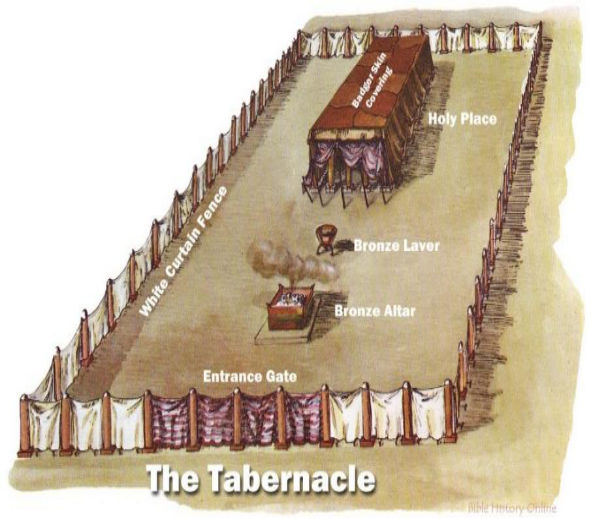
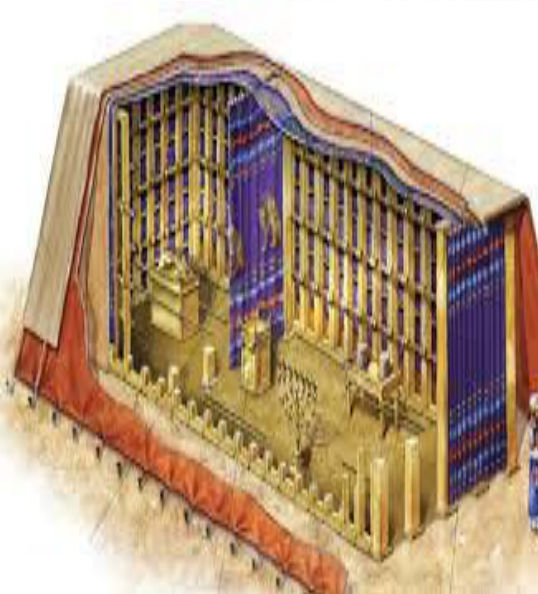
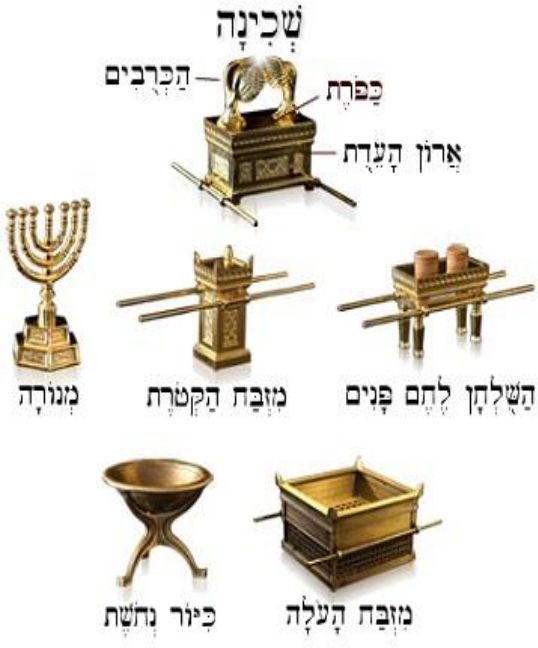
Text and illustrations reproduced from the study “Exodus”. The original PDF is the reference copy.