
Relationship between actions of Man and Jesus
WHAT A LOST PERSON MUST DO TO BE SAVED RELATES TO WHAT JESUS DID TO SAVE HIM. The conditions of salvation are not merely acts commanded by one in authority that becomes the ground of our redemption. “Christ crucified” is himself the Savior. “He offered himself.” (Hebrews 7:27). “He gave himself" (Galatians 1:4). The idea that conditions have been arbitrarily chosen ignores the cross. Nothing nullifies the cross more than to preach the conditions of salvation without relating them to the atoning work of the Savior.
What Jesus did to save us determines, therefore, what we must do to be saved. Nothing that is required of sinners can possibly be for the remission of sins unless it relates to the blood of Christ. Faith, for example, possesses no redemptive power; but the blood of Christ is redemptive. So faith is a condition of salvation because it means trust in, or reliance upon the blood of Christ. (See John 3:16 and Romans 3:25.)
It Is Required That One Believe In The Crucified Son Of God. John 3:16 teaches this. “God so loved the world that he gave his only begotten son that whosoever believes on him shall be saved.” It was his Son that God gave. But the Son must be lifted up on the cross. The Son died for our sins. Hence, it is not enough merely to believe that Jesus is the Son of God. The sinner must also believe in the Son crucified for his sins. The faith that saves must be in the Son who died to save. “Whom God set forth to be a propitiation, through faith in his blood" (Romans 3:25). Christ is our propitiation because he shed his blood (His sacrifice) for us and we respond to him through faith. We must have faith in his blood (trust in his blood) or faith in him who shed his blood.
But what is it to believe in Christ crucified? It is the belief that he died for our sins and as well as trust or reliance upon him as our sin offering.
Jesus died to redeem man so one must depend upon or trust in his death for salvation. This dependence on Christ crucified is faith. This faith is more than confidence in the integrity of Jesus to fulfill his promise to save under certain conditions. The conditions themselves mean trust in his death for salvation. Faith looks to the cross, to the blood. Jesus did not die merely to induce one to recognize him as Lord or king, that is, as one having the right to rule over us. He died to save sinners. Hence, faith that saves must mean dependence upon his blood. Without trust in the blood as an element of faith, there is no satisfactory response to Christ as a sin offering. Faith that saves must have Jesus Christ and him crucified" as its object. This faith looks to the cross. Any other notion of faith removes Jesus from the cross and makes him no more than a teacher or lawgiver. Jesus is the Savior. One does not rely, therefore, on the conditions, but upon Christ.
- One Must Repent Of His Sins In Order To Be Baptized And, Thus, Saved.
Jesus says in Luke 13:3, "... unless you repent, you will all likewise perish." It is either repent or perish; the choice is ours. Acts 17:30 says, "Truly these times of ignorance God overlooked, but now commands all men everywhere to repent." All people everywhere are commanded of God to repent. Repent of what? Repent of our sins. Repent of not fully serving and following all that God says. God is pleading with us to repent. He greatly desires that we turn to him. He tells us in 2 Peter 3:9, "The Lord is not slack concerning His promise, as some men count slackness; but is longsuffering toward us, not willing that any should perish but that all should come to repentance." God wants us to repent so we can be saved.
Repentance is not just being sorry. 2 Corinthians 7:10 says, "For Godly sorrow produces repentance leading to salvation, not to be regretted; but the sorrow of the world produces death." Repentance is a change of heart
and a change of mind. We must make up our mind to stop living life our way and start living it God’s way. It is making up our minds that we are going to serve God with all our might and do everything.
Romans 2:4 says, "The goodness of God leads you to repentance." God has been so good to us, and this should cause us to want to please Him in every way. God, because of His love for us, has done so much for us, and because of this we read in I John 4:19, "We love Him, because He first loved us." This should cause us to want to repent and do all the things that He has asked us to do, otherwise, we do not love God. Jesus said in John 14:24, "He who does not love Me does not keep my words."
- To Repent Is Basically Synonymous With Becoming A Disciple As Well As Confessing Jesus Christ As Lord.
We not only confess that Jesus is the Christ, the Son of the Living God, as Peter did in Matthew 16:18; we also confess Him as our Lord. “... if you confess with your mouth the Lord Jesus and believe in your heart that God has raised Him from the dead, you will be saved...” Romans 10:9. We name Him as our leader, owner, ruler, chief, boss, the one who has total authority over our lives. Someday everyone will make this confession (" …that at the name of Jesus every knee should bow, of those in heaven, and of those on earth, and of those under the earth, and that every tongue should confess that Jesus Christ is Lord, to the glory of God the Father." Philippians 2:10-11) but for some it will be too late.
Since baptism is the embodiment of faith and a sinner’s appeal to God for forgiveness, it is obvious that without faith in Christ as one’s sacrifice and without surrounding to Jesus as Lord. There can be no baptism, and thus no salvation.
- So What Must One Do To Be Saved?
Repentance is “in the name of Jesus Christ." Jesus as the Christ is man’s sin offering. Hence, repentance must be "in the name of" the crucified Christ. The phrase "in the name of Jesus Christ" signifies not only the authority of Jesus, but reliance upon him as the sin offering. Hence, repentance is not merely turning away from sin, but it is related to turning to Jesus as the sin offering. Such repentance is inseparable from faith which means trust in Jesus Christ. Peter spent much time on Pentecost leading his hearers to repentance. But it was not a mere turning from sin that he sought, but such a turning from sin as would lead to a full acceptance of the Lord and Savior. The rejection of Christ through unbelief was also a sin that called for repentance. When one repents of the rejection of Jesus as Savior he accepts him as the Savior. Faith, therefore, must be accompanied by repentance, and repentance must be associated with trust before one has responded to Christ as his sin offering.
- It Is Required That Penitent Believers Be Baptized In The Name Of Jesus Christ" (Acts 2:38).
The relation of baptism to faith in the scriptures is easily revealed as the expression or the embodiment of faith. What is signified by trust in Christ crucified is outwardly expressed or embodied by baptism which is a burial in and a resurrection from the water "in the name of Jesus Christ." Baptism, therefore, signifies trust in Christ. It is not something different from faith added to faith and repentance, but an expression of both. Hence, Peter commanded his hearers to repent and be baptized ... in the name of Jesus Christ for the remission of sins" (Acts 2:38). Baptism, like faith, looks to Calvary, to Christ as sin offering. It has, therefore, the meaning of faith. God has joined baptism to faith and repentance, and he expects every one of us "to be baptized in the name of the Lord" (Acts 10:48).
Conclusion:
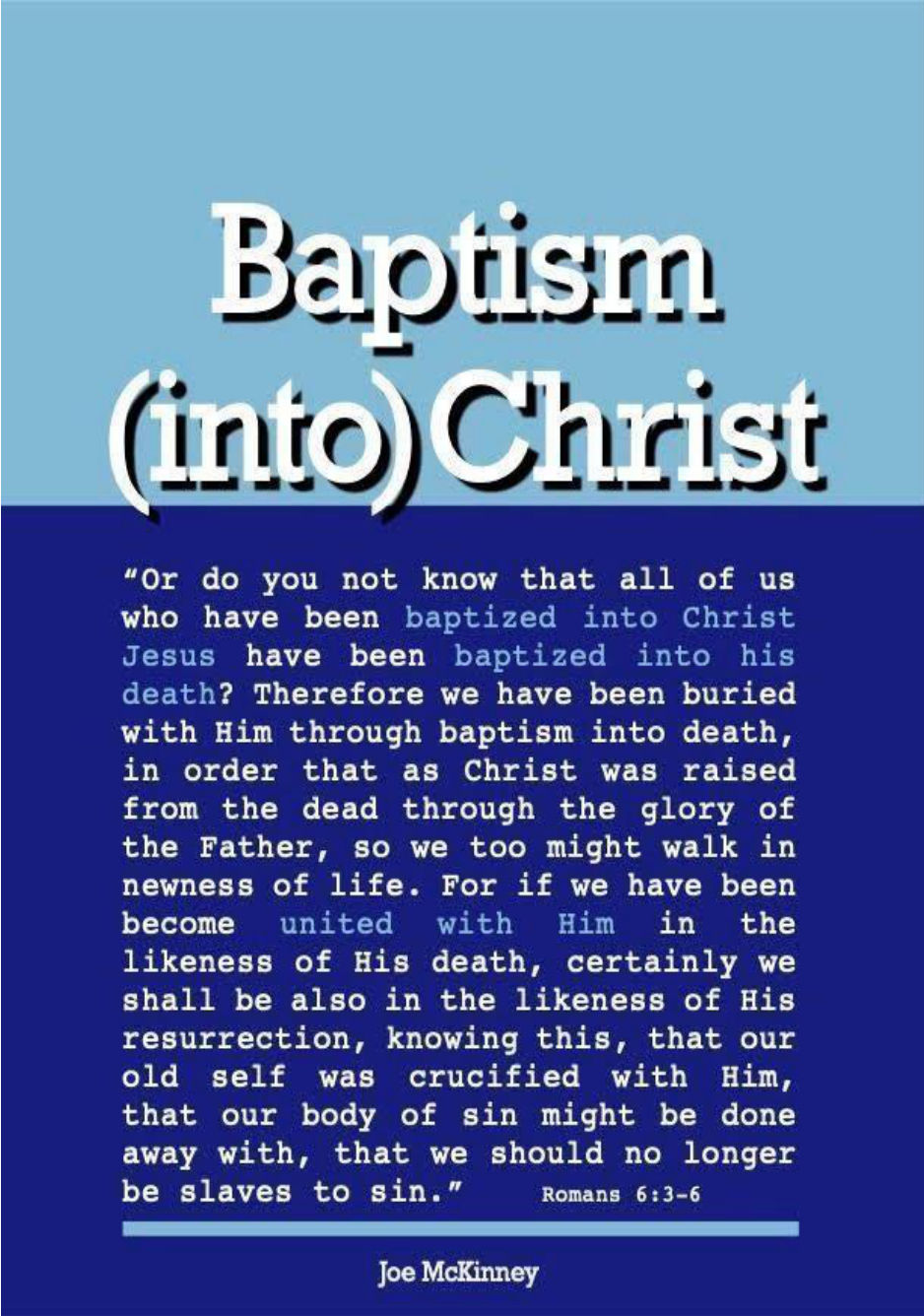
The conditions of salvation are responses to Christ as our sin offering. They are meaningless, therefore, apart from the cross. It is senseless and pointless to reach the conditions without first having reached Jesus as a sin offering. The conditions are not a few commands arbitrarily given by one in authority to test man's willingness
to obey, but natural responses to one who is man's sin offering. He must make Christ crucified his plea before God and expect salvation because of Jesus’ death on man's behalf. The sinner is being called, not merely to confess Jesus as his Lord but as Savior.
Questions
Answer each question, then submit your work to your instructor for grading. You will also see a self-check score.
Text and illustrations reproduced from the study “Relationship between actions of Man and Jesus”. The original PDF is the reference copy.